
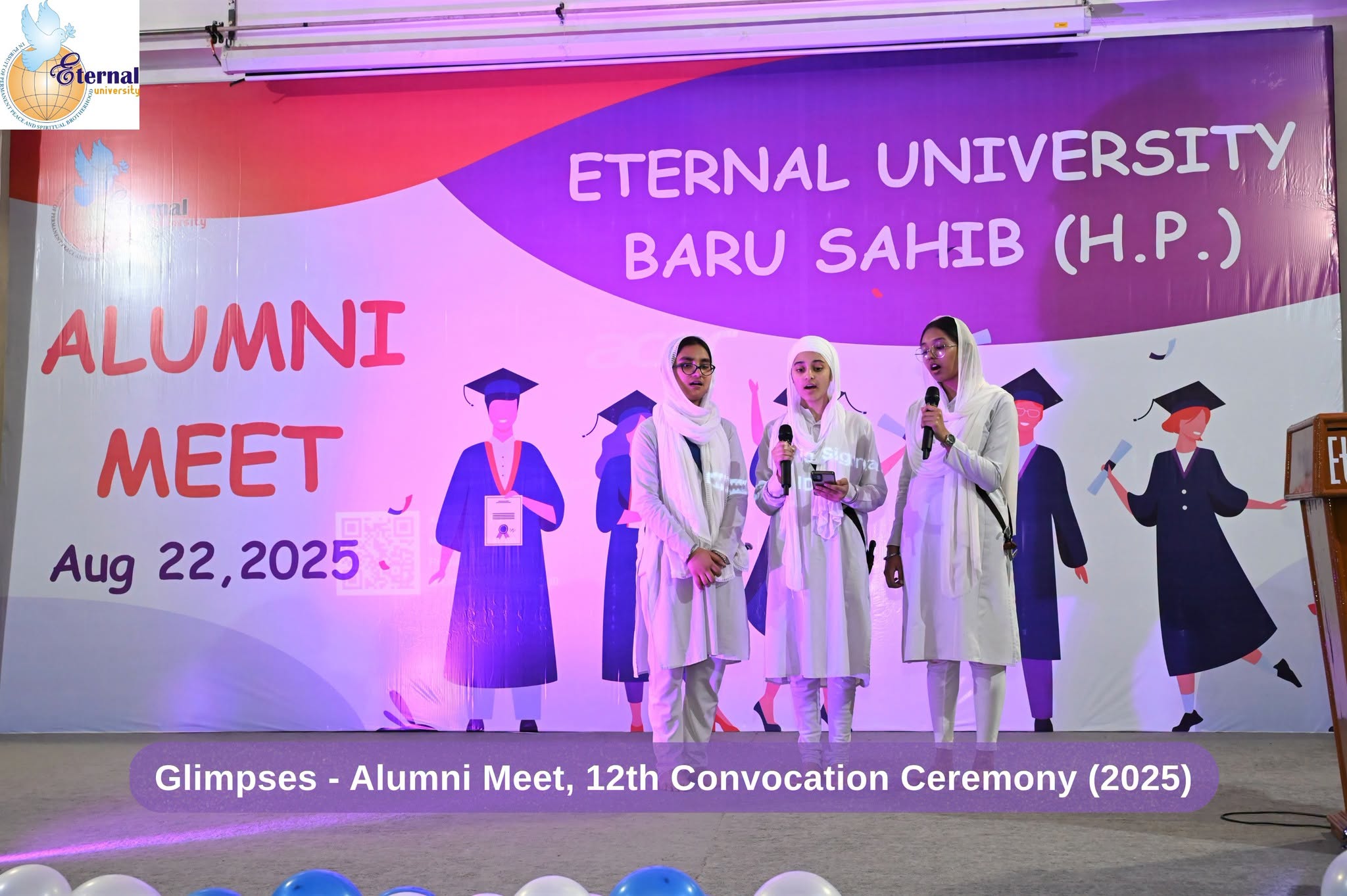
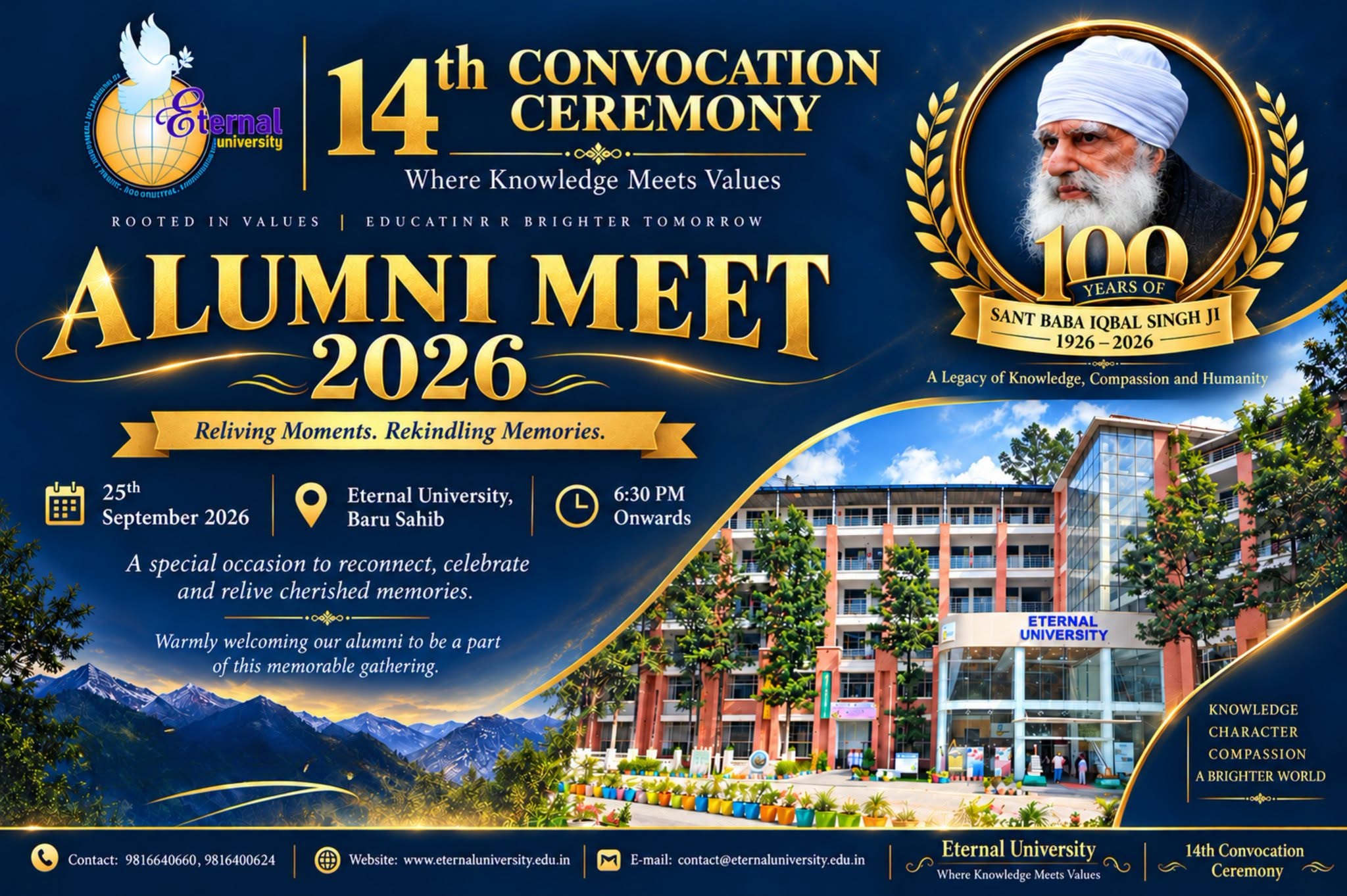
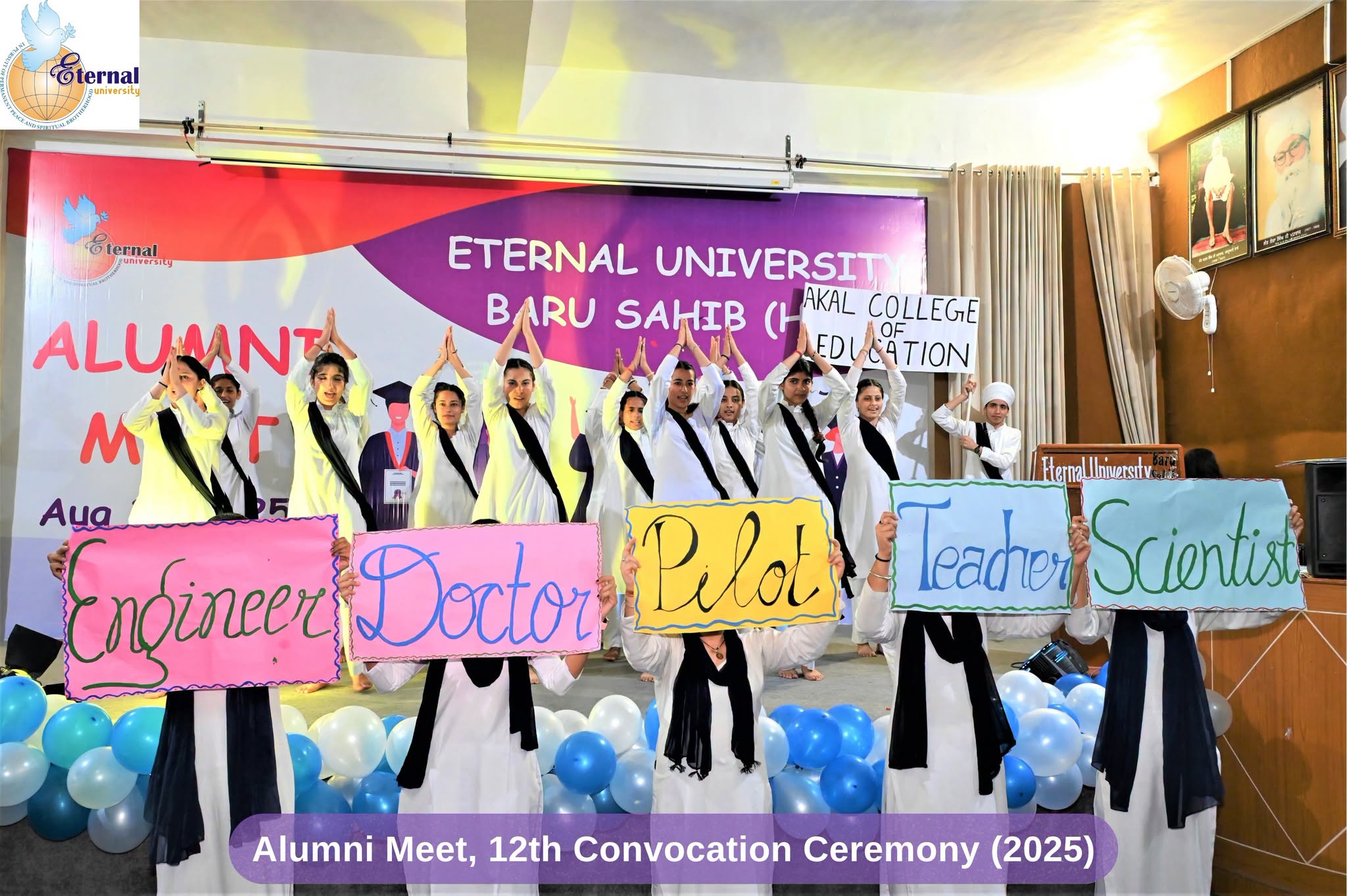
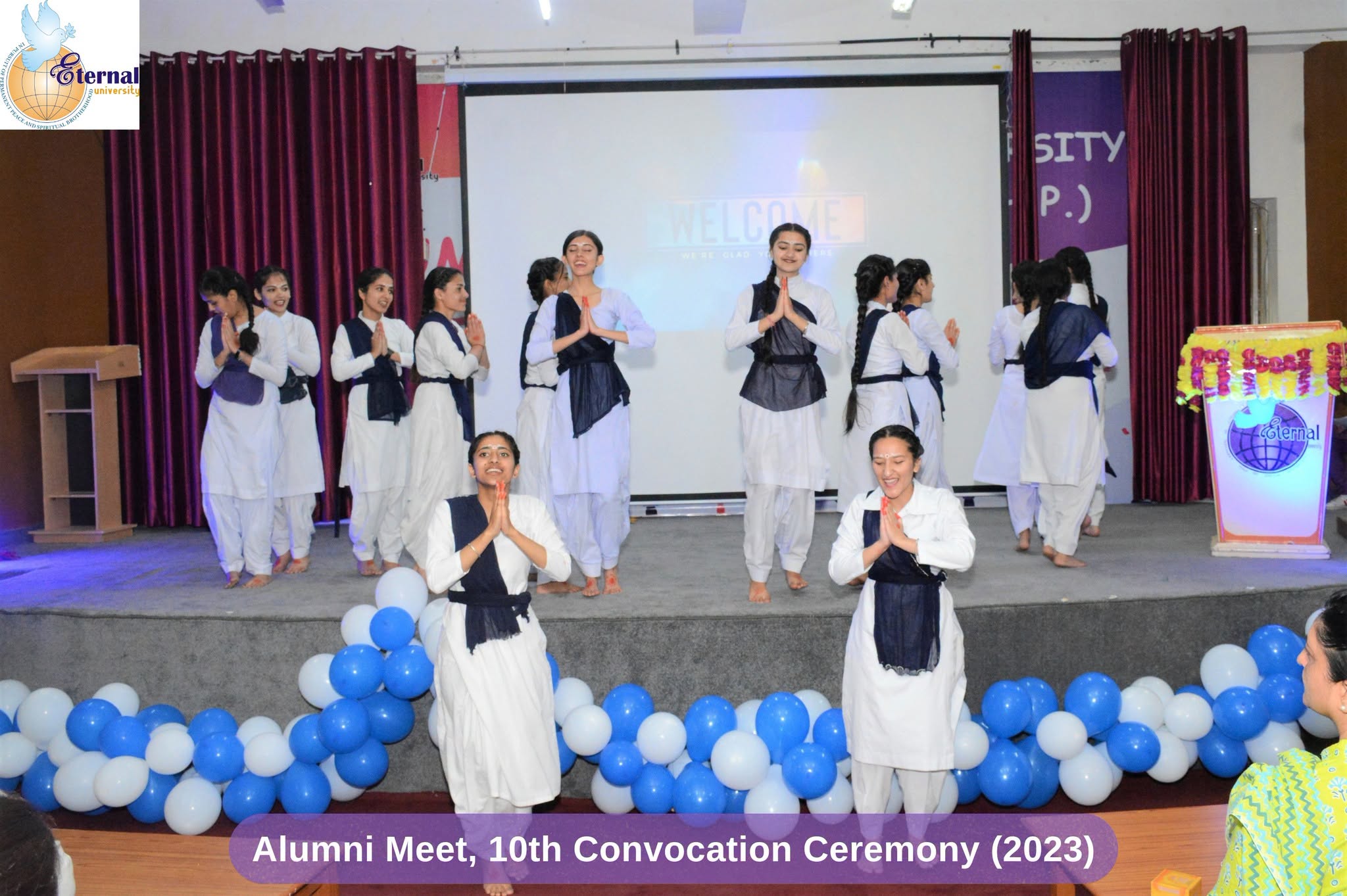
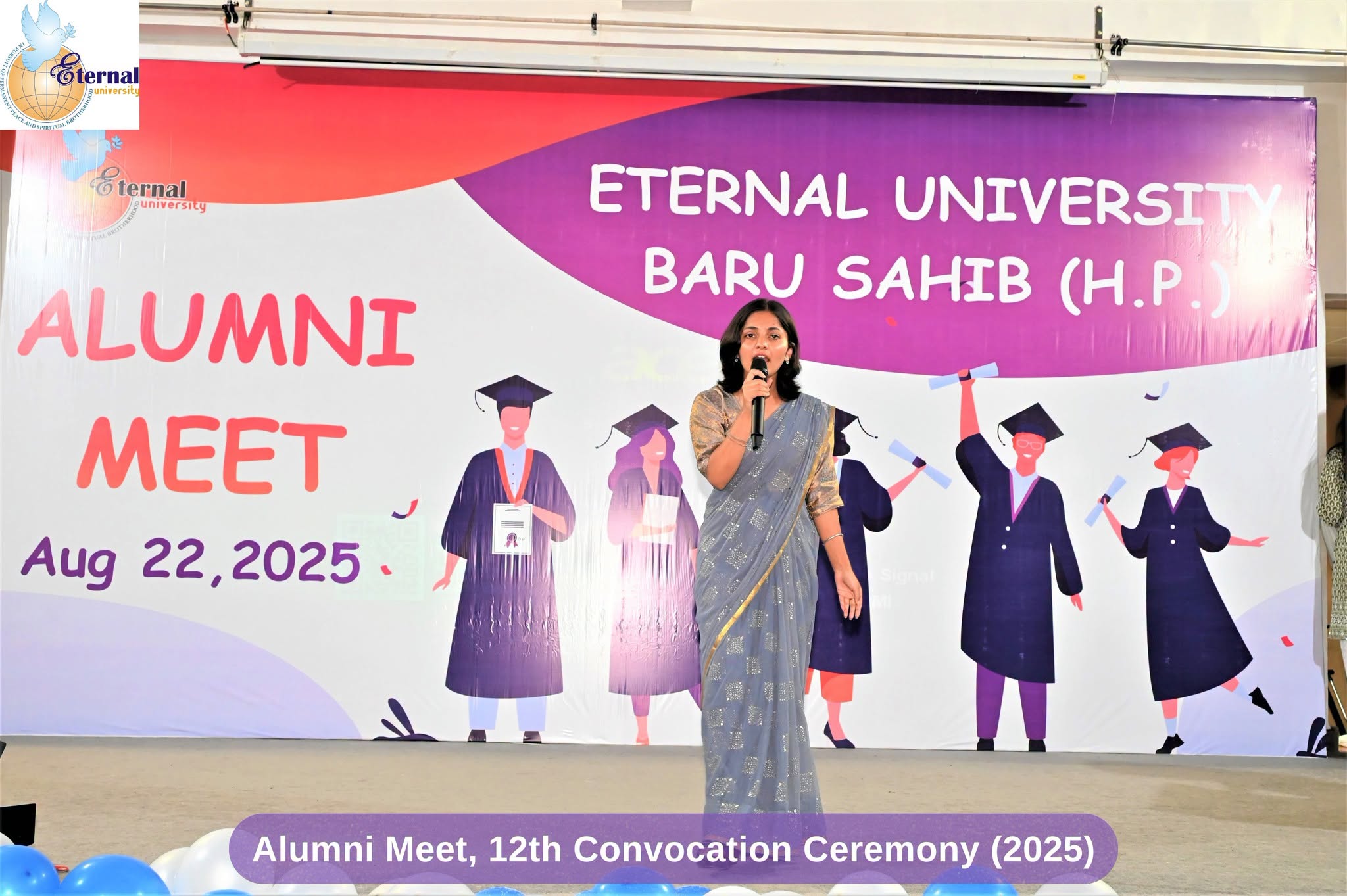

17 years of memories. Generations of journeys. One evening to come back together.
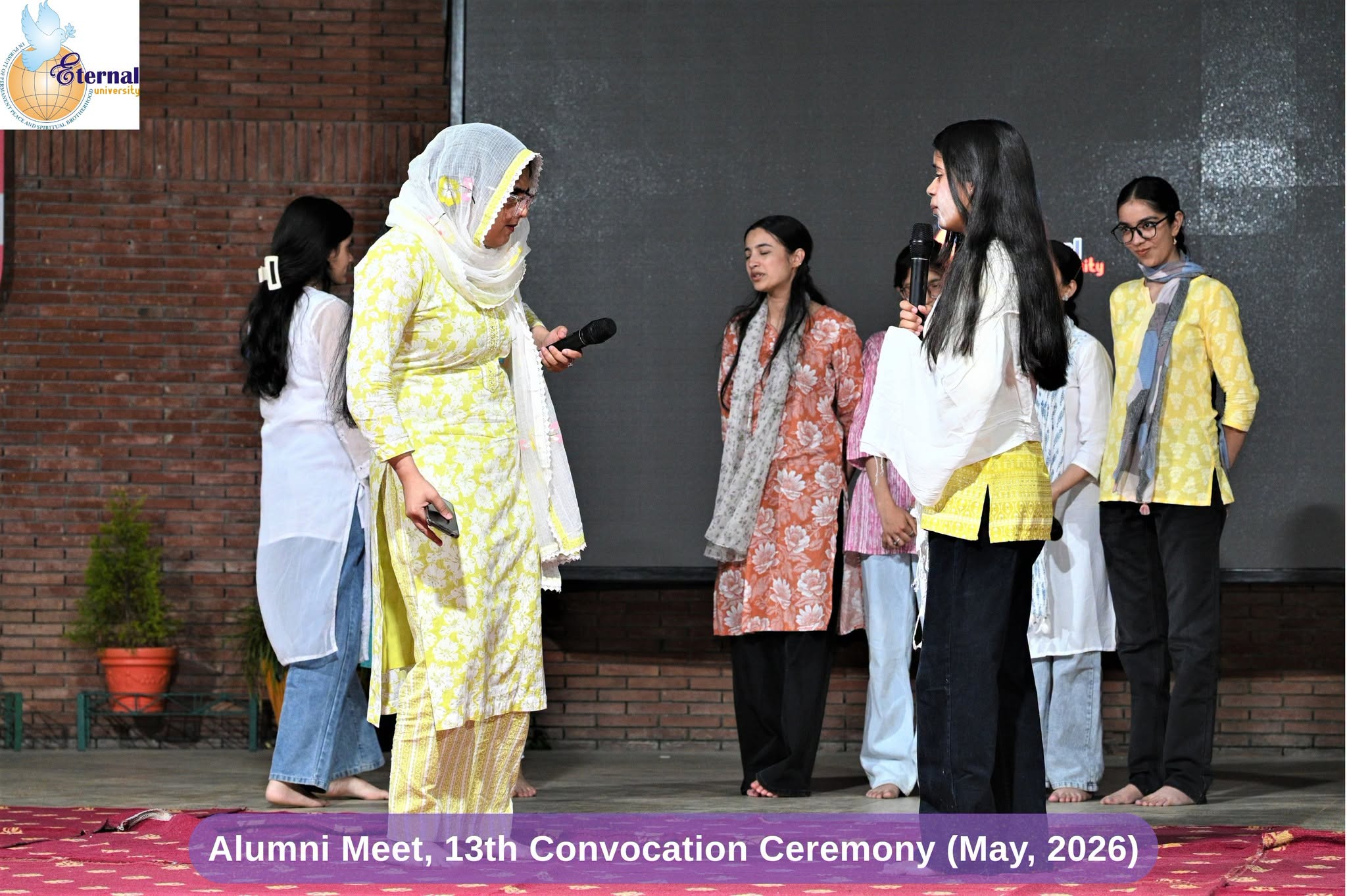
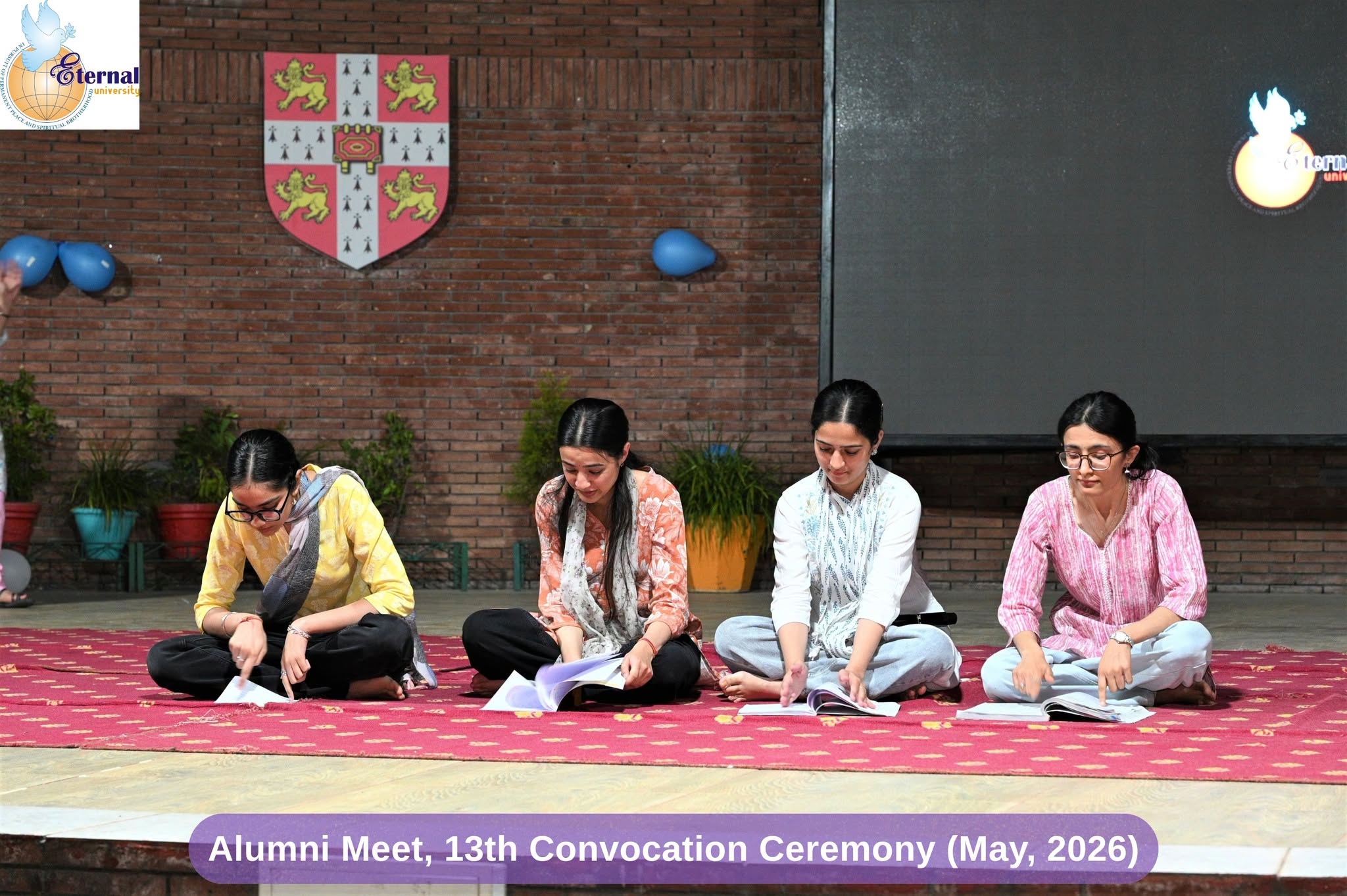
From the 2008 batch to the 2025 batch, alumni of Eternal University, Baru Sahib will come together once again, returning to familiar spaces, reconnecting with old friends and faculty, and reliving the moments that became an unforgettable part of their University journey.
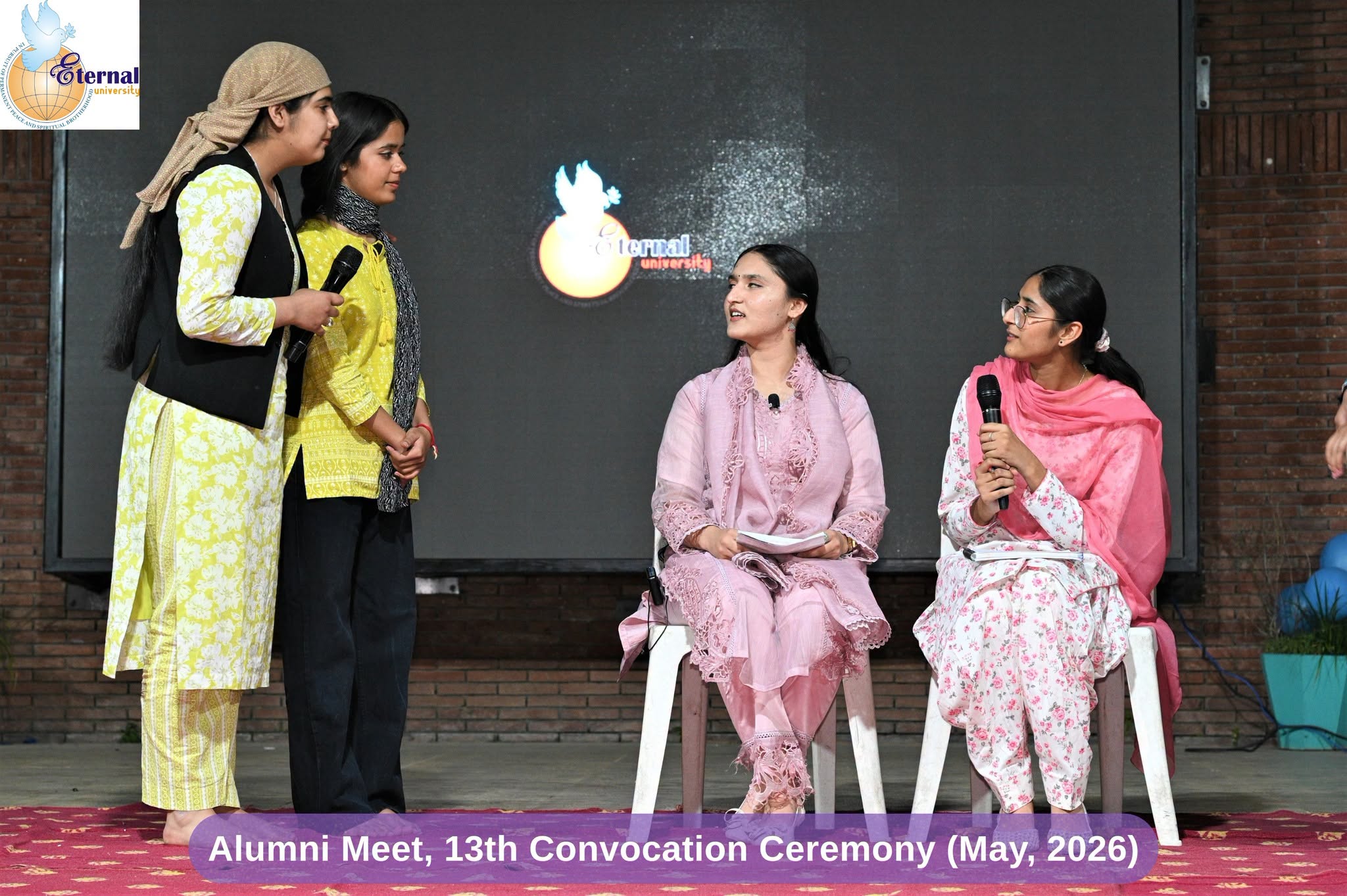
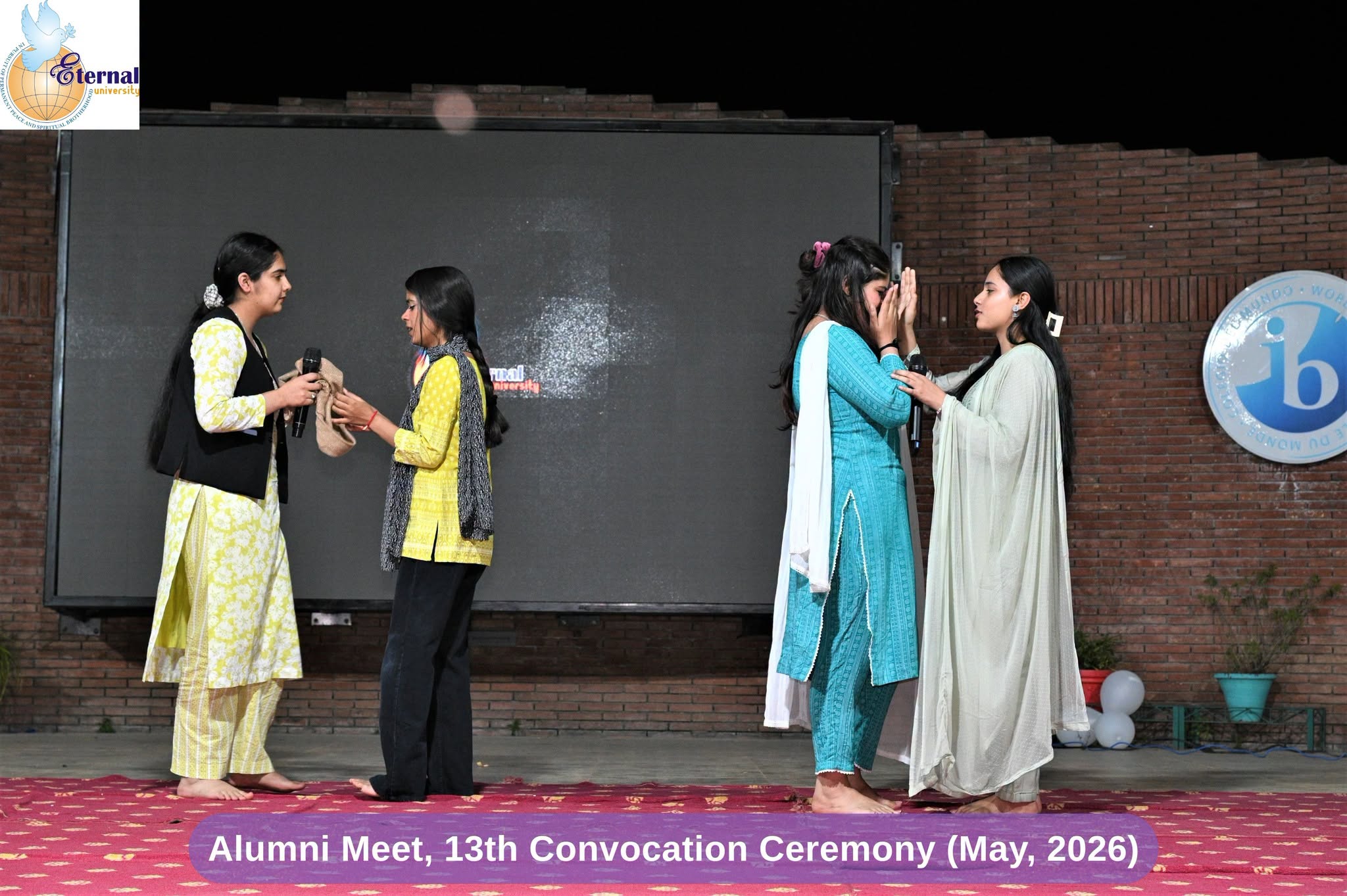
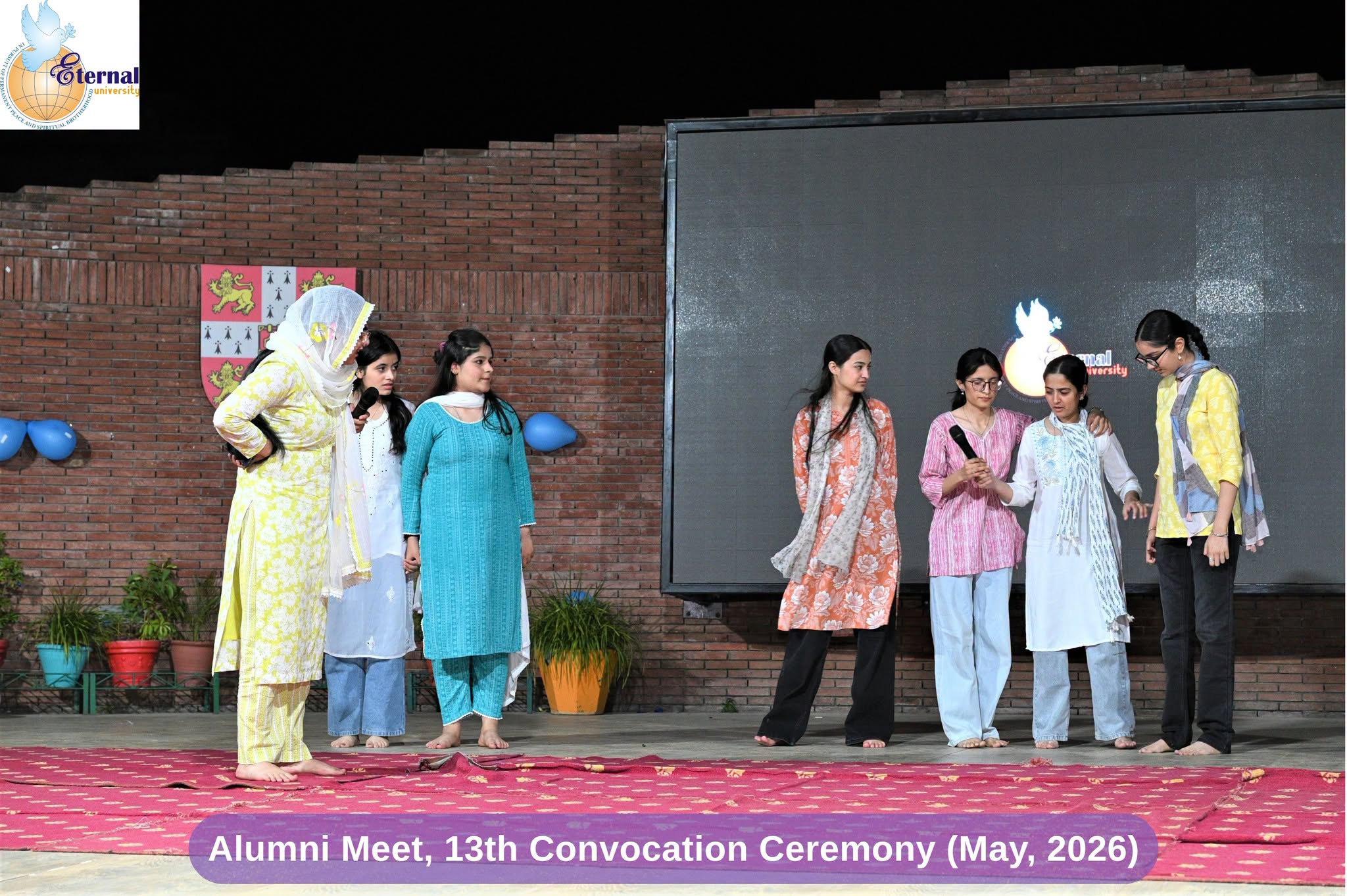
The evening will begin with a pious Shabad, followed by a skit on college and hostel life, cultural performances, speeches by esteemed alumni, and an address by the Hon’ble Vice-Chancellor of Eternal University.
The gathering becomes even more meaningful in the year commemorating the 100th Birth Anniversary of Sant Baba Iqbal Singh Ji (1926–2026), whose vision of value-based education continues to connect generations with Baru Sahib.
We warmly welcome our alumni to join us for an evening of nostalgia, memories and reconnection.
Reliving Moments. Rekindling Memories.
25th September 2026 | 6:30 PM onwards
Eternal University, Baru Sahib
Where Knowledge Meets Values
For more details, kindly contact
Phone - +918278734672
E-mail: contact@eternaluniversity.edu.in,
Website: www.eternaluniversity.edu.in
ਮਨ ਤੂੰ ਜੋਤਿ ਸਰੂਪੁ ਹੈ ਆਪਣਾ ਮੂਲੁ ਪਛਾਣੁ ॥ (ਗੁਰੂ ਗ੍ਰੰਥ ਸਾਹਿਬ : ਅੰਗ ੪੪੧ ਪੰ. ੩)
Maan Thoon Joth Saroop Hai Aapanaa Mool Pashhaan || ((Guru Granth Sahib ji: Ang 441))
O mind, you carry the Divine Light within you; recognise your true self.
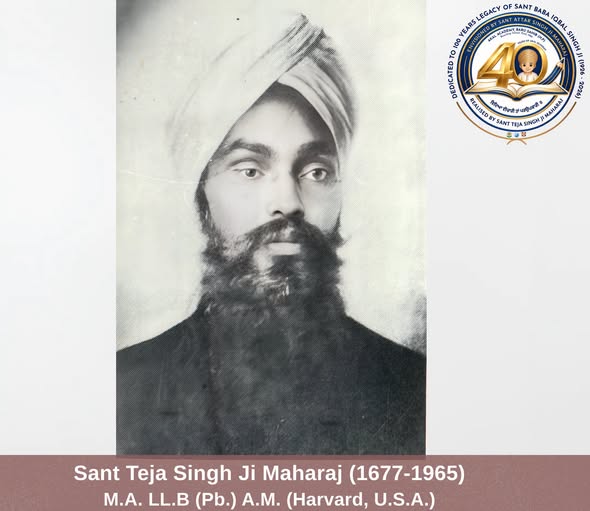
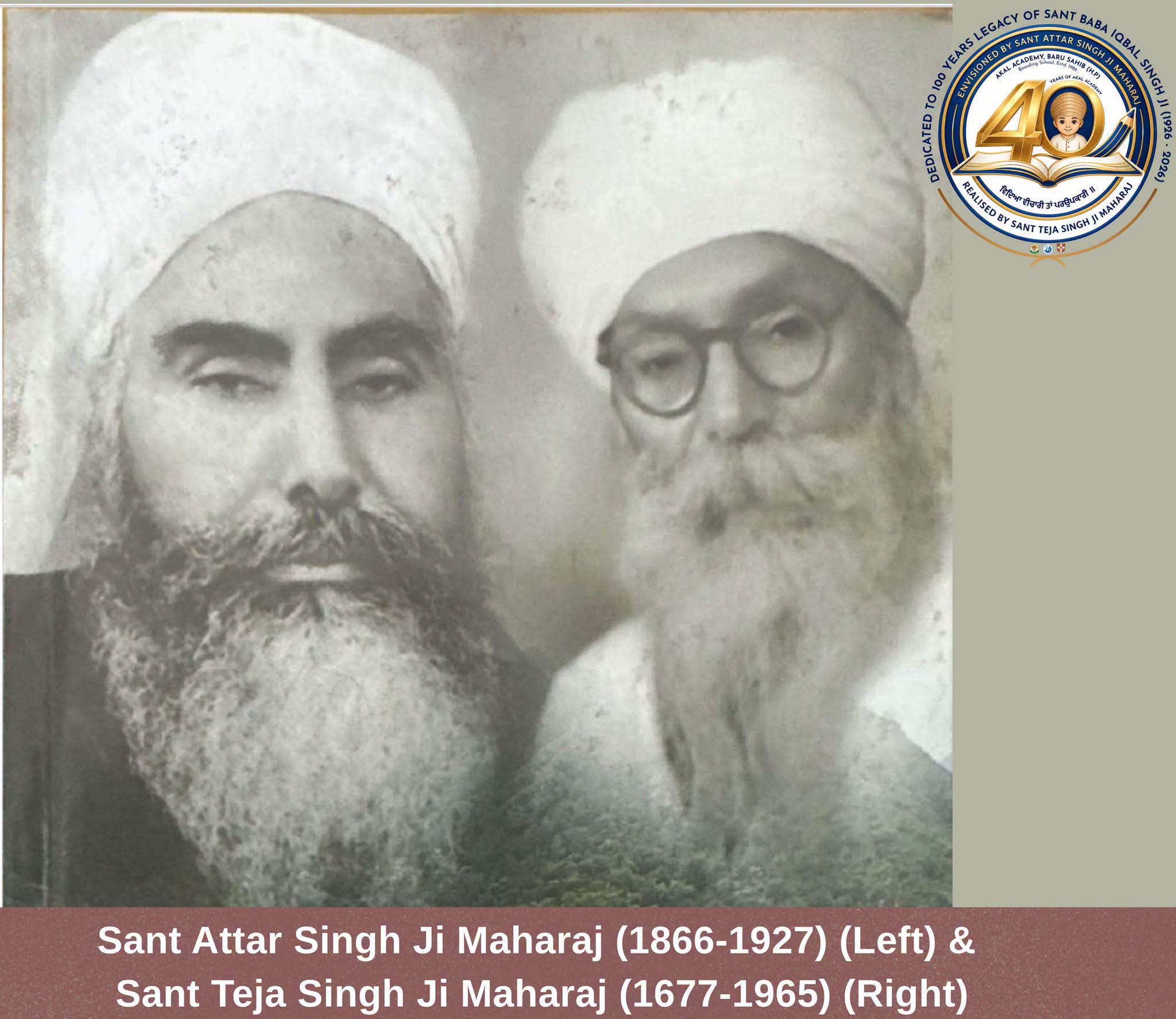
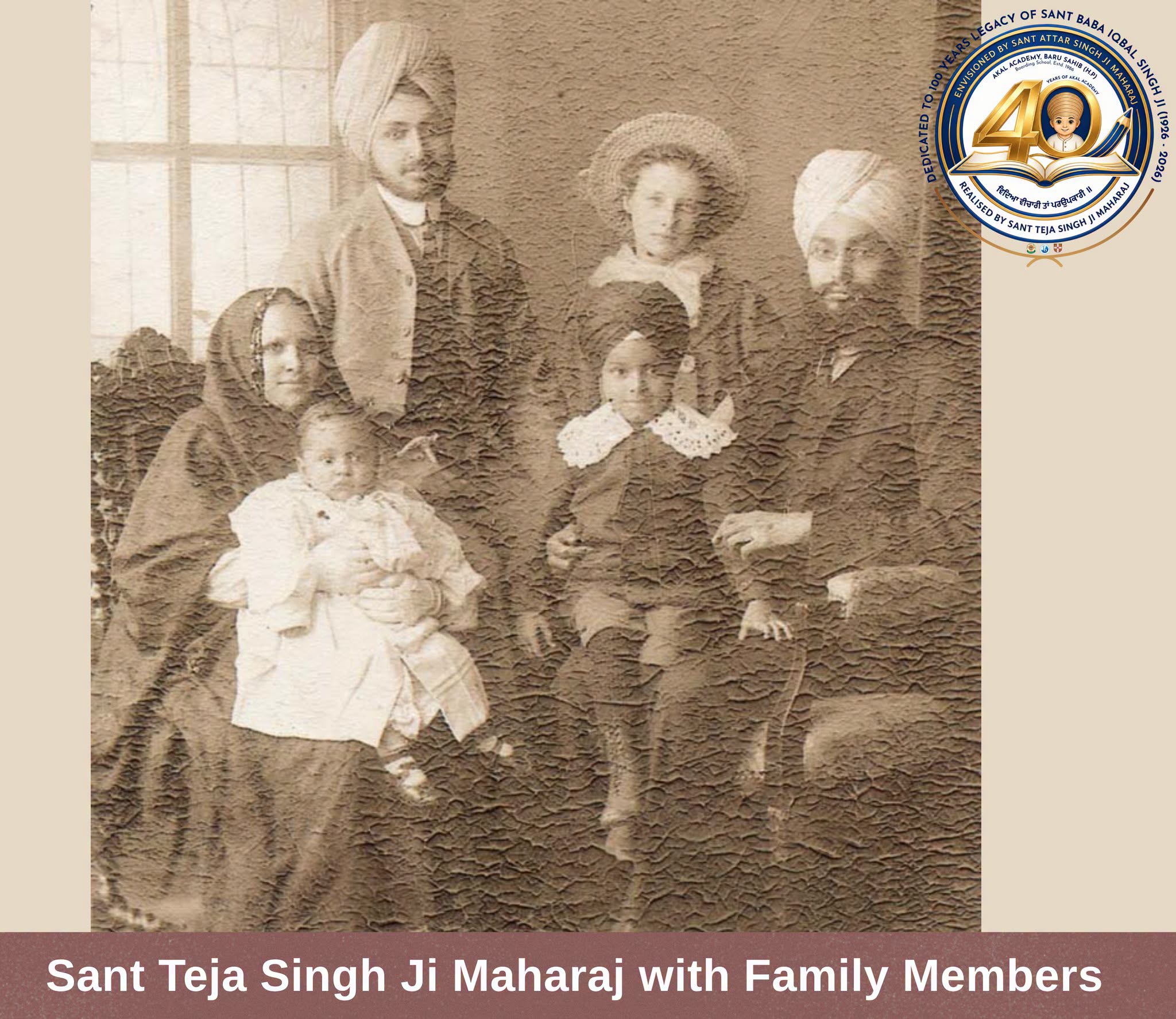
Following the life and vision of Sant Attar Singh Ji, the journey continues with Sant Teja Singh Ji, the devoted disciple who would carry that vision forward.
The life of Sant Teja Singh Ji encompasses an extraordinary journey of education, transformation, spirituality, and service. With so many defining chapters, Ep. 2 unfolds in 4 parts, beginning with the early years and the transformation.
1. Birth (1877) & An Exceptional Academic Journey
11 years after Sant Attar Singh Ji appeared on Earth, Niranjan Singh Mehta Ji, later known as Sant Teja Singh Ji, was born to Dr. Ralla Singh Ji (renowned surgeon) & Sada Kaur Ji in village Balowali, Gujranwala (now in Pakistan). After schooling, Niranjan Singh Ji completed B.A., followed by LL.B. in 1900. In 1901, he completed M.A. in English, securing 1st position in the entire undivided Punjab, which extended from the Afghanistan border to the Delhi border
2. A Rare Achievement-
In 1902, Niranjan Singh Ji achieved another remarkable distinction by qualifying the civil Services examination for the post of Assistant Superintendent in the North India Salt Department. At a time when Indians rarely secured officer-level positions under British rule.
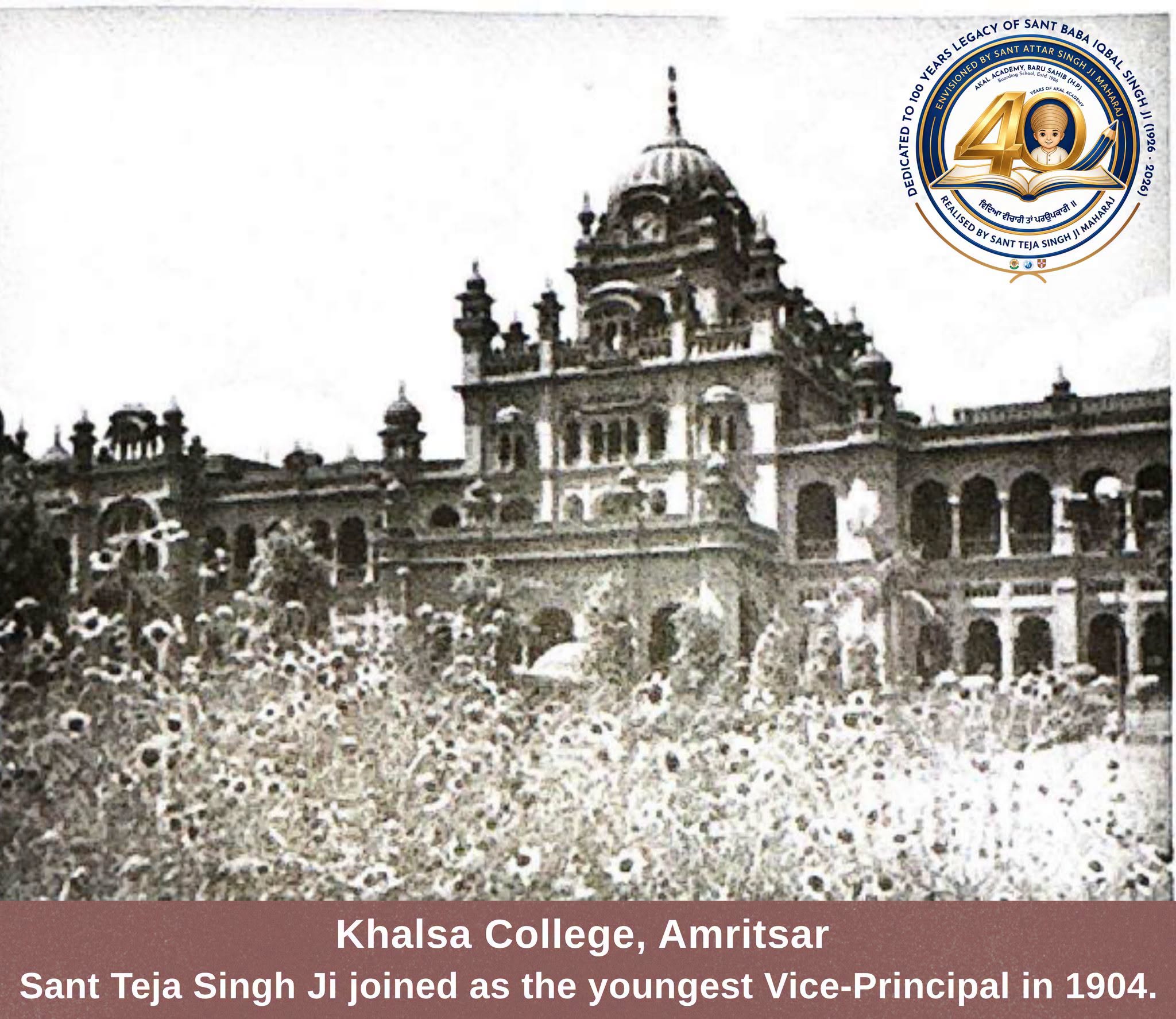
The government-controlled production of salt, restricting even the poor from producing this basic necessity, troubled Niranjan Singh ji’s conscience. Hence, decided to pursue a career in teaching. In 1904, Niranjan Singh Ji joined Khalsa College, Amritsar, as Vice-Principal, becoming the youngest Vice-Principal of the College.
3. A Non-Religious Free Thinker
Young Niranjan Singh Ji was a non-religious free thinker, argumentative and deeply influenced by Western education, with little inclination towards religious teachings. He would not even bow before Sri Guru Granth Sahib Ji, considering the practice a form of idol worship.
But one morning at the Gurdwara Sahib of Khalsa College, something changed. Standing before Sri Guru Granth Sahib Ji, he experienced an overwhelming spiritual pull and bowed before Guru Sahib. The experience awakened a search for spiritual guidance. Sant Baba Sham Singh Ji of Harmandir Sahib eventually guided him towards Sant Attar Singh Ji.
4. Holy Glimpse of Sant Attar Singh Ji
Accompanied by Bhai Jodh Singh Ji, Niranjan Singh Ji had the blessed Darshan of Sant Attar Singh Ji during a visit to Lahore. The Darshan brought an extraordinary sense of inner peace. After being introduced, Sant Attar Singh Ji remarked, “A true Hari Premi, a true lover of God.” These words had a profound effect on Niranjan Singh Ji, who felt as the entire being had been cleansed.
5. The First Lesson
The first lesson from Sant Attar Singh Ji was deeply personal — To forgive those who had caused hurt or ill-treated you.
Niranjan Singh Ji took these words to heart. Among those towards whom Sant Ji carried some resentment was the stepmother; setting aside the pain of the past, he sought forgiveness and reconciliation, putting Sant Ji’s guidance into practice.
6. The Transformation
During another visit to Sant Attar Singh Ji, Niranjan Singh Ji sat in meditation, hearing holy hymns; a Divine Voice echoed,
'If you wish to become God-conscious in this birth, then you should get initiated with Amrit of Guru Gobind Singh Ji'
Having developed an intense desire, he pleaded to Sant Attar Singh Ji for the blessing of Amrit. In 1906, Niranjan Singh Ji, along with his mother and family, was blessed with Amrit and became part of Khalsa Path.
Sant Attar Singh Ji changed the name from Niranjan Singh Mehta to Teja Singh Ji. The scholar and free thinker had entered a new chapter of life.
7. The Wish
At Mastuana Sahib, Sant Attar Singh Ji Maharaj shared a far-reaching educational vision: an institution that would bring together the spiritual wisdom of Guru Nanak Sahib and the material sciences of the West, preparing students to put spiritual philosophy into action and become messengers of peace to the world. This vision laid the foundation for the concept of value-based education.
To fulfil this mission, Teja Singh Ji decided to travel abroad to pursue higher education in the material sciences, with the blessings of Sant Attar Singh Ji Maharaj.
Before departure, Sant Attar Singh Ji Maharaj gave five guiding instructions:
i. Keep the Sikh form and Kesh (uncut Hair) intact.
ii. Do not enter into arguments.
iii. Wherever possible, establish Gurdwara Sahibs.
iv. Share with the West that occult powers and miracles are insignificant before Divine Realisation.
v. Lecture only if one is free from ego. Else, refrain.
Coming Up | Part 2 — The Journey Abroad
Akal Academy Baru Sahib, celebrating 40 Years of Education (1986- 2026).
Call us – 18001807755 | WhatsApp us: 9816400510
Website - www.akalacademybarusahib.com
With the precious blessings of our Beloved Guru Sahibans, Founding Saints, Principals, Teachers, Students, Parents, Alumni, the entire Akal Academy & Kalgidhar Trust family and the Revered Sadh Sangat Ji around the globe, we begin a humble journey of 40 Stories on the pious occasion of the 40th Foundation Day of Akal Academy Baru Sahib.
The journey begins with the life and vision of revered Sant Attar Singh Ji Maharaj and will continue through 40 stories, leading to the final episode on the 40th Foundation Day in 2026.
We humbly invite everyone’s precious participation in this journey.
EPISODE 1/40
The Vision of Baru Sahib
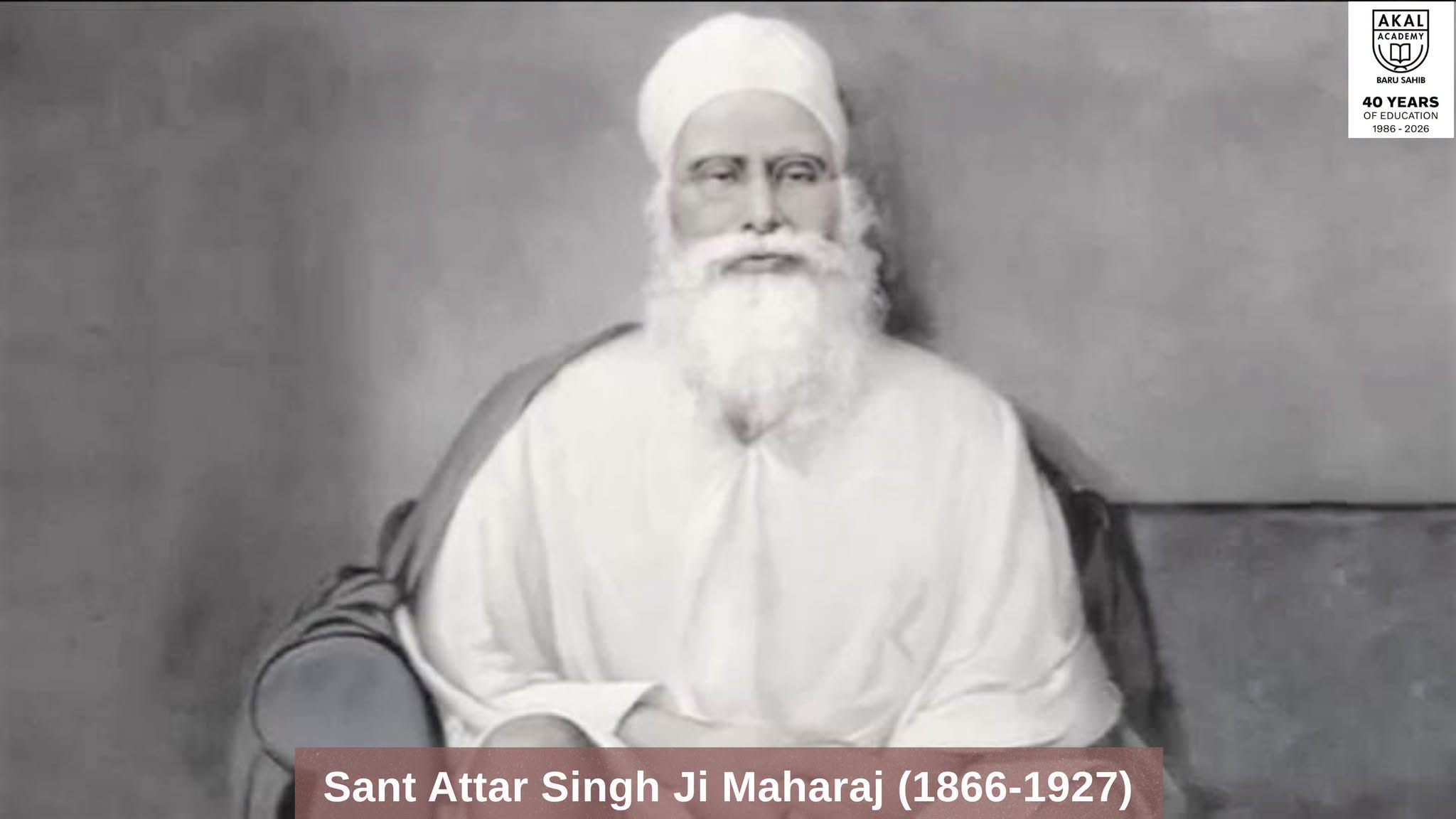
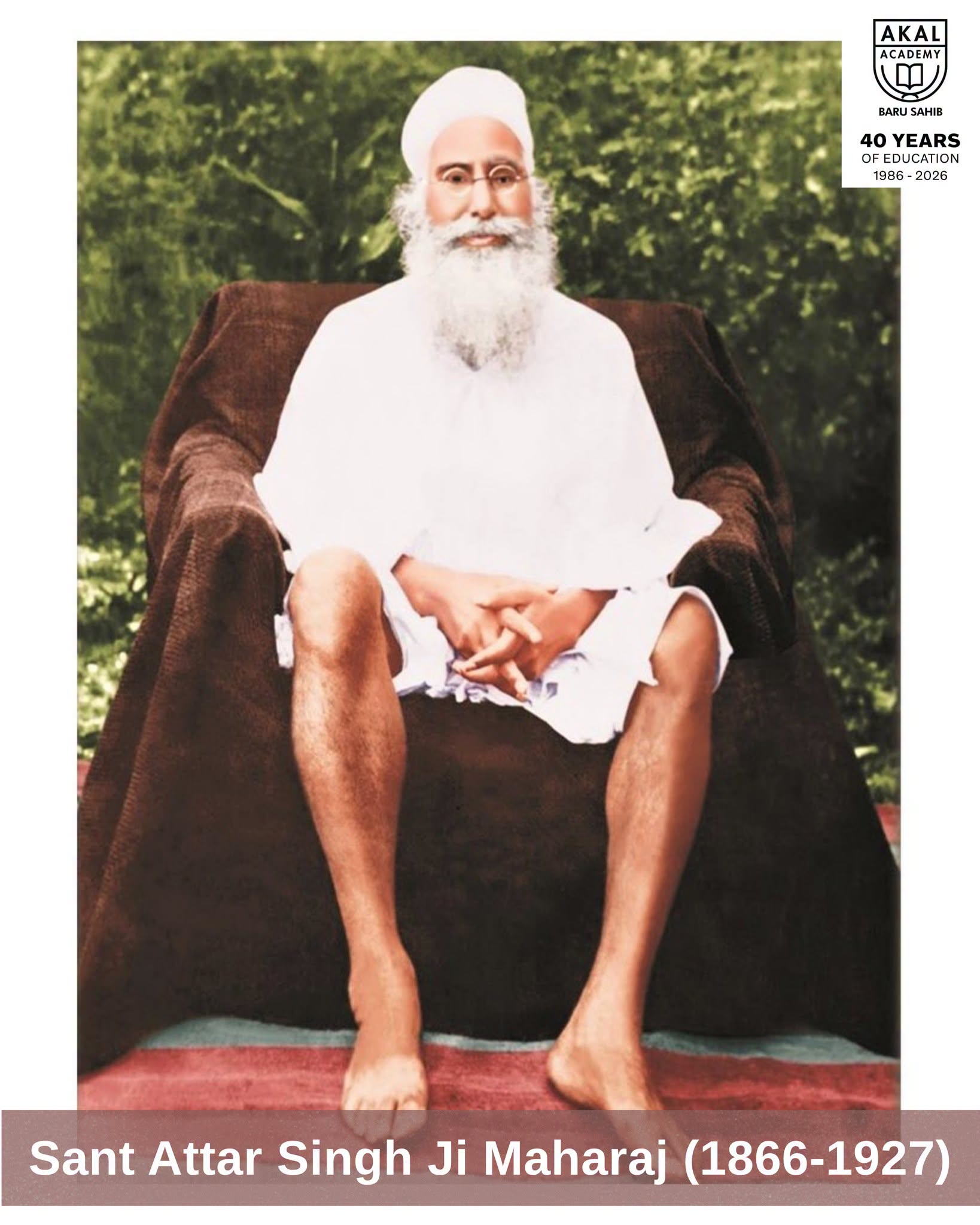
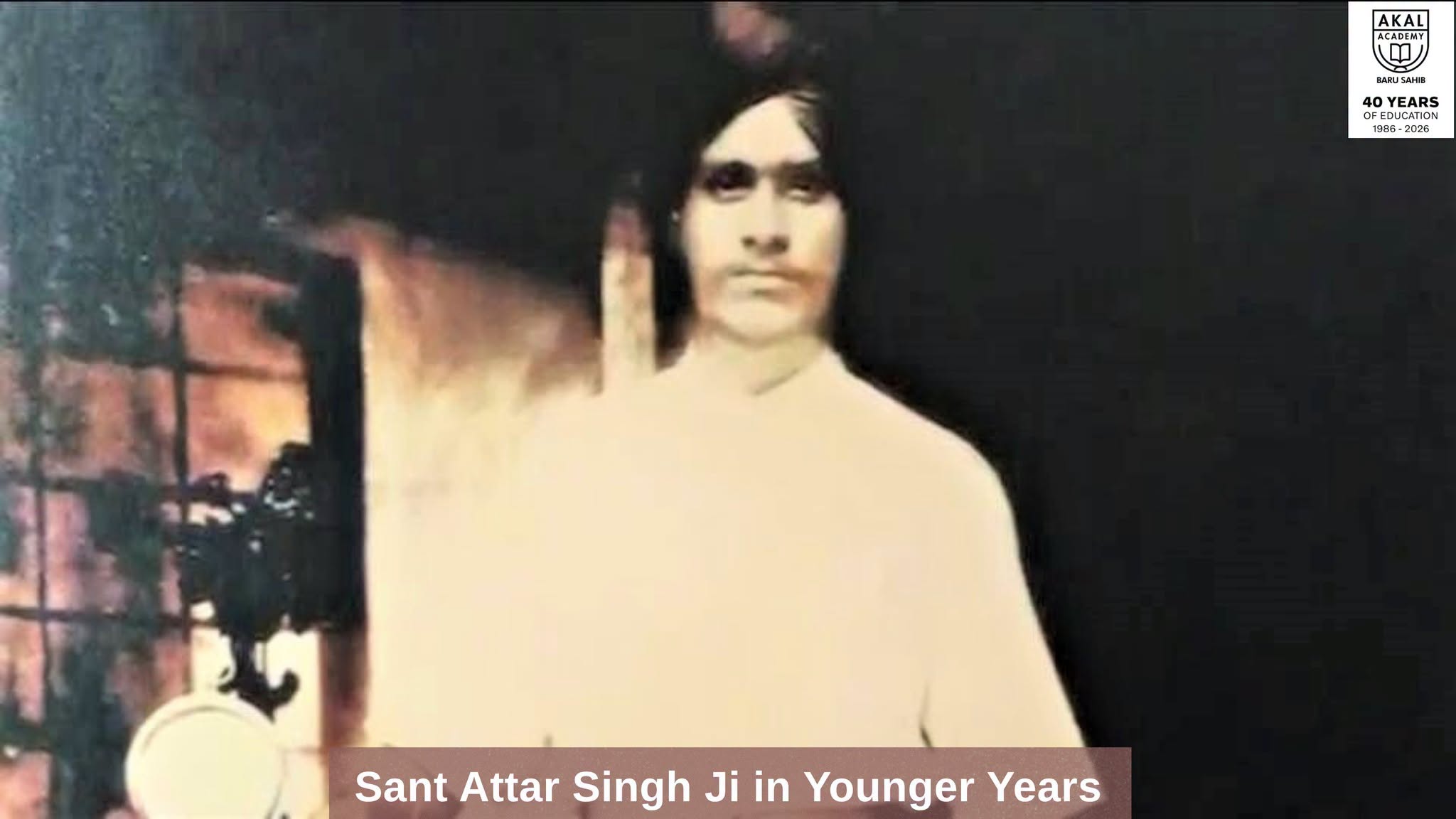
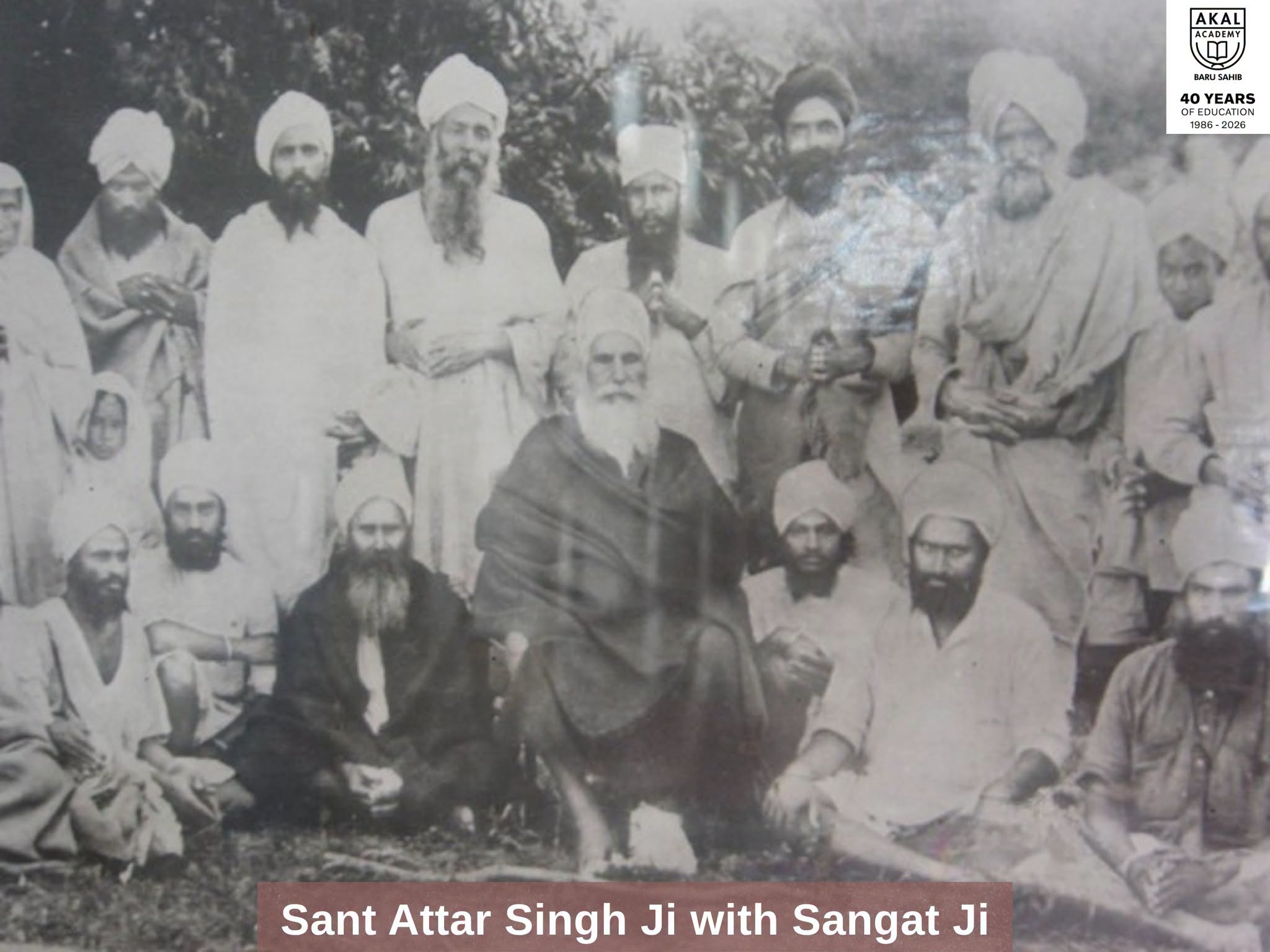
Sant Attar Singh Ji Maharaj, the founding Saint behind the value-based educational vision, envisioned a sacred place in the Himalayas where young children would receive spiritual and modern scientific education and carry the message of universal brotherhood.
To realise this vision, Sant Attar Singh Ji Maharaj identified and inspired Sant Teja Singh Ji, M.A., LL.B. (Punjab), A.M. (Harvard). In 1956, Baru Sahib was revealed through the efforts of Sant Teja Singh Ji, with the help of Sant Baba Iqbal Singh Ji and Dr. Khem Singh Ji.
Baba Iqbal Singh Ji later communicated to Sant Teja Singh Ji that Baru Sahib was exactly like the place envisioned for a spiritual centre.
1. Sant Attar Singh Ji Maharaj’s Childhood
Sant Attar Singh Ji Maharaj was born in Village Cheema, Sangrur, Punjab, on 28 March 1866, to Baba Karam Singh Ji and Mata Bholi Ji. From childhood, Sant Ji remained inclined towards meditation on the Divine Name.
At the age of seven, when asked to attend the village school, Sant Ji expressed the desire for an education leading towards the realisation of Truth.
2. Sant Ji Joins the Army and Receives Amrit
In the late teenage years, Sant Ji joined the Army and later received Amrit from the Panj Pyare Sahibans. Sant Ji continued studying sacred texts and meditating upon the Divine Name. Sant Ji later resigned from the Army to pursue the spiritual path.
3. The Journey to Hazur Sahib
Sant Ji travelled around 1500 Km on foot from Dera Ghazi Khan to Hazur Sahib, Maharashtra. During the journey, Sant Ji remained immersed in Naam Simran, uttering “Wah” with the left foot and “Guru” with the right.
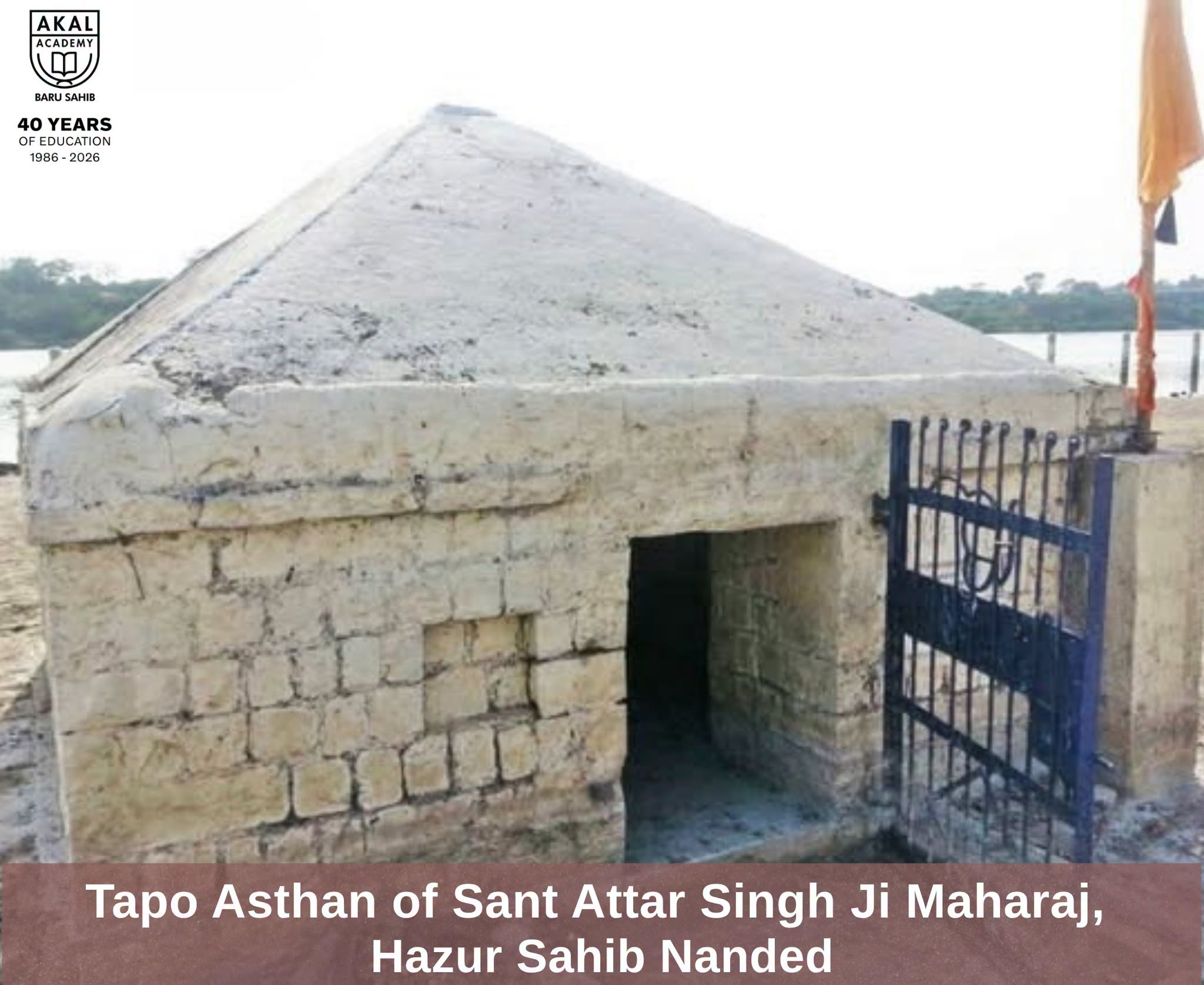
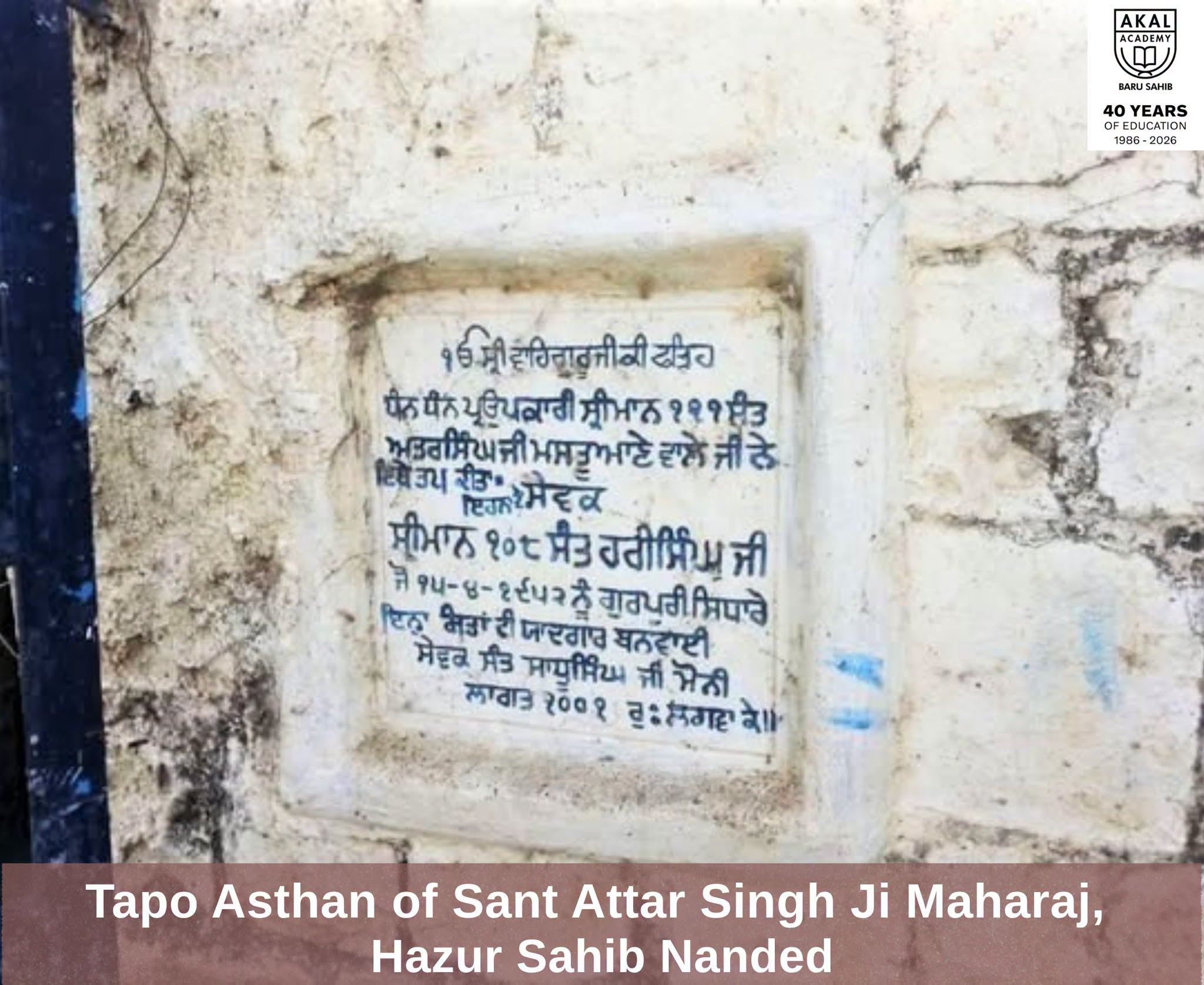
At Hazur Sahib, Sant Ji spent two years in meditation on the banks of the Godavari, engaged in the Mool Mantar, Gurbani and continuous recitation of Japji Sahib. According to the account, Sant Ji sometimes remained without food for weeks in deep meditation.
Sant Ji later travelled to Haridwar and Rishikesh, continuing meditation upon Naam.
4. Sant Ji’s Contribution to Amrit Sanchaar
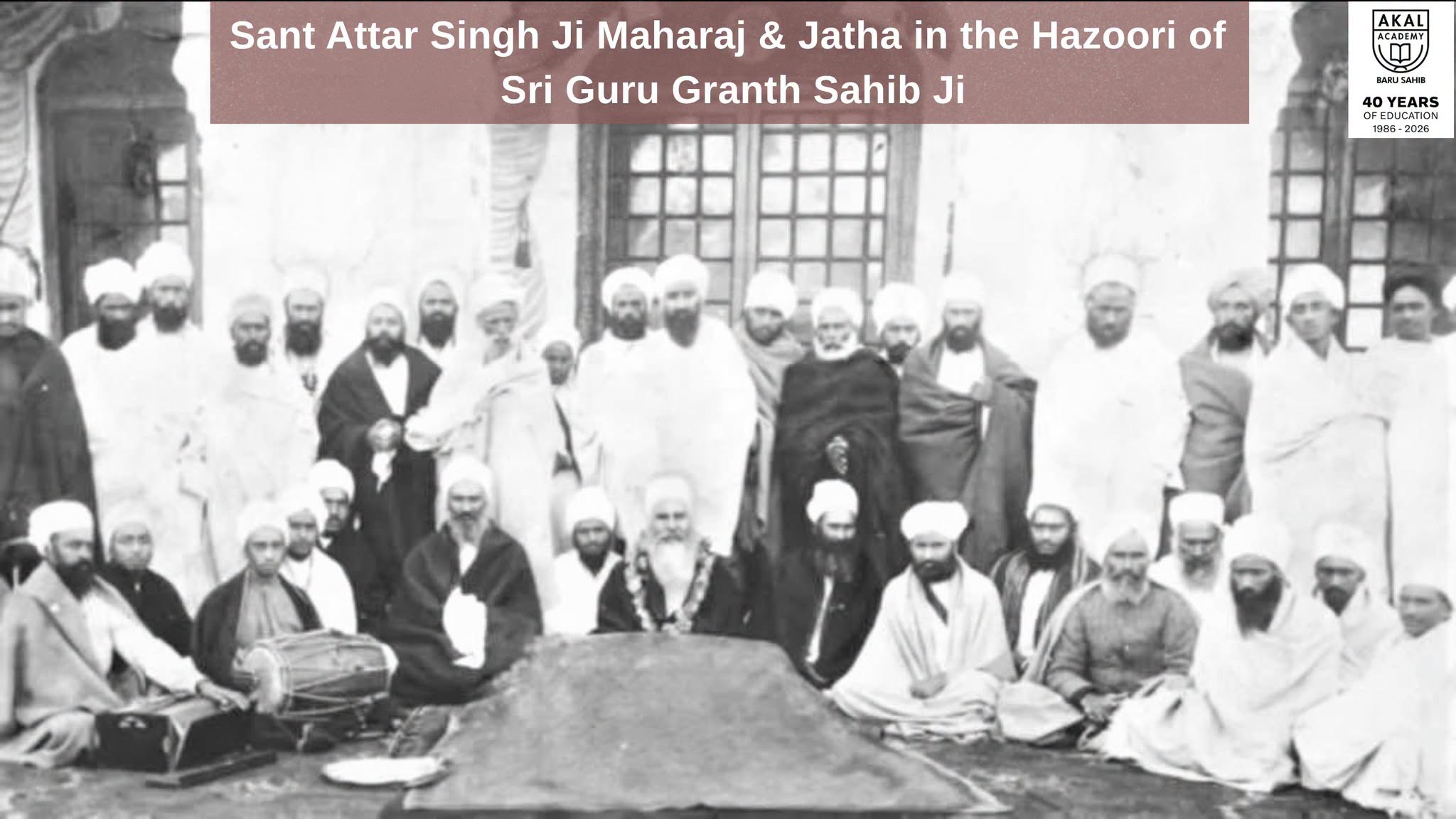
Travelling across North India, Sant Ji inspired Sikhs to receive Amrit di Pahul. Through the Panj Pyare of Sant Ji’s Jatha, an estimated 14 lakh or more people received Amrit through the grace of Guru Gobind Singh Ji Maharaj.
Several prominent personalities, including Master Tara Singh Ji, Bhai Harkishan Singh Ji, Malik Mohan Singh Ji, Malik Hardit Singh Ji, Sant Teja Singh Ji, and Sikh Raja-Maharajas, are also said to have received Amrit through the Panj Pyare.
5. The Educational Vision
Sant Attar Singh Ji Maharaj brought a new perspective to education.
In 1906, Sant Ji started an all-girls’ school at Mastuana Sahib, followed by schools for boys and the establishment of Akal Degree College.
At Mastuana Sahib, modern scientific education was imparted alongside the Divine knowledge of Guru Nanak Sahib, reflecting Sant Ji’s vision of education rooted in knowledge, spiritual wisdom and moral strength.
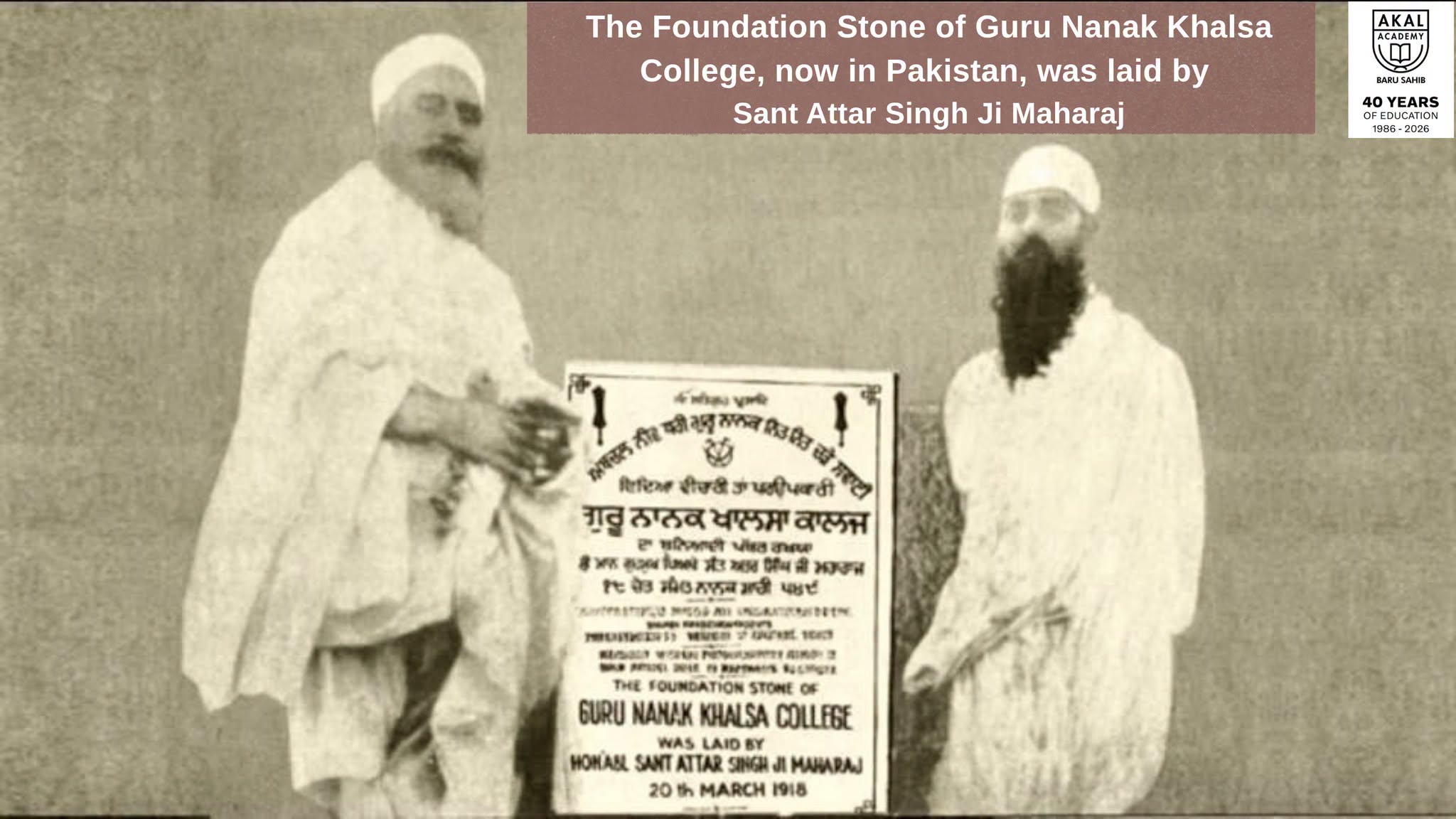
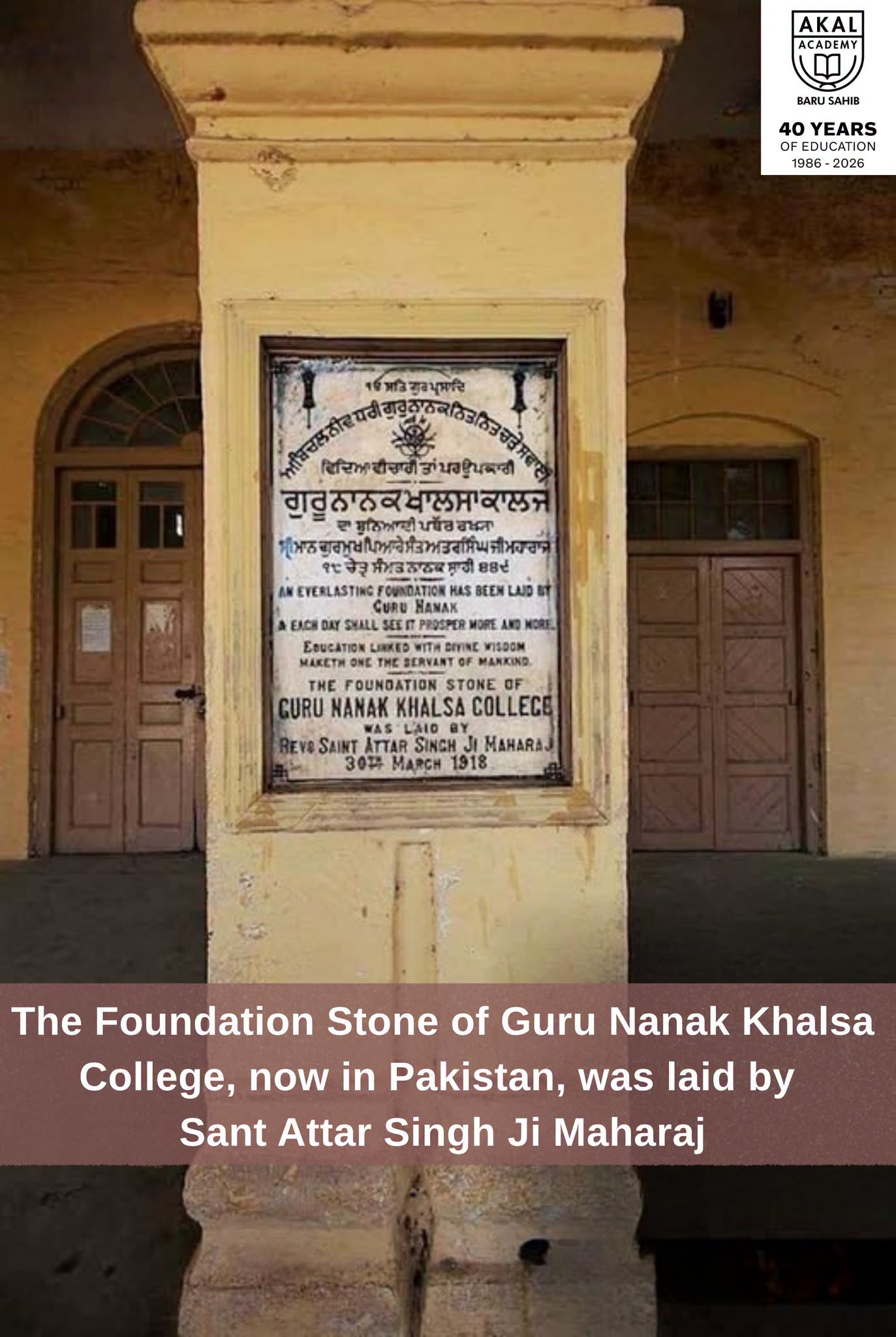
In 1918, Sant Ji laid the foundation stone of the historic Guru Nanak Khalsa College in Gujranwala (now in Pakistan).
6. The Foundation of Banaras Hindu University
In 1914, Pandit Madan Mohan Malviya invited Sant Attar Singh Ji Maharaj to the foundation ceremony of the proposed Hindu University and requested five Akhand Paths of Sri Guru Granth Sahib Ji.
Sant Ji accepted the request. Following the completion of the Akhand Paths and Kirtan, Sant Ji laid the foundation stone of Banaras Hindu University.
7. The Vision Continues
After passing the baton to Sant Teja Singh Ji, Sant Attar Singh Ji Maharaj left for the heavenly abode on 1 February 1927, to unite with the Divine Light.
The vision of combining modern education with spiritual and moral values continued through those inspired by Sant Ji and eventually took shape at Baru Sahib.
Coming Up — Episode 2 | Sant Teja Singh Ji: Carrying the Vision Forward
1. How Niranjan Singh Mehta Ji transformed into Sant Teja Singh Ji.
2. The meeting with Sant Attar Singh Ji Maharaj.
3. Shaping the vision of value-based education.
Stay Tuned...
Akal Academy Baru Sahib, celebrating 40 Years of Education (1986- 2026).
Call us – 18001807755 | WhatsApp us: 9816400510
Website - www.akalacademybarusahib.com See less
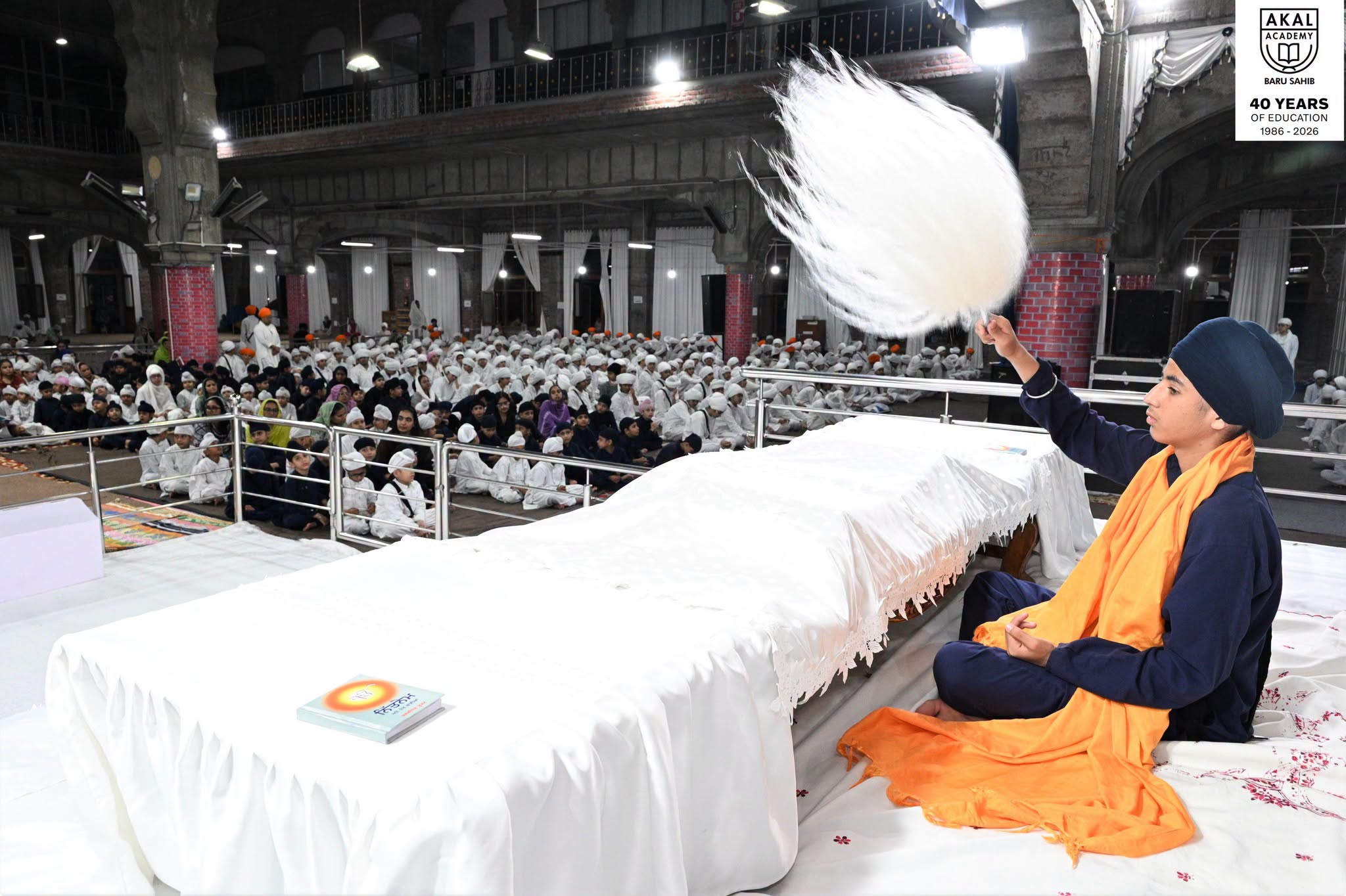
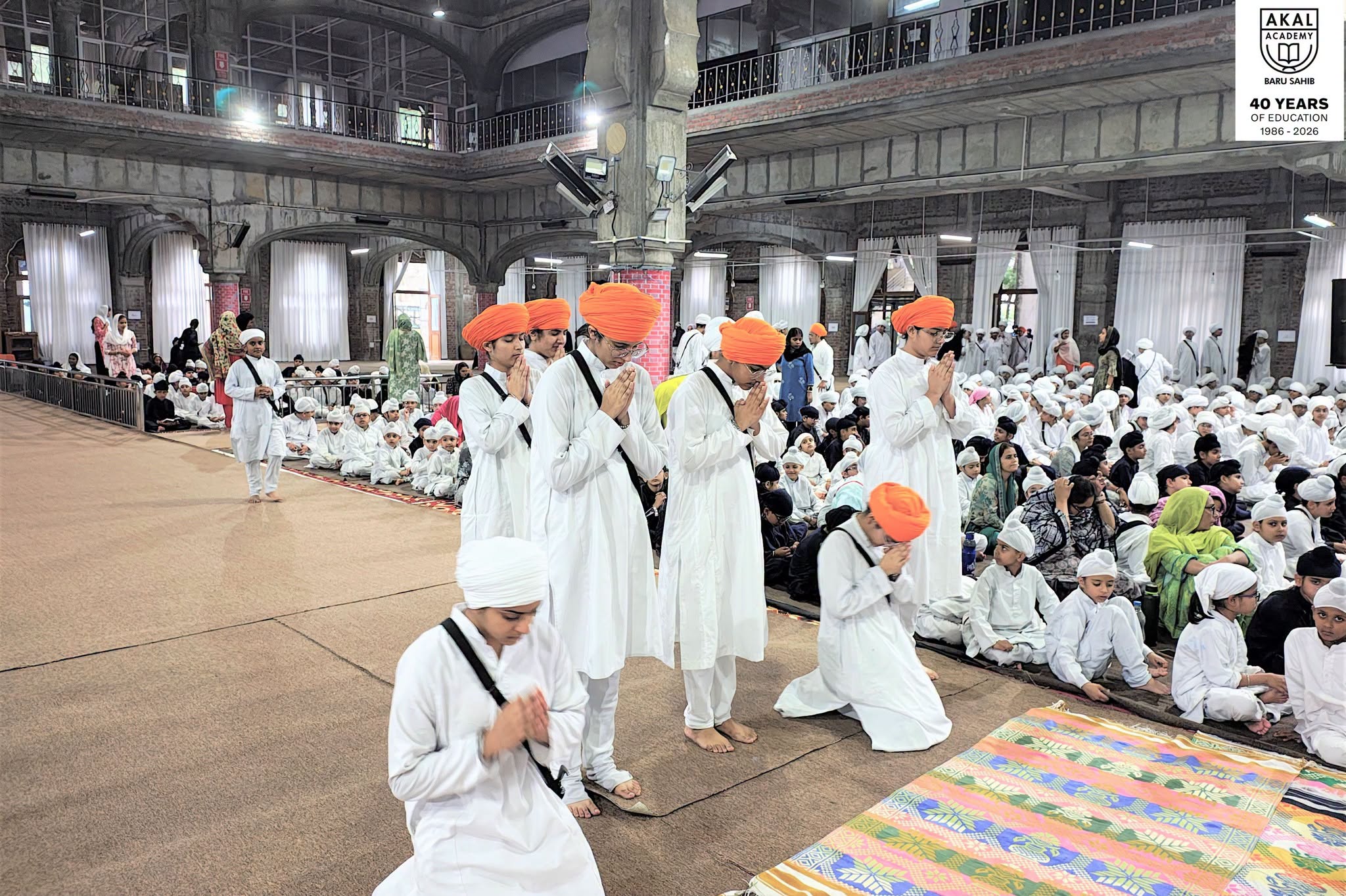
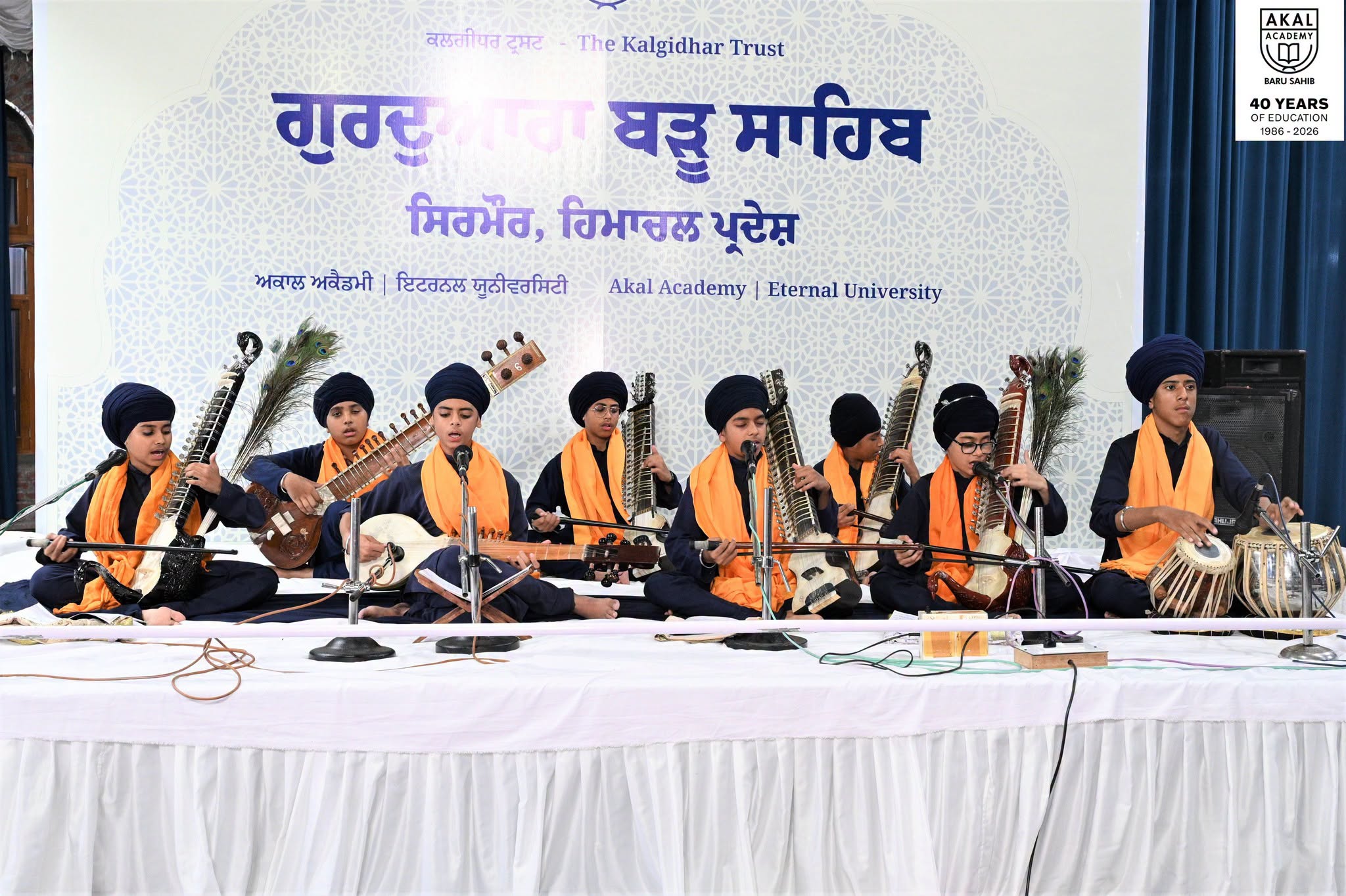
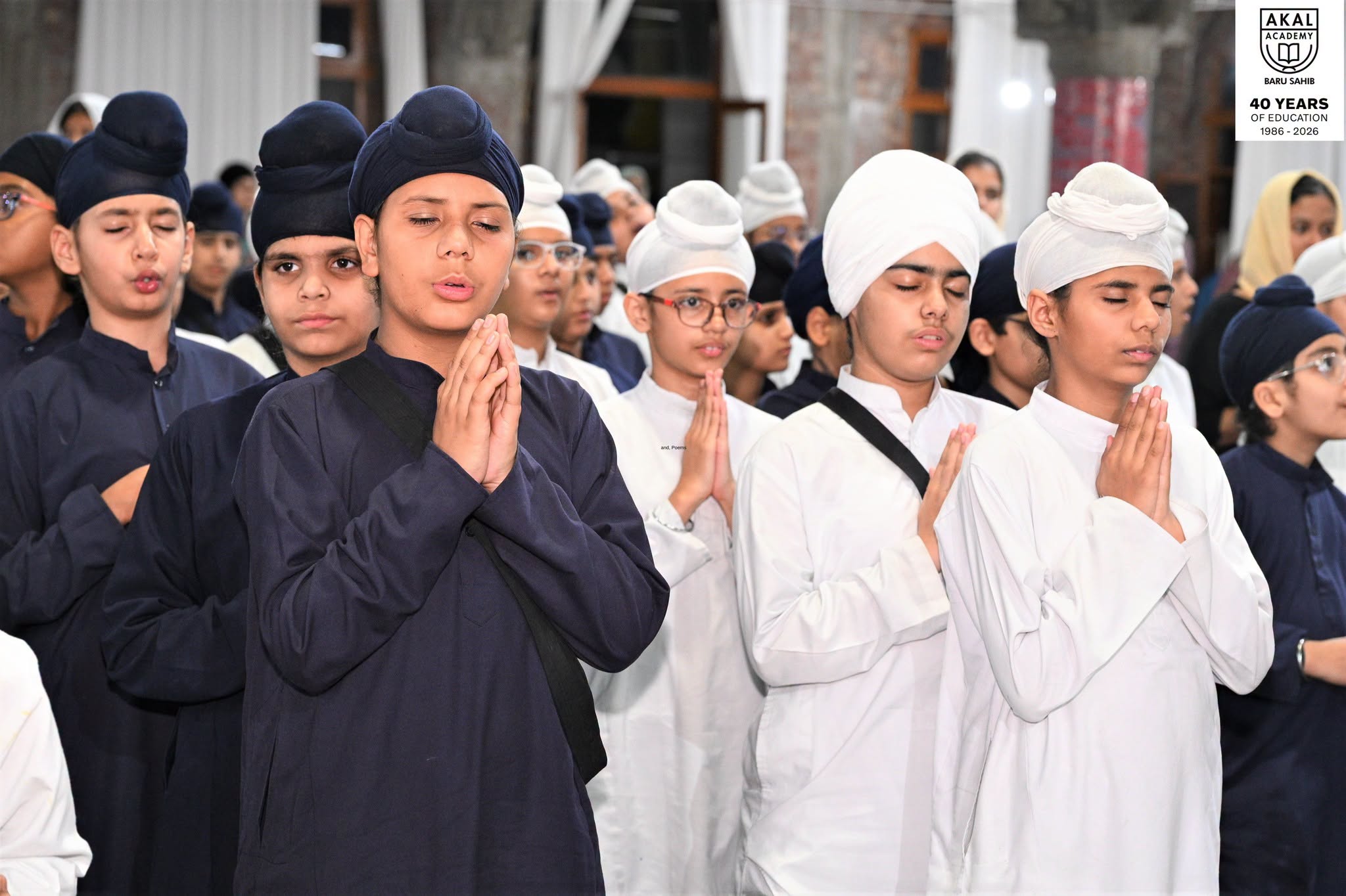
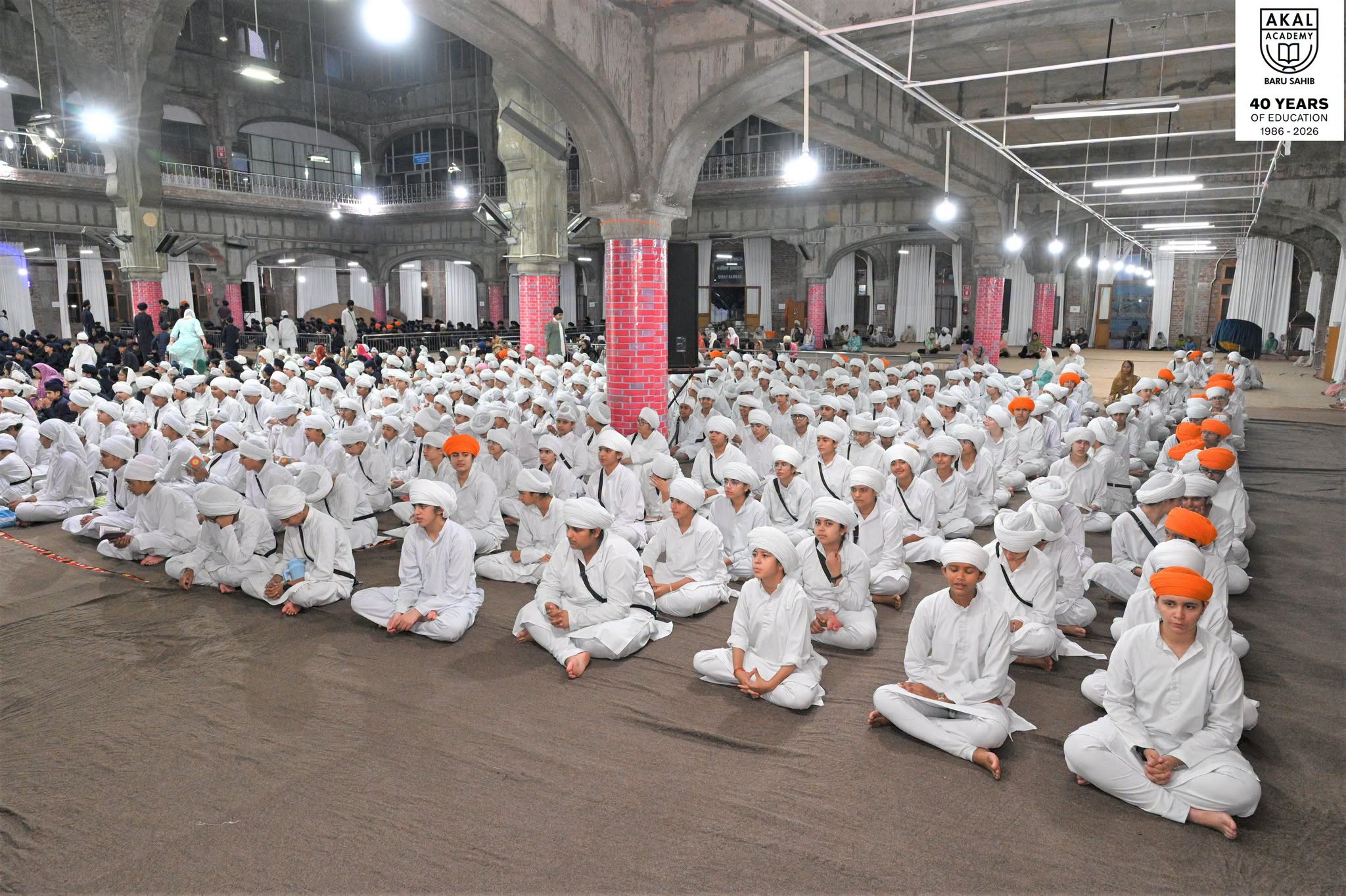
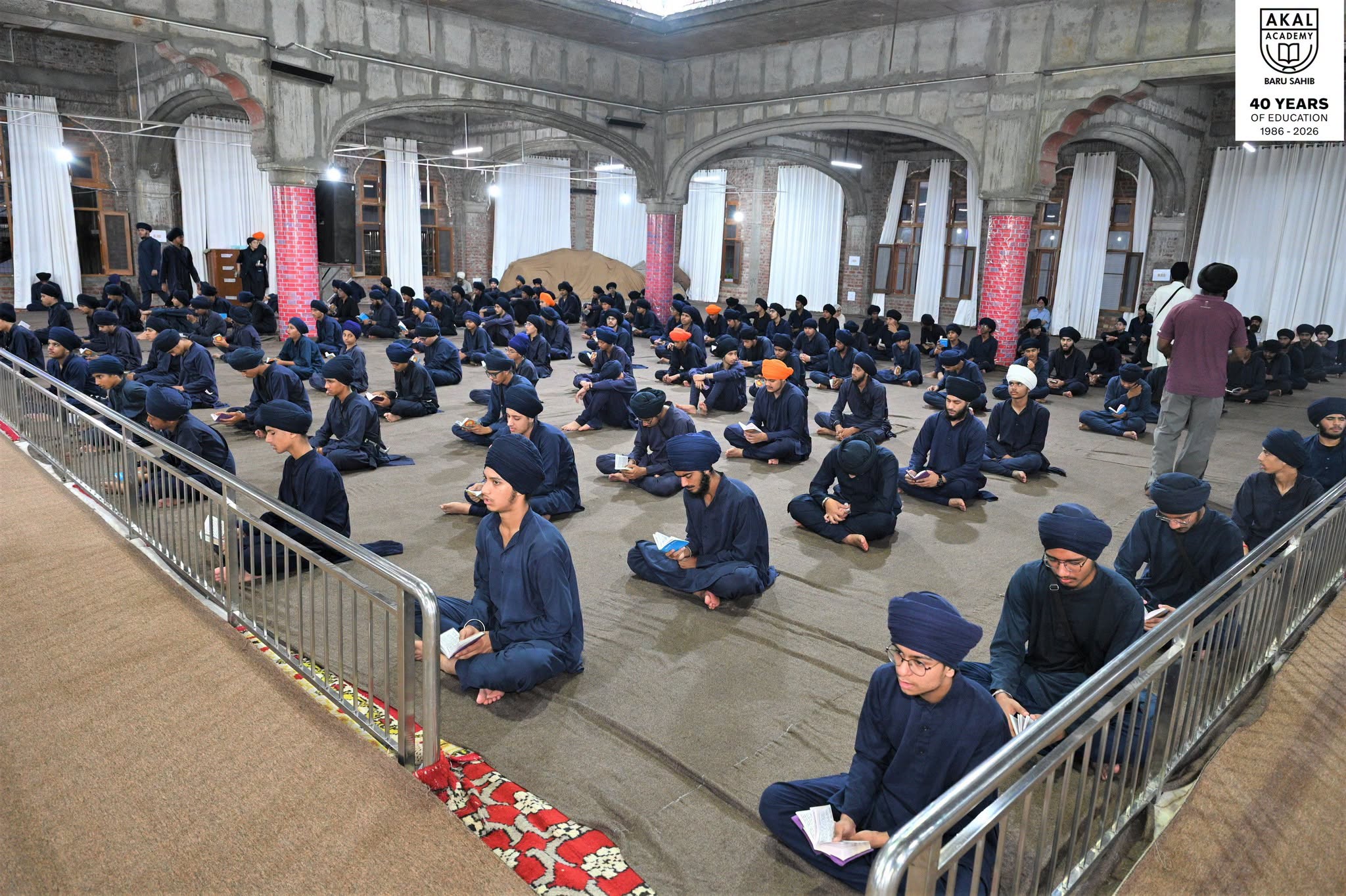
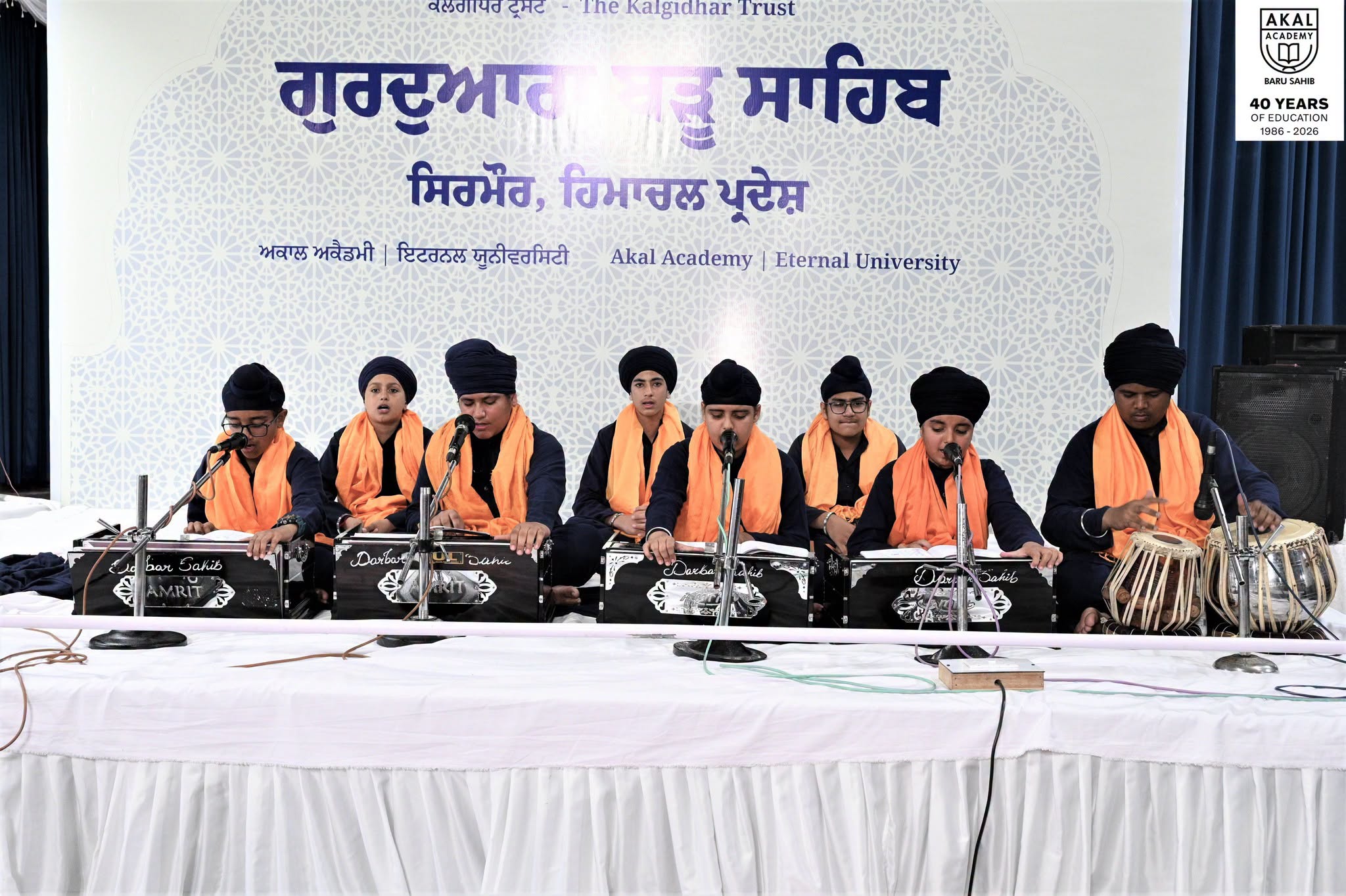
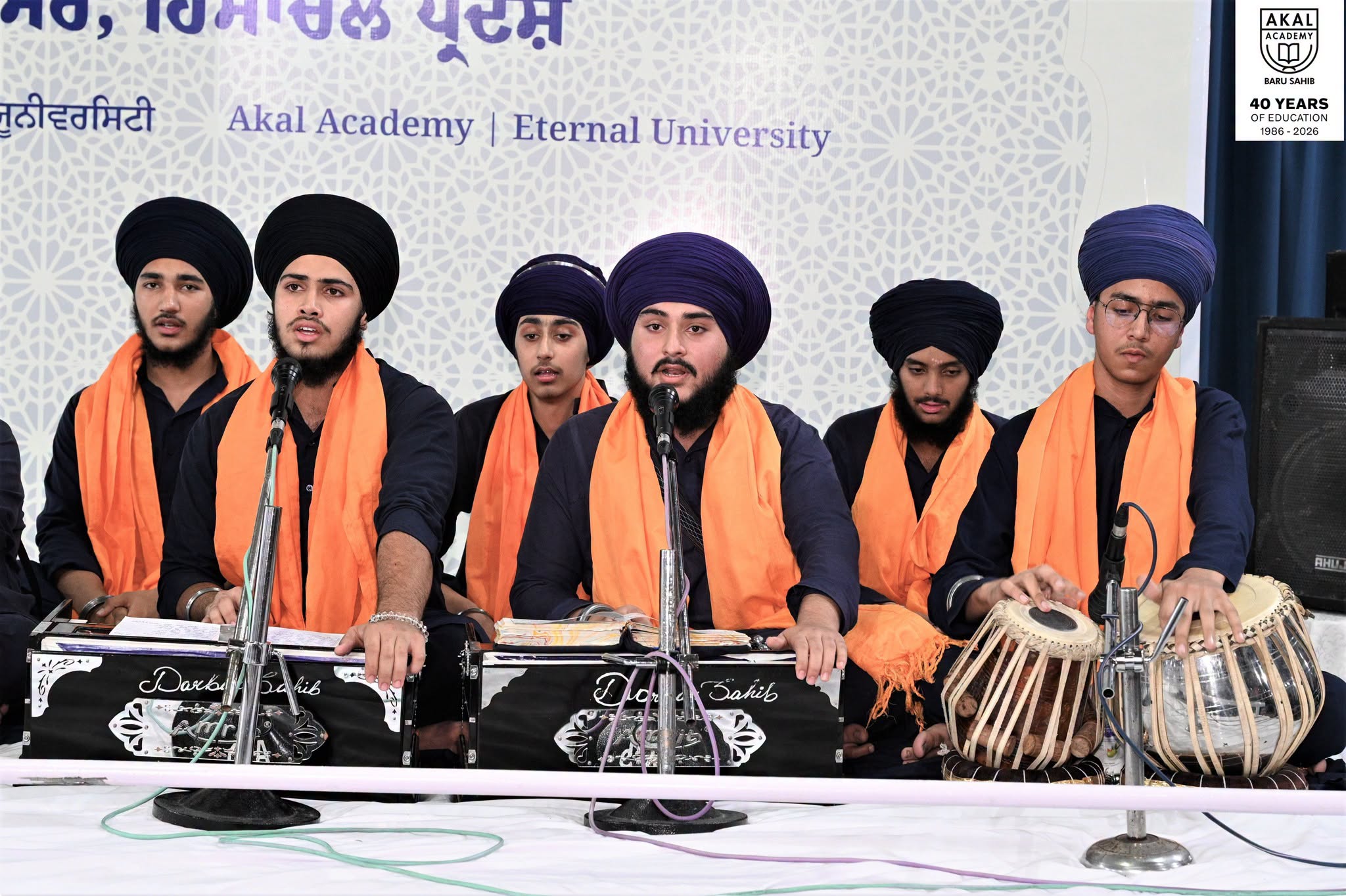
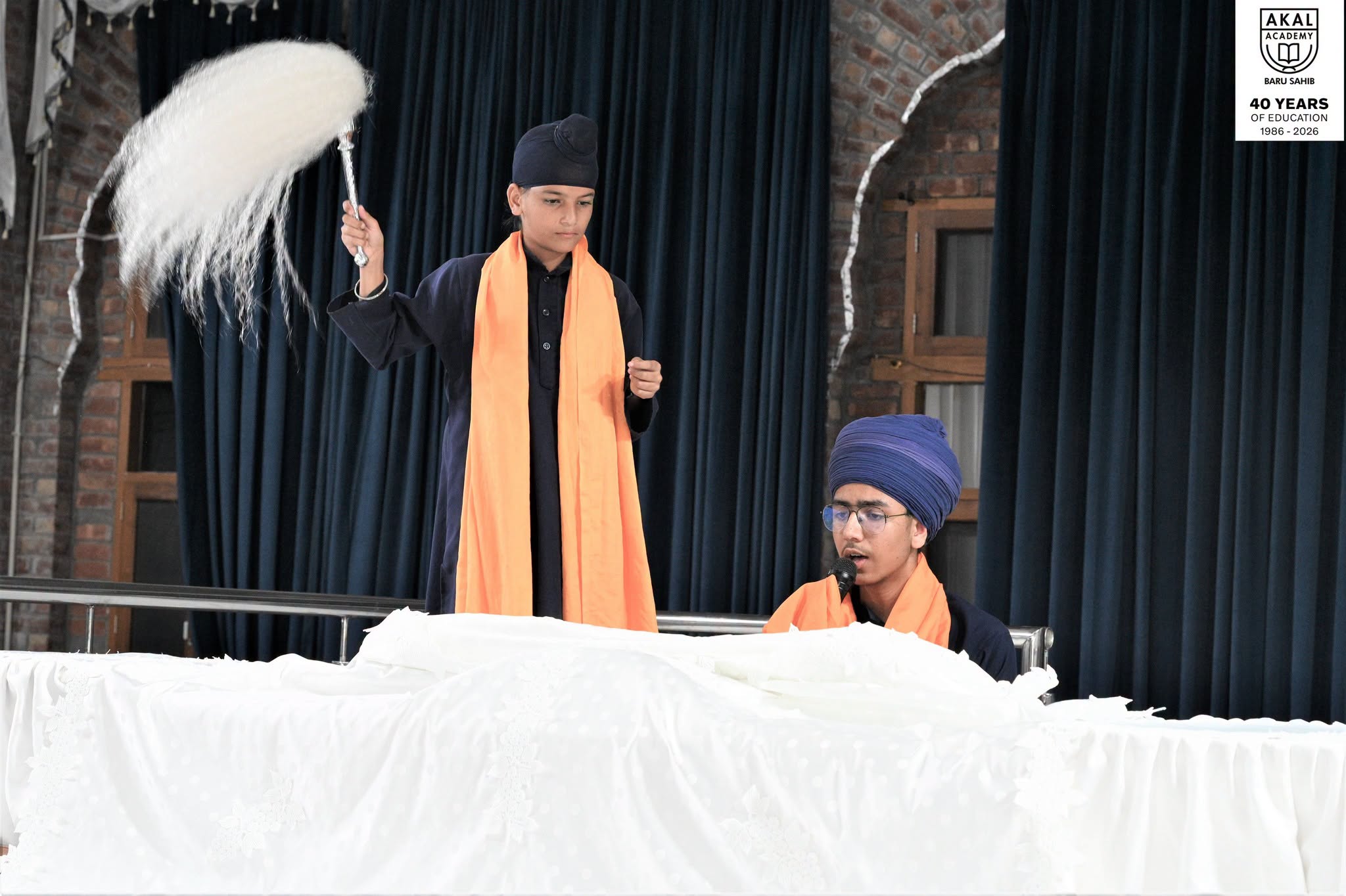
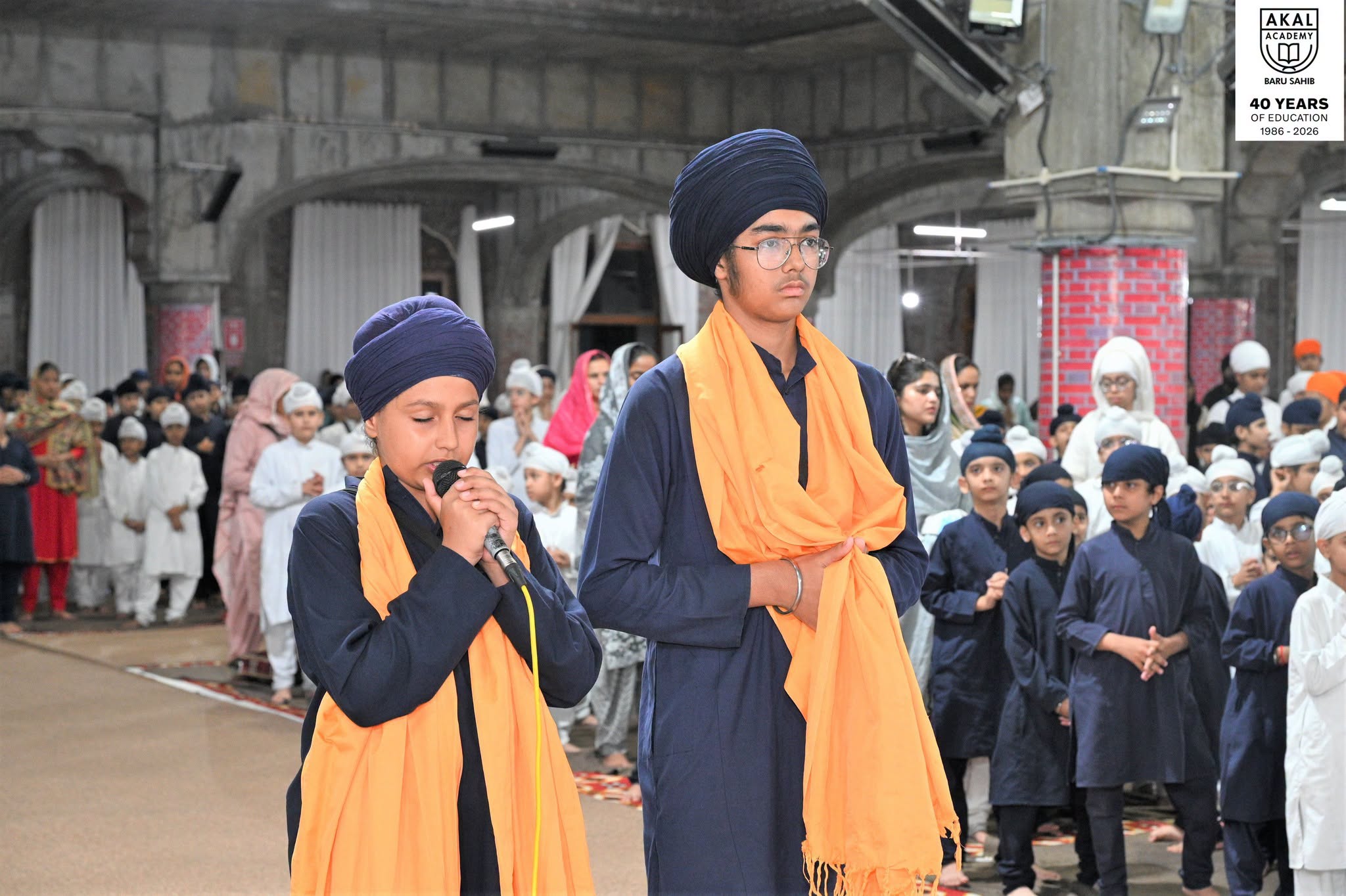
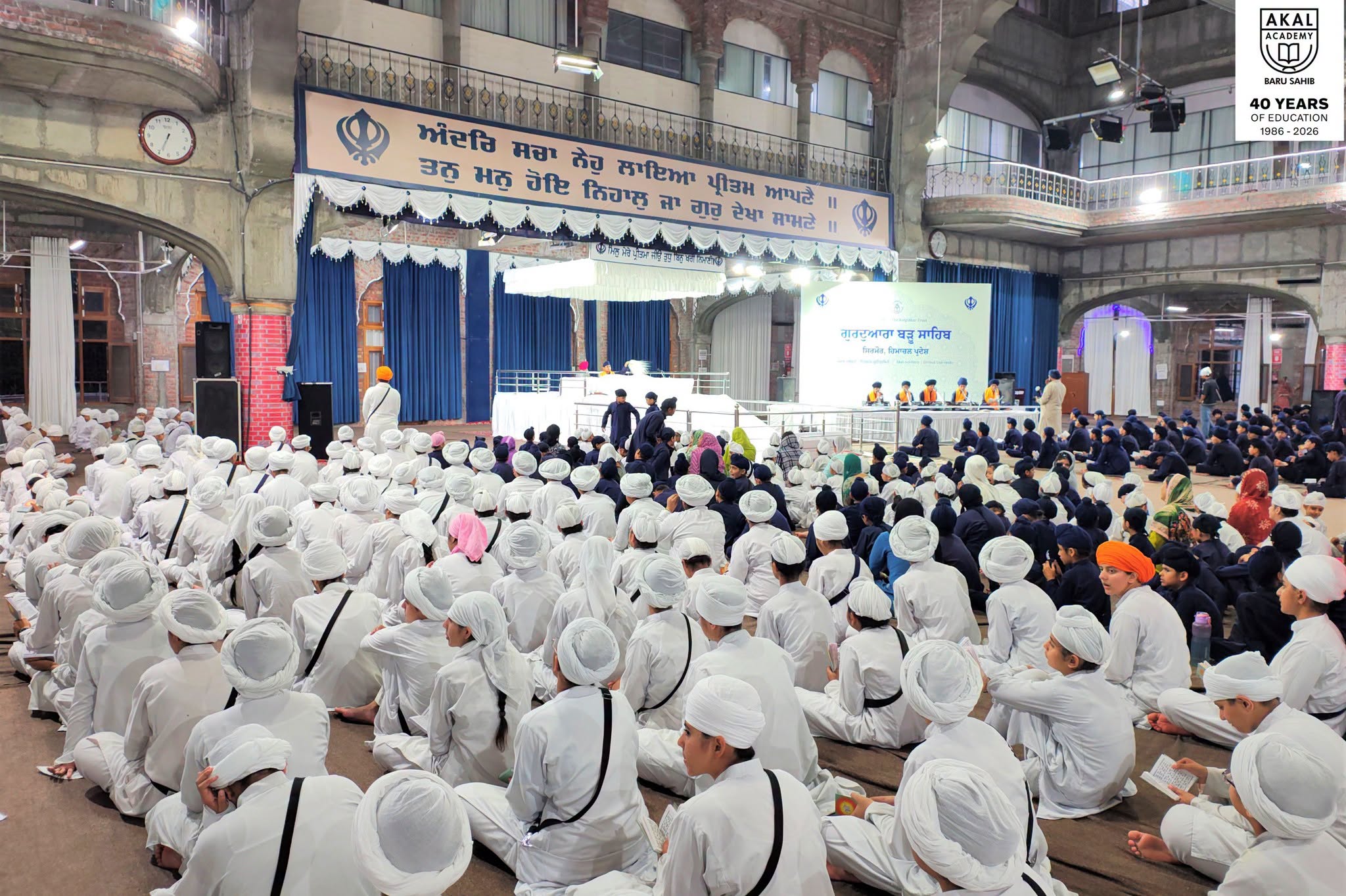
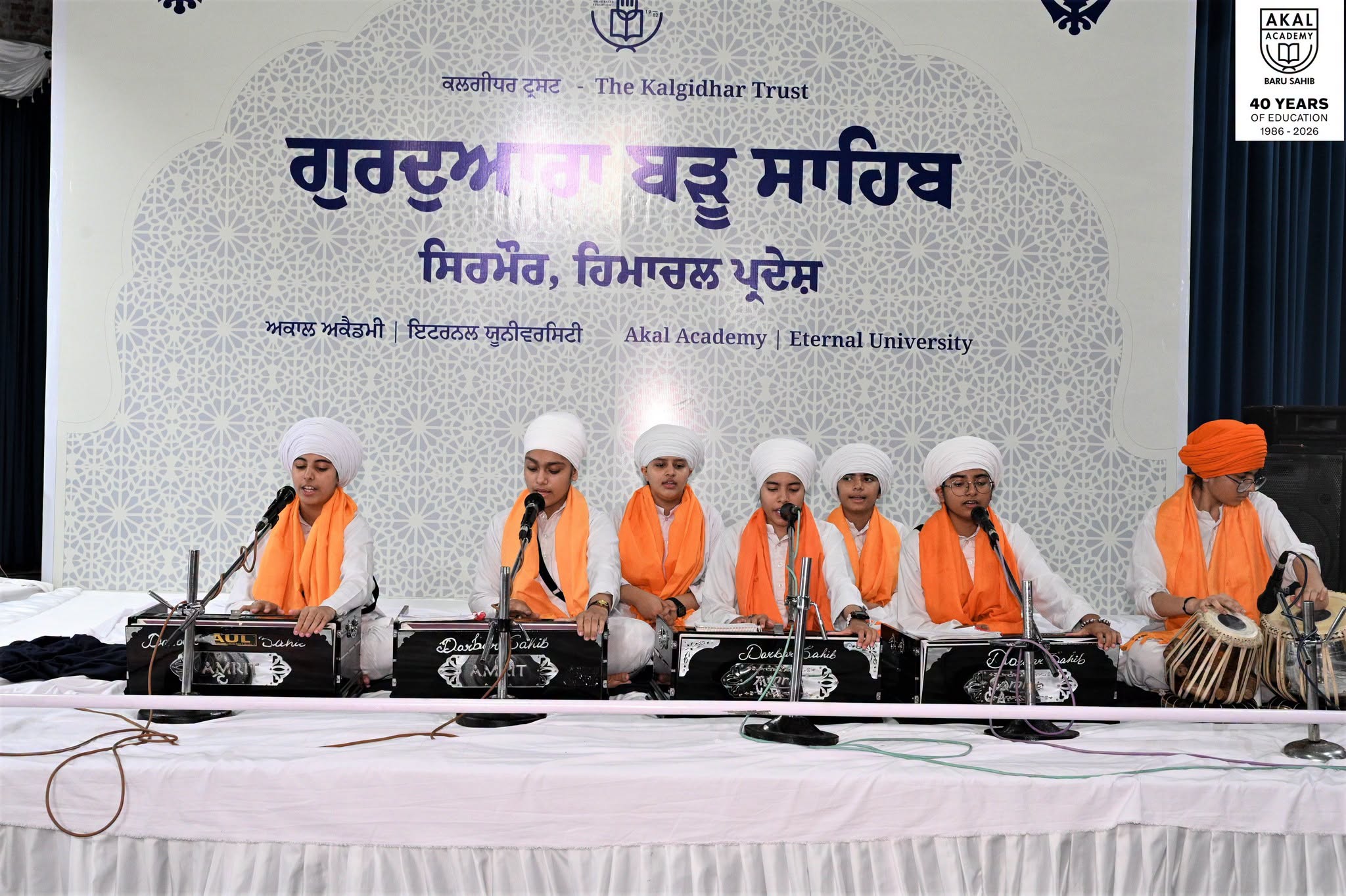
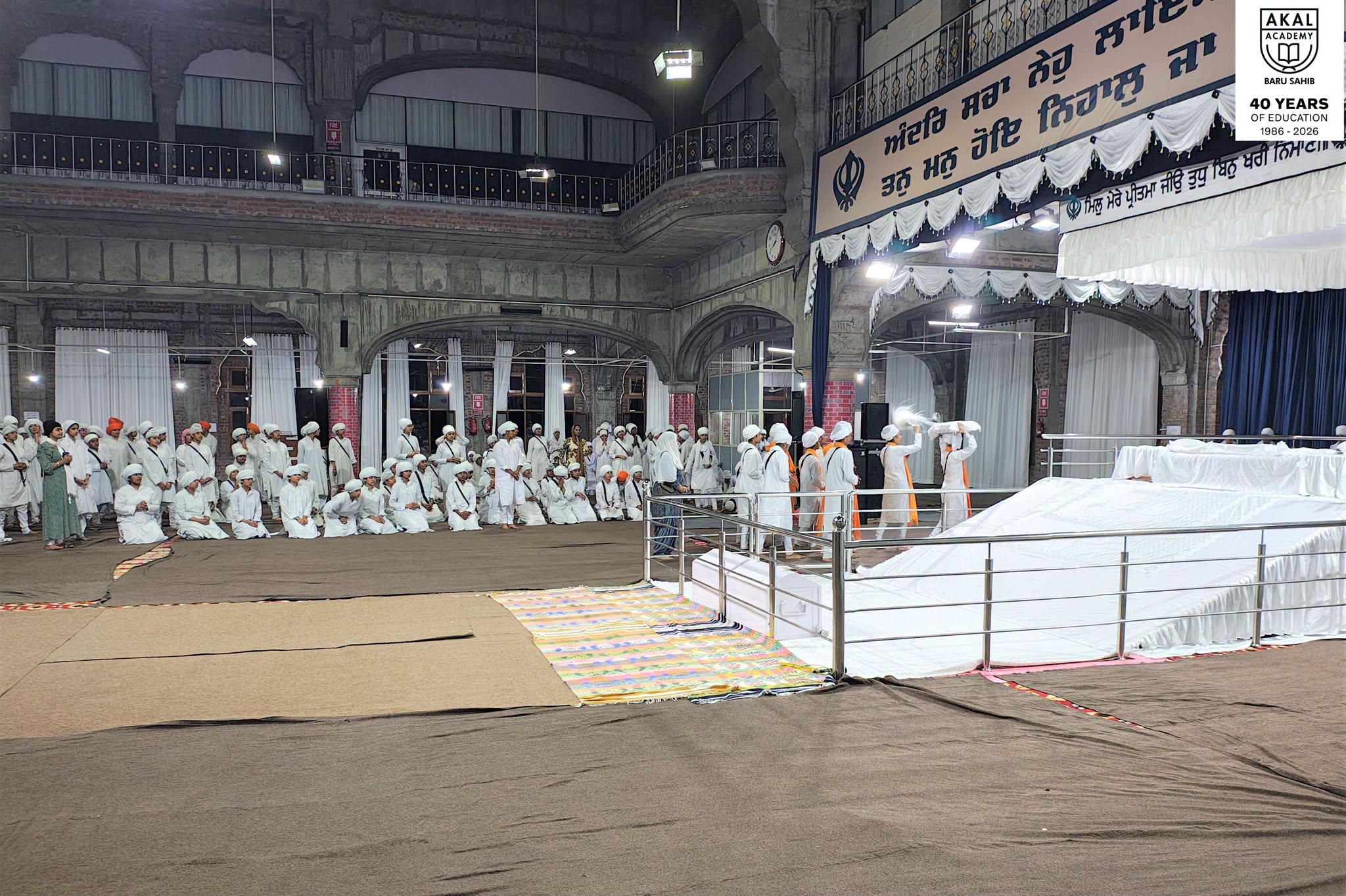
The Pehla Prakash Purab of Shri Guru Granth Sahib Ji was celebrated yesterday at Akal Academy Baru Sahib by the students of Akal Academy Baru Sahib. The students recited the history of this pious occasion and presented Shabads and poems dedicated to Guru Sahib Ji.
A Brief History
Sri Guru Granth Sahib Ji, initially known as the Adi Granth Sahib Ji, was compiled by Sri Guru Arjan Dev Ji in 1604. The first Parkash of the Adi Granth Sahib JI took place at the revered Harmandir Sahib Ji, also famously known as Darbar Sahib, in Amritsar.
Shri Guru Arjan Dev Ji, the Fifth Guru Sahib, included the Banis of the first five Guru Sahibs - Shri Guru Nanak Dev Ji, Shri Guru Angad Dev Ji, Shri Guru Amar Das Ji, Shri Guru Ram Das Ji and Shri Guru Arjan Dev Ji, along with the Bani of:
• Bhagats: 15 medieval saints and spiritual poets, including Sant Kabir Das Ji, Ravidas Ji, Baba Farid Ji and Sant Namdev Ji.
• Bhatts: 11 Bhatts who contributed their sacred verses in praise of the Guru Sahibs.
• Other Gursikhs: Sacred verses contributed by figures such as Bhai Sundar Ji, Bhai Satta Ji and Bhai Balwand Ji.
Later, Shri Guru Gobind Singh Ji incorporated the sacred Banis of Shri Guru Tegh Bahadur Ji into the Adi Granth Sahib at Takht Shri Damdama Sahib.
In 1708, at Takht Shri Hazur Sahib, Nanded, Shri Guru Gobind Singh Ji bestowed the Gurta Gaddi upon Sri Guru Granth Sahib Ji, declaring Sri Guru Granth Sahib Ji to be the eternal Guru of the Sikhs.
A humble tribute by Akal Academy Baru Sahib.
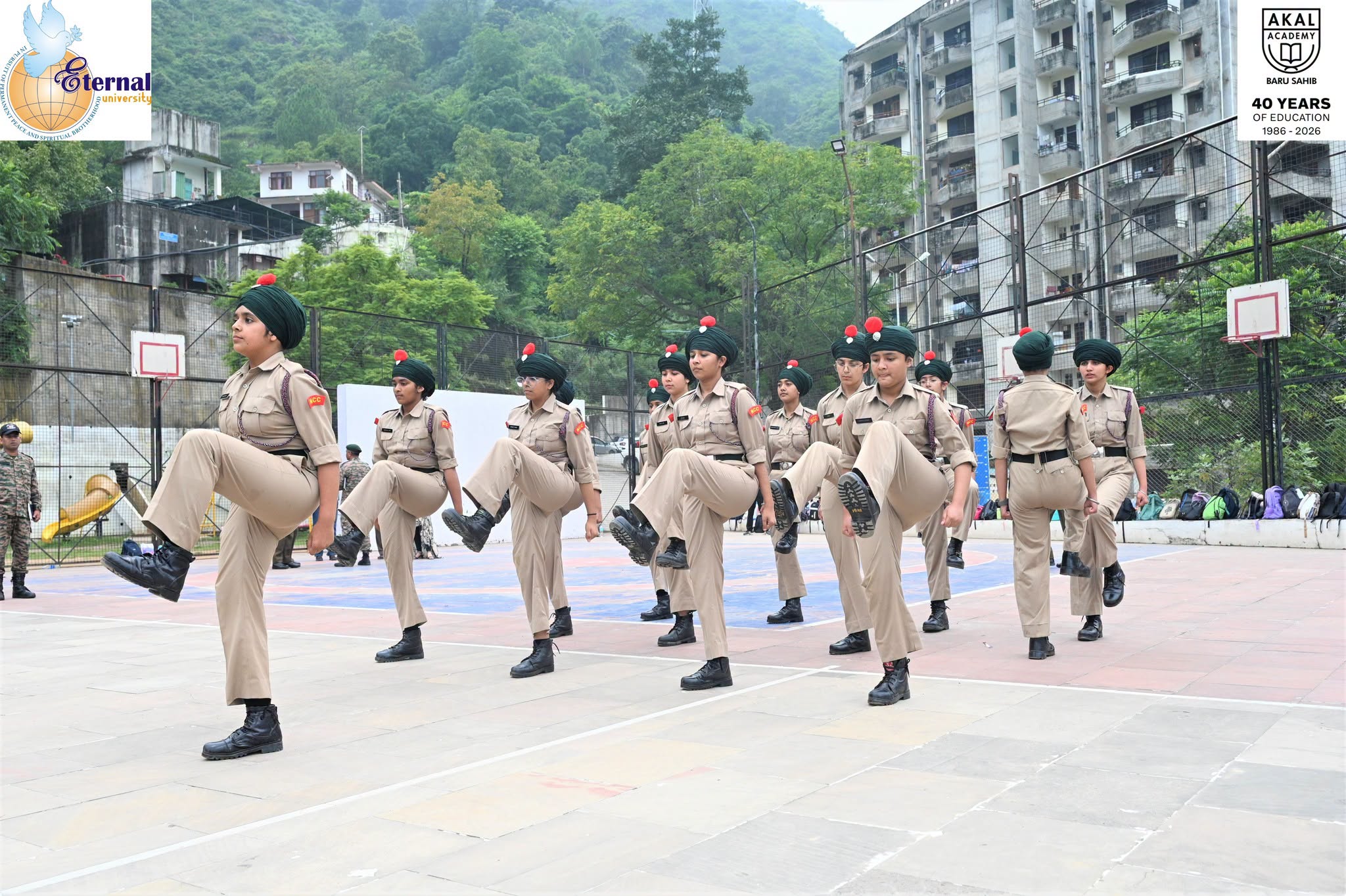
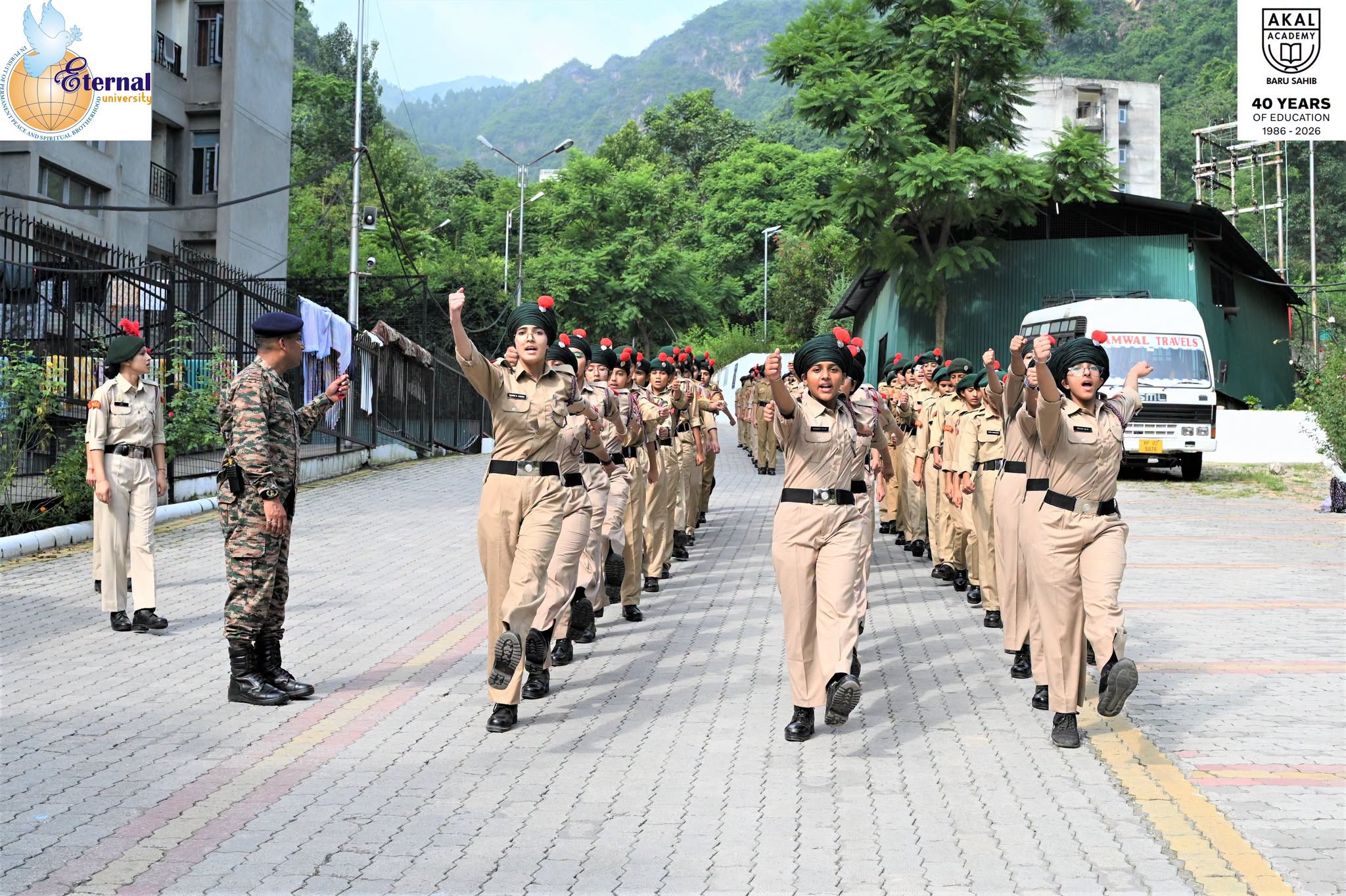
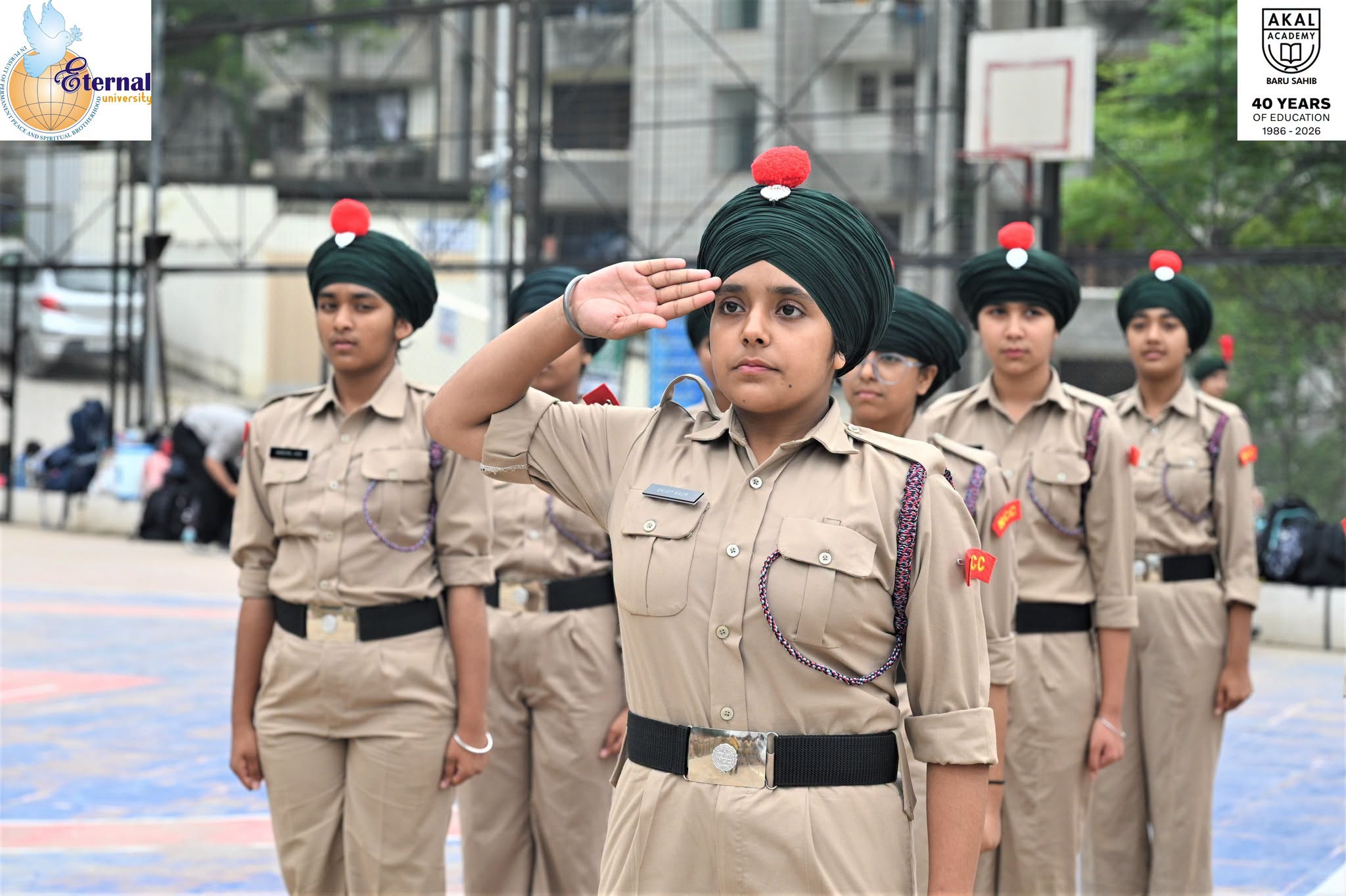
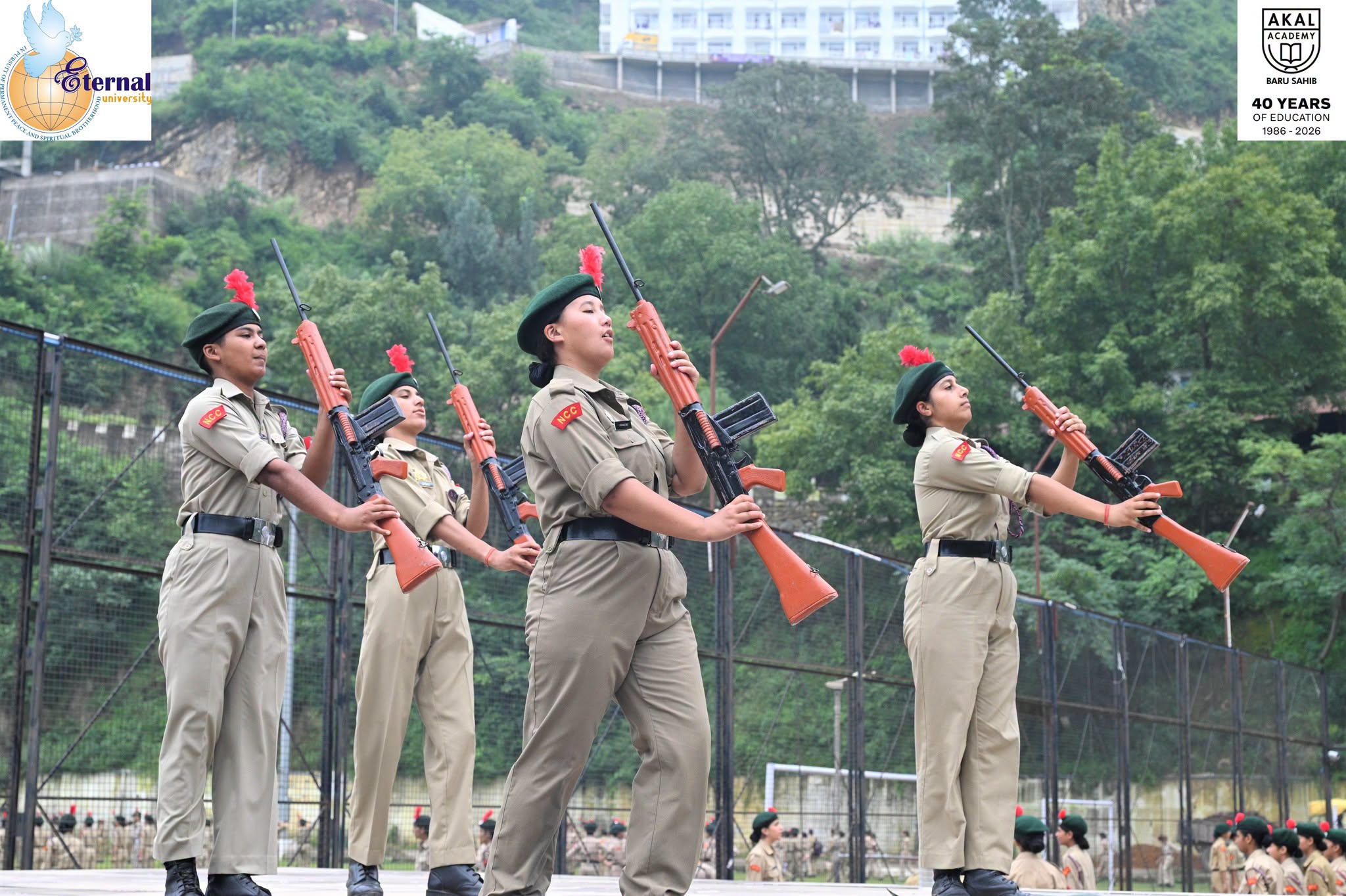
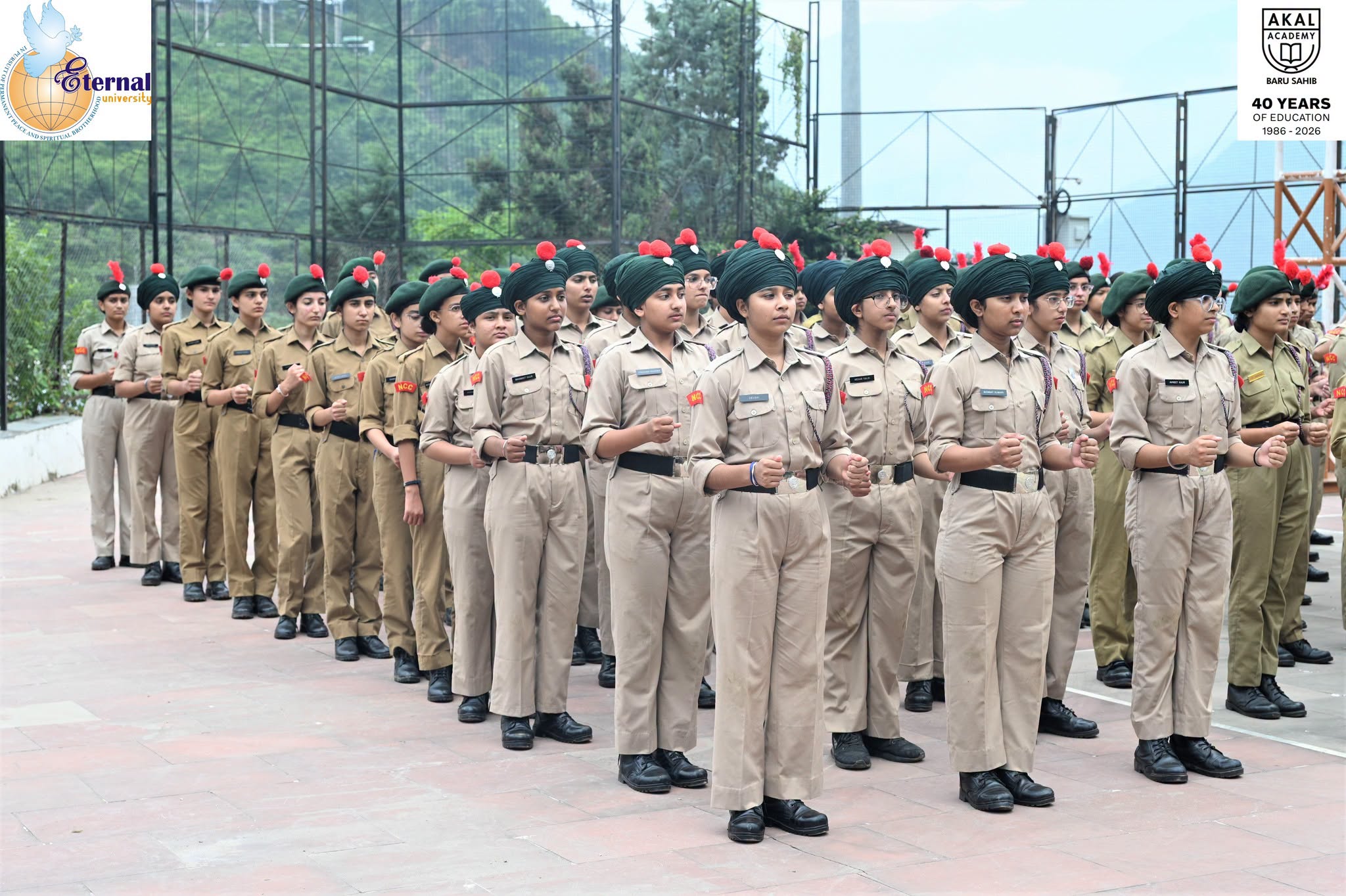
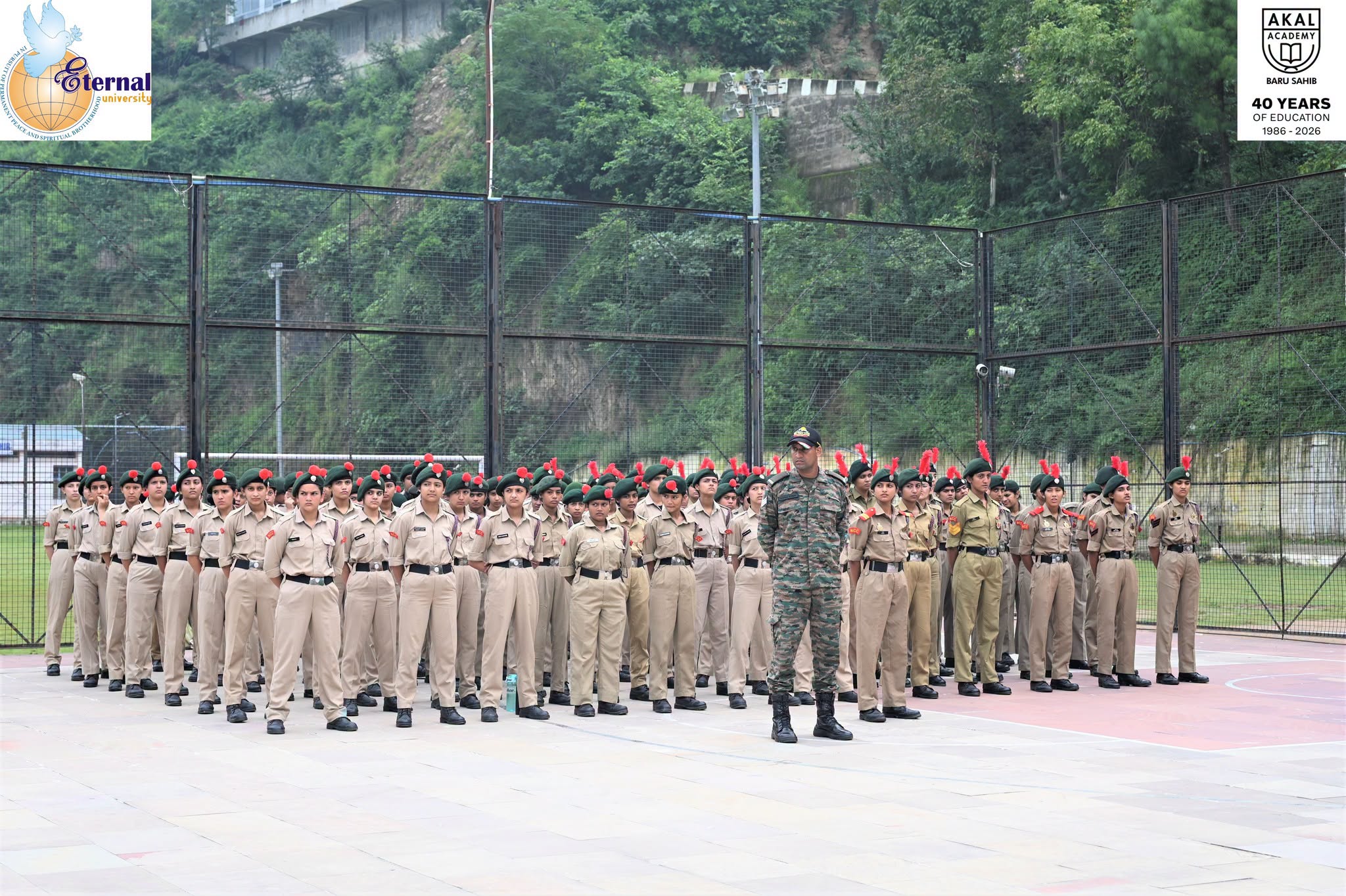
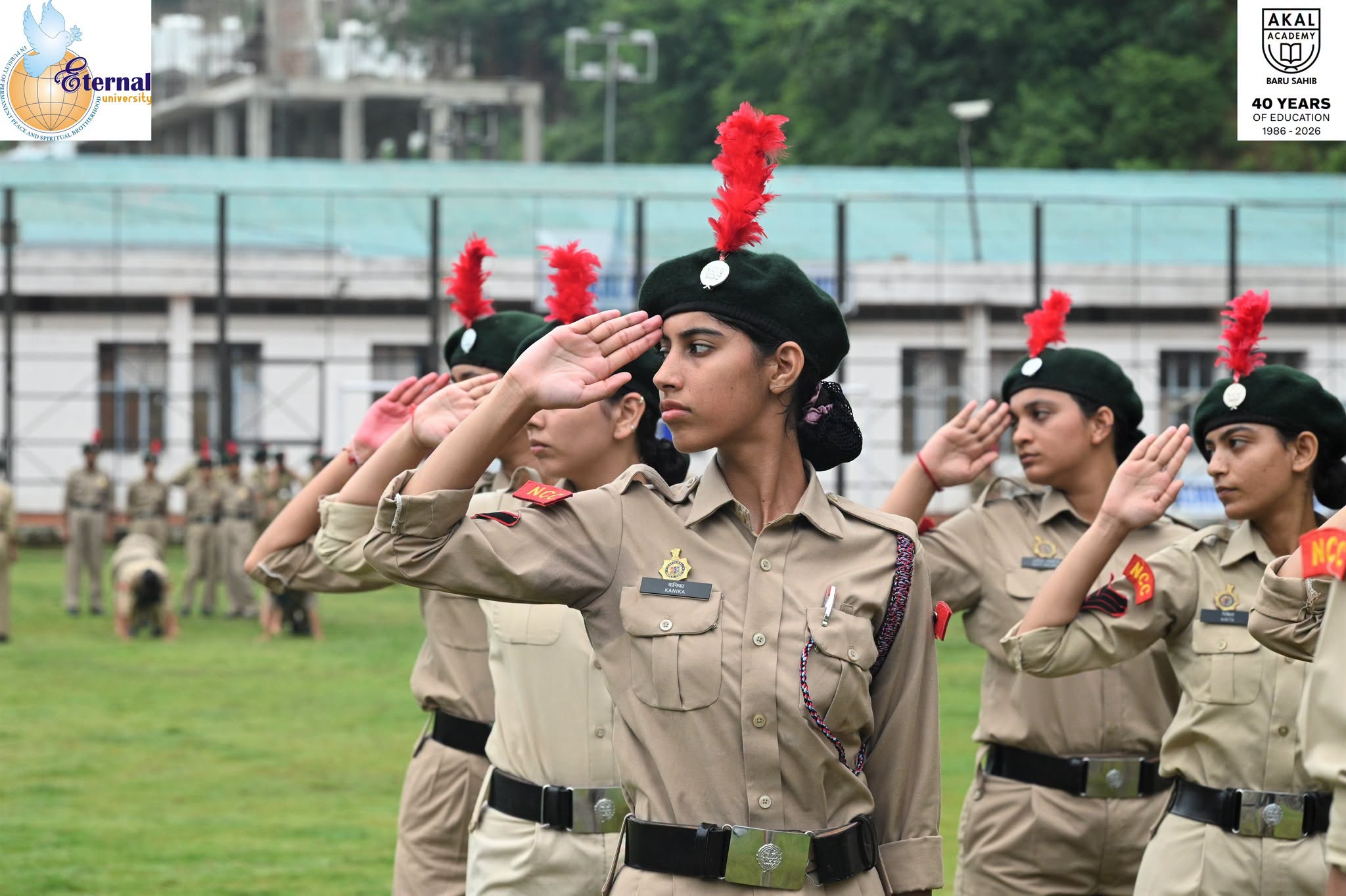
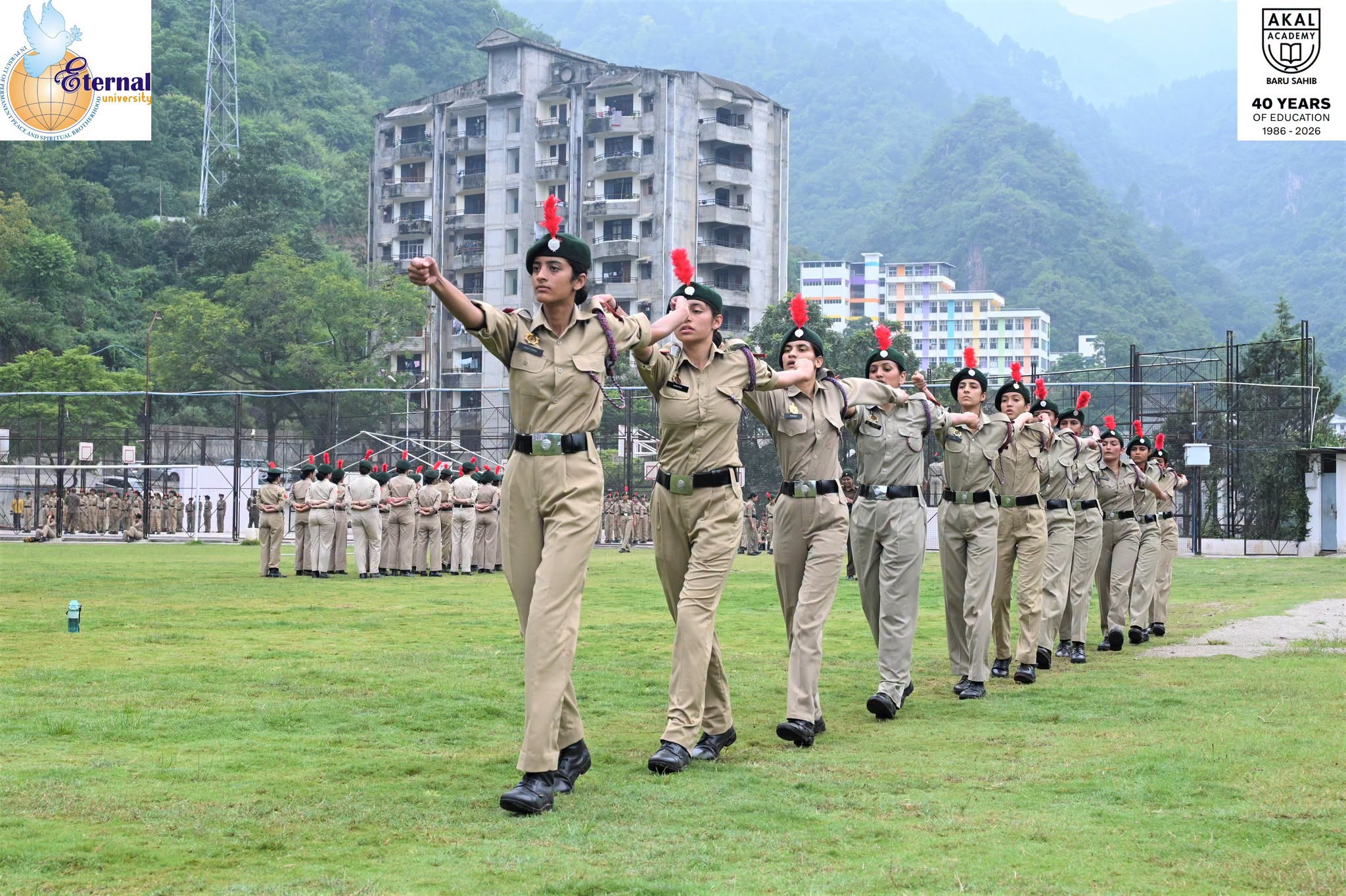
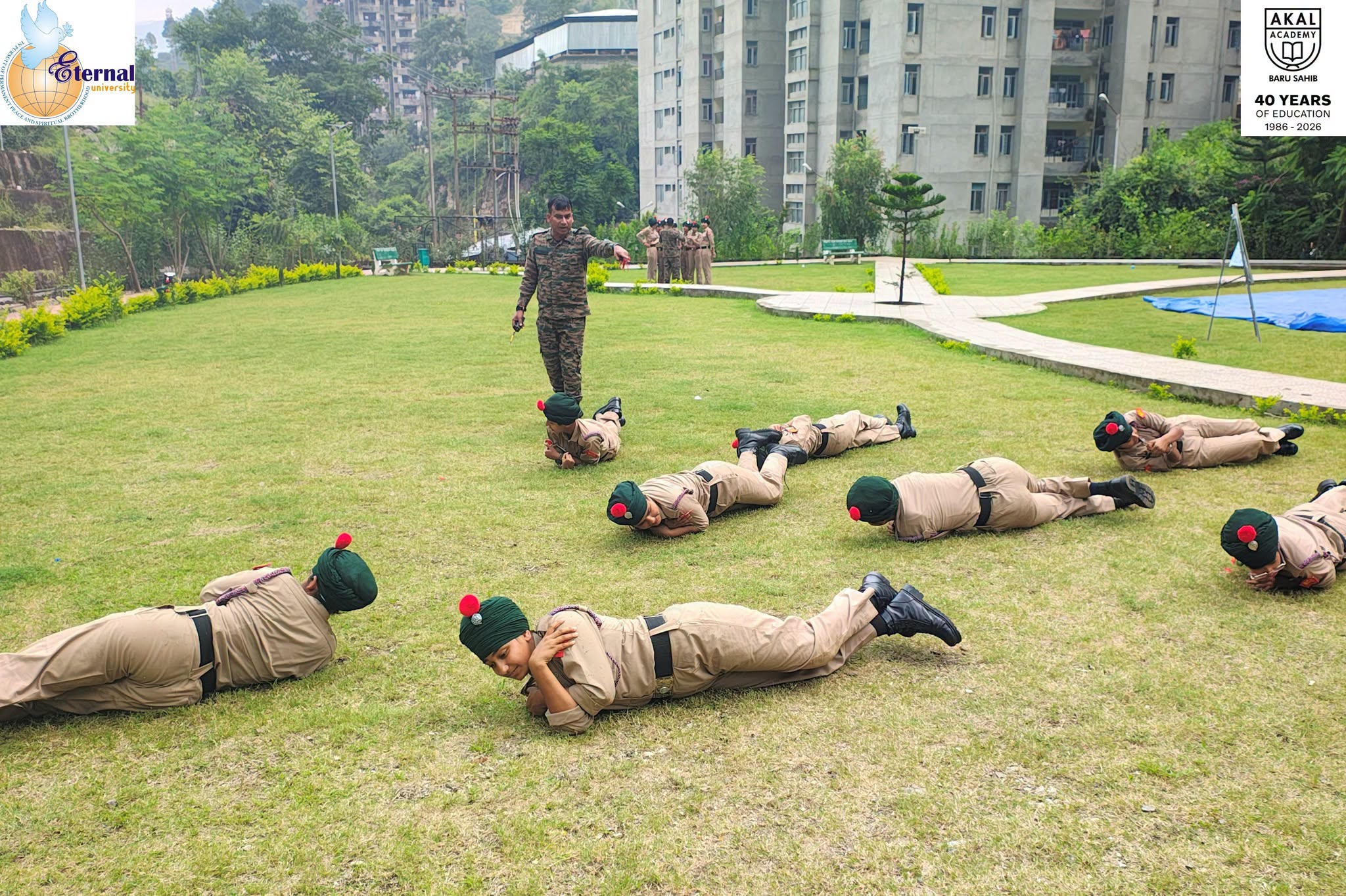
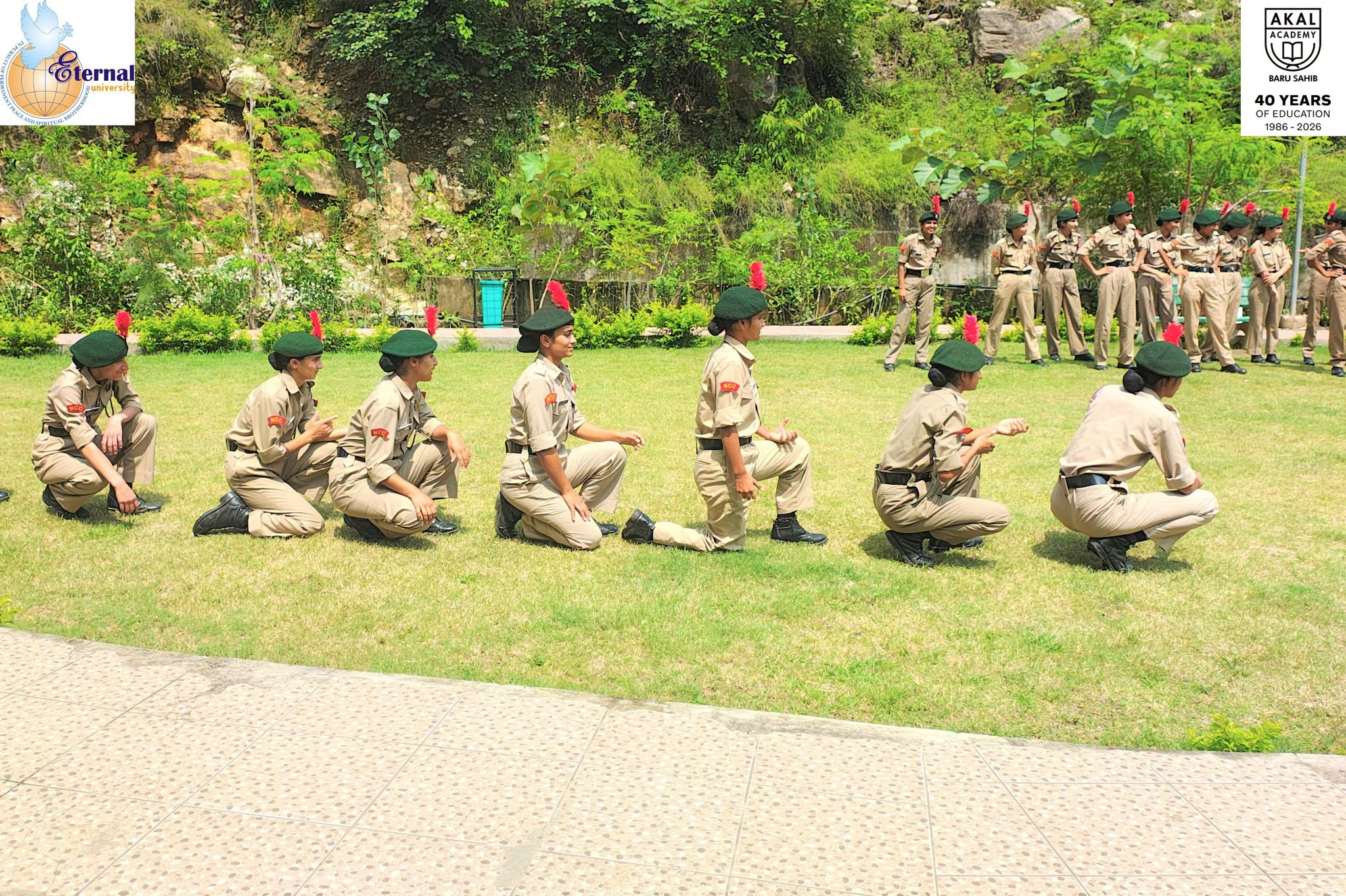
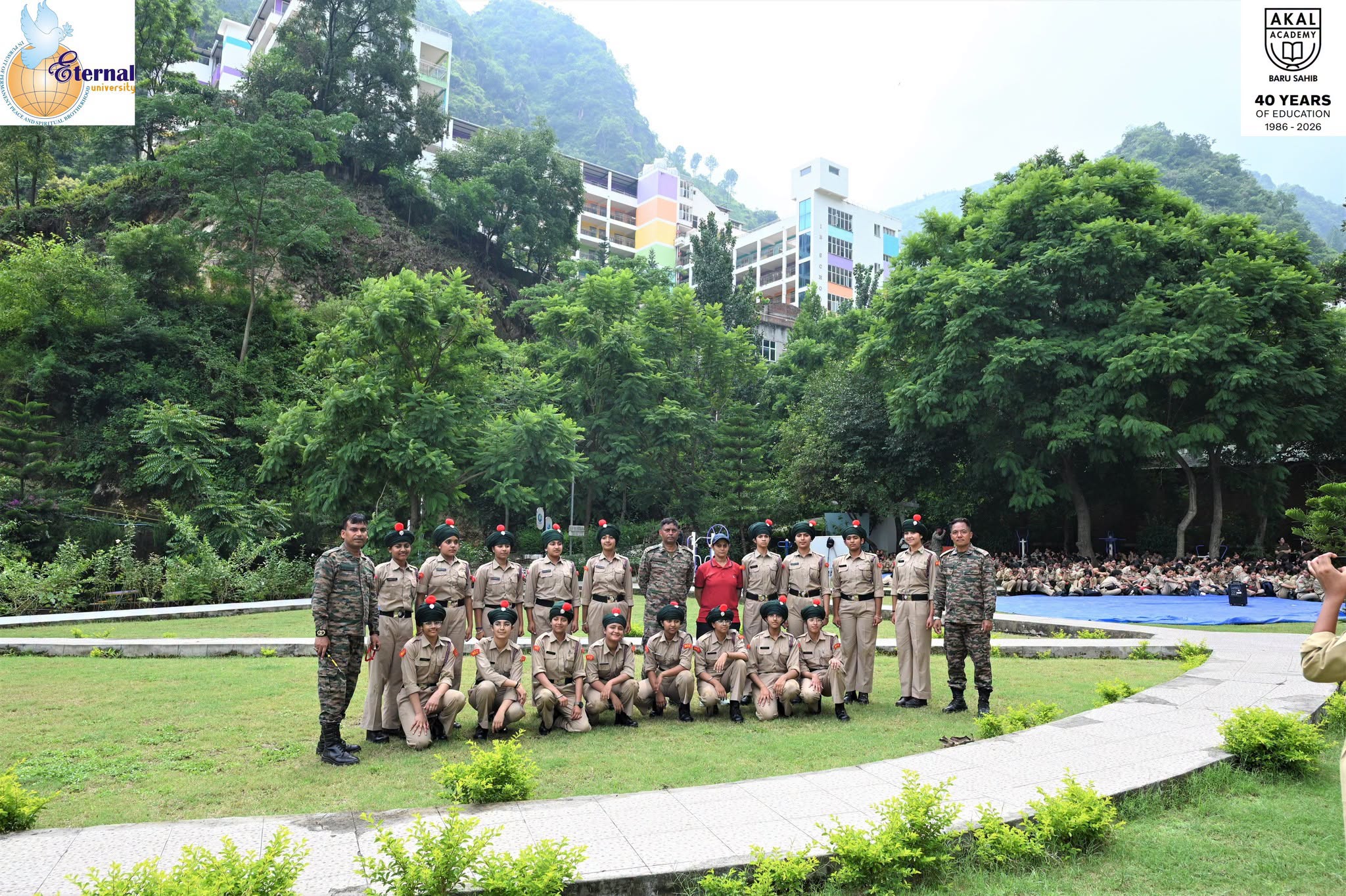
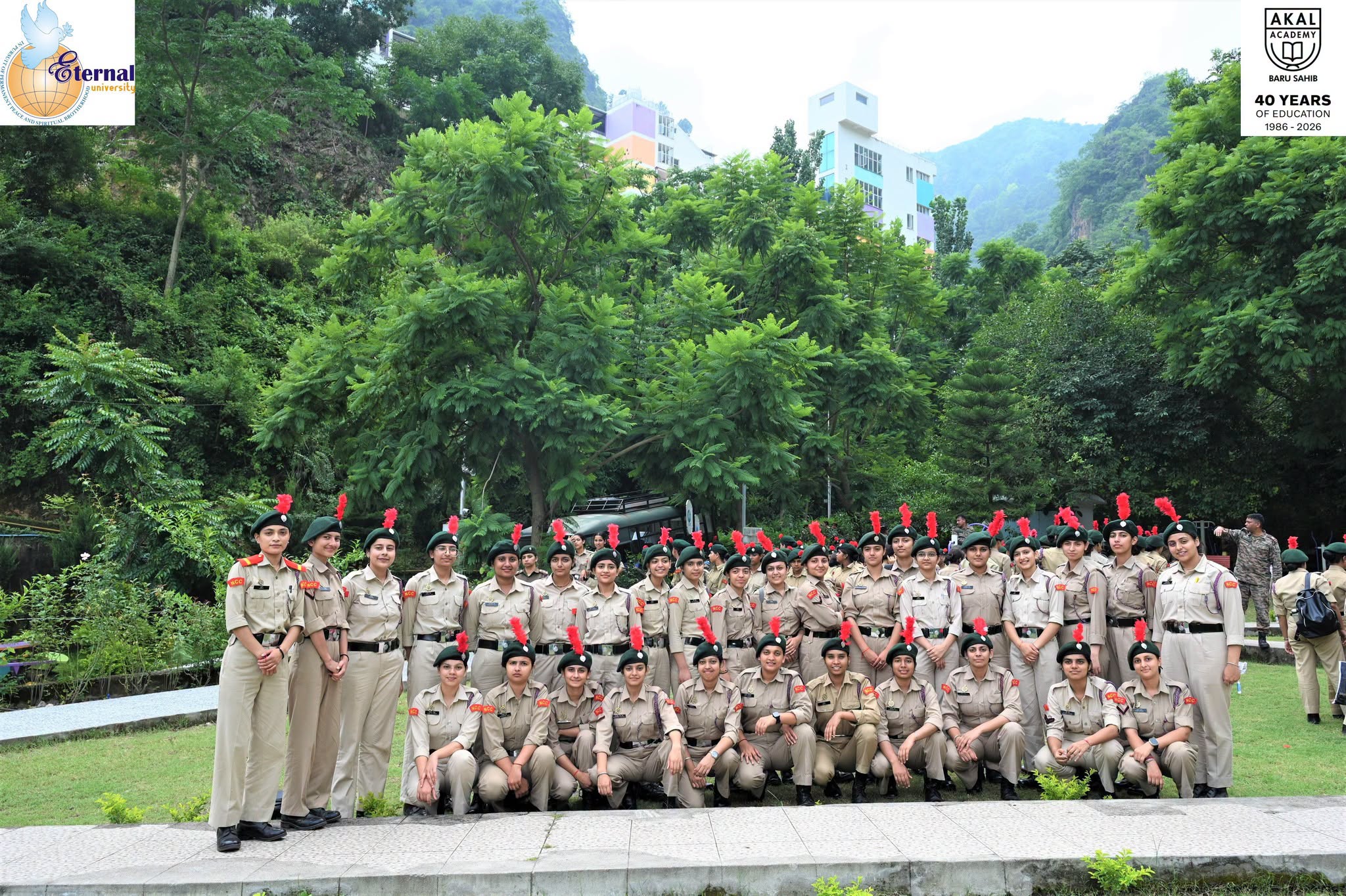
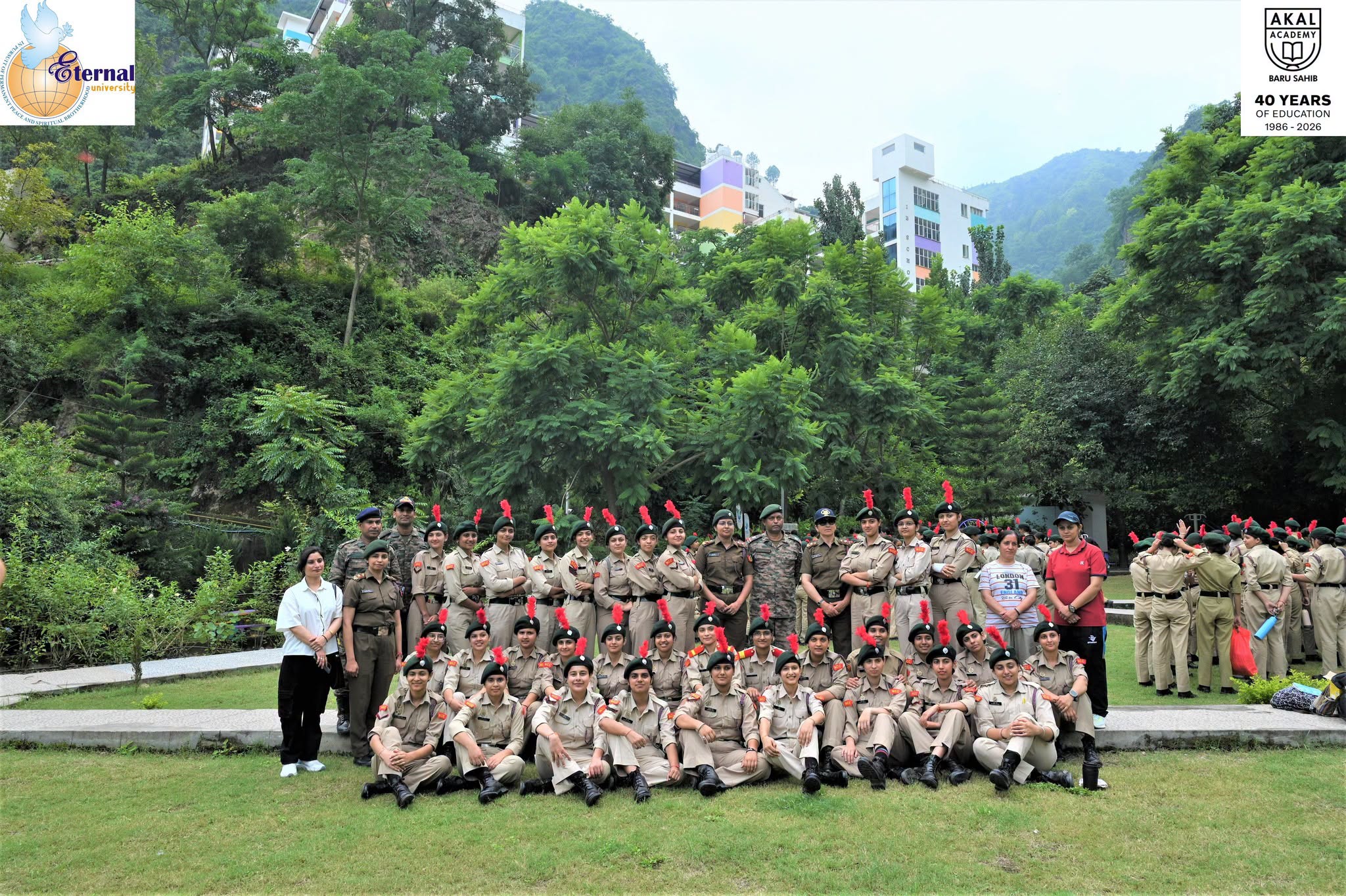
Following Physical Training, Drill and Squad Formation training begins at 8:30 AM at the NCC Annual Training Camp.
Drill Training, the backbone of ATC, trains cadets to move, march, and stand in a precise, synchronized, and uniform manner in response to a word of command.
Cadets assemble in the Drill Training Areas of their respective Companies. The Chief Drill Instructor and Permanent Instructors train the cadets in different types of drill activities.
1. Turnout Inspection – The Perfect Uniform.
Cadets are expected to maintain a crisp, spotless and properly arranged uniform, with a correctly tied Dastar/ Hair, well-maintained uniform and polished shoes.
2. Static Drill – Foot Movements in Place.
Cadets are trained in standard military positions of stance and sharp posture.
This includes:
* Attention:
* Stand at Ease
* Stand Easy
* Turns: Right, Left & About Turn.
3. Squad Formation & Marching Drill.
After setting position right, cadets are trained to move seamlessly as a squad formation across the parade area.
A squad consists of 13 cadets, arranged in a 4 × 3 grid of 12 cadets, with one additional cadet serving as the Squad Leader.
The squad then practises marching movements that must remain symmetrical, synchronized and uniform.
Marching Drill includes:
* Flat foot March - where cadets strike the ground heavily and flatly with the whole sole rather than rolling from heel to toe.
* Quick March.
* Slow March.
* Squad Dressing: On the word of command, aligning the unaligned squad line cleanly.
4. Training in the Word of Command
A loud, clear & powerful command is essential for maintaining the coordination, timing & energy of the squad. Squad Leader is trained to give commands loudly, clearly, confidently & with full energy.
5. Saluting- The profound gesture of respect, discipline and military protocol.
Cadets are trained in the correct execution, timing, and positioning of different salutes, which include:
* Salute to the Front (Centre)
* Right Salute
* Left Salute
6. Arms Drill –
Arms Drill is an advanced stage of drill training introduced to Senior Wing cadets after they have developed proficiency in foot drill, using the .303 rifle. This includes:
* Order Arms:
* Shoulder Arms:
* Present Arms: The highest form of military salute to honor VIPs or the National Flag.
Drill training is the absolute backbone of the ATC. The Cadets learn teamwork, coordination, synchronization & discipline, ultimately leading to the DST (Drill Squad Test) in the final leg of the NCC ATC. Here, squads are evaluated on these aspects & the best-performing squad earns the Best Drill Squad Award.
Stay Tuned for the Next Episode, featuring:
Weapon Training | Tactical Positions | Battlefield Responses
Akal Academy Baru Sahib, celebrating 40 Years of Education (1986- 2026).
Call us – 18001807755 | WhatsApp us: 9816400510
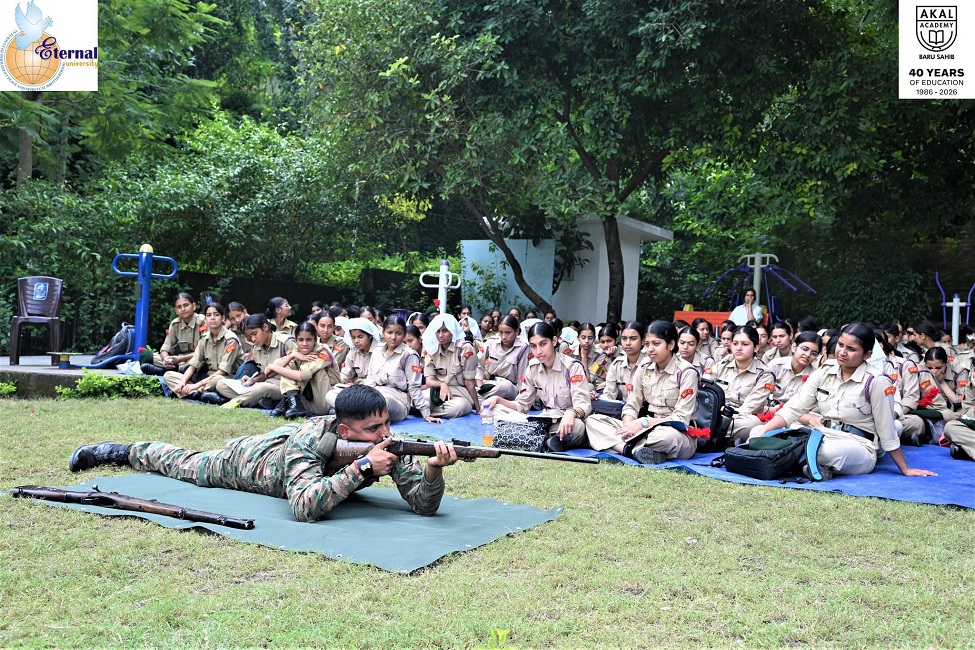
After Drill Training, the cadets proceed to the Army Specialised Subject Classes, which begin at 10:30 AM. The two-hour classes cover five subjects in detail, conducted on different days: Weapon Training, Map Reading, Signal Communication, Drill & FCBC.
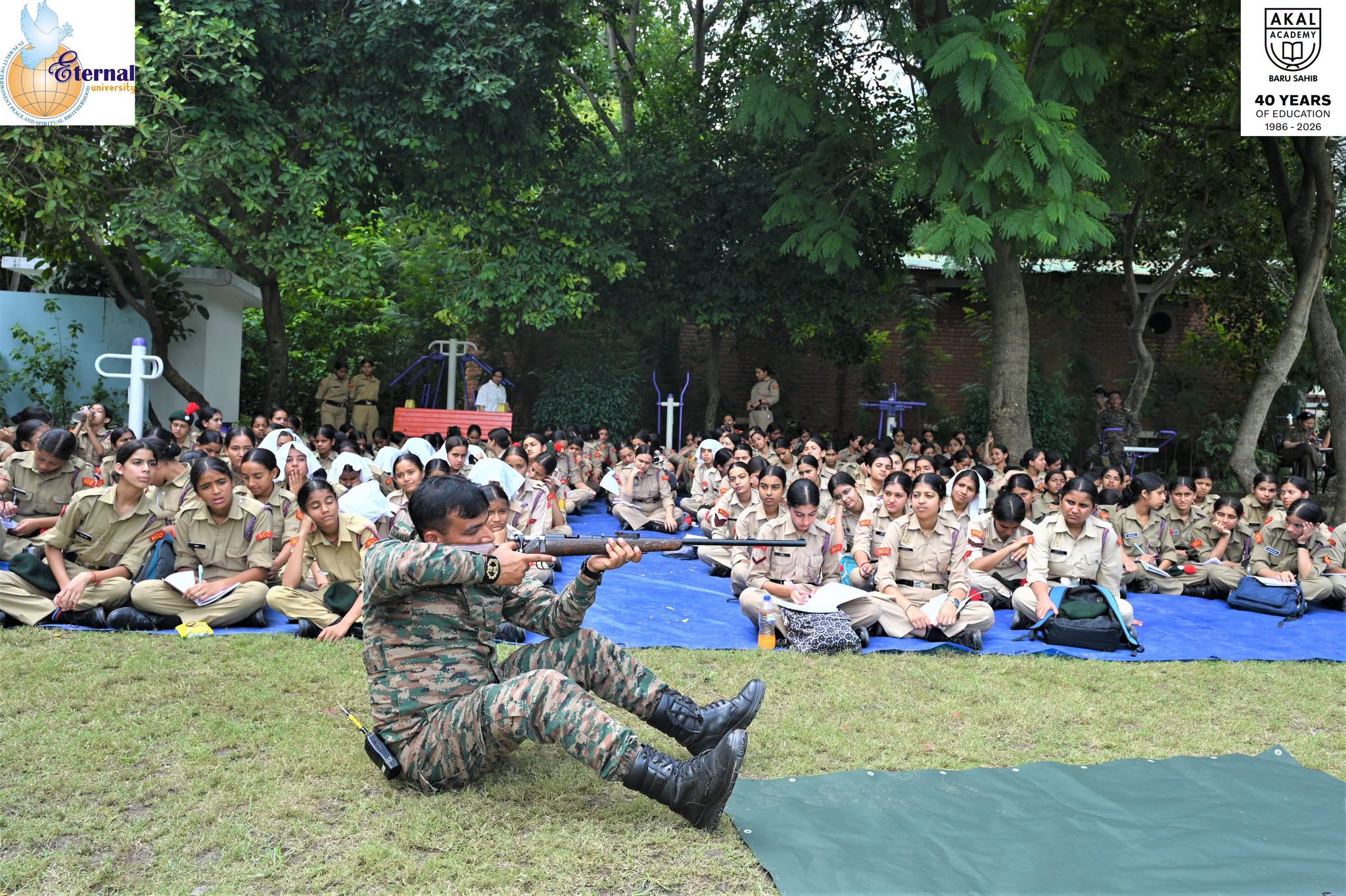
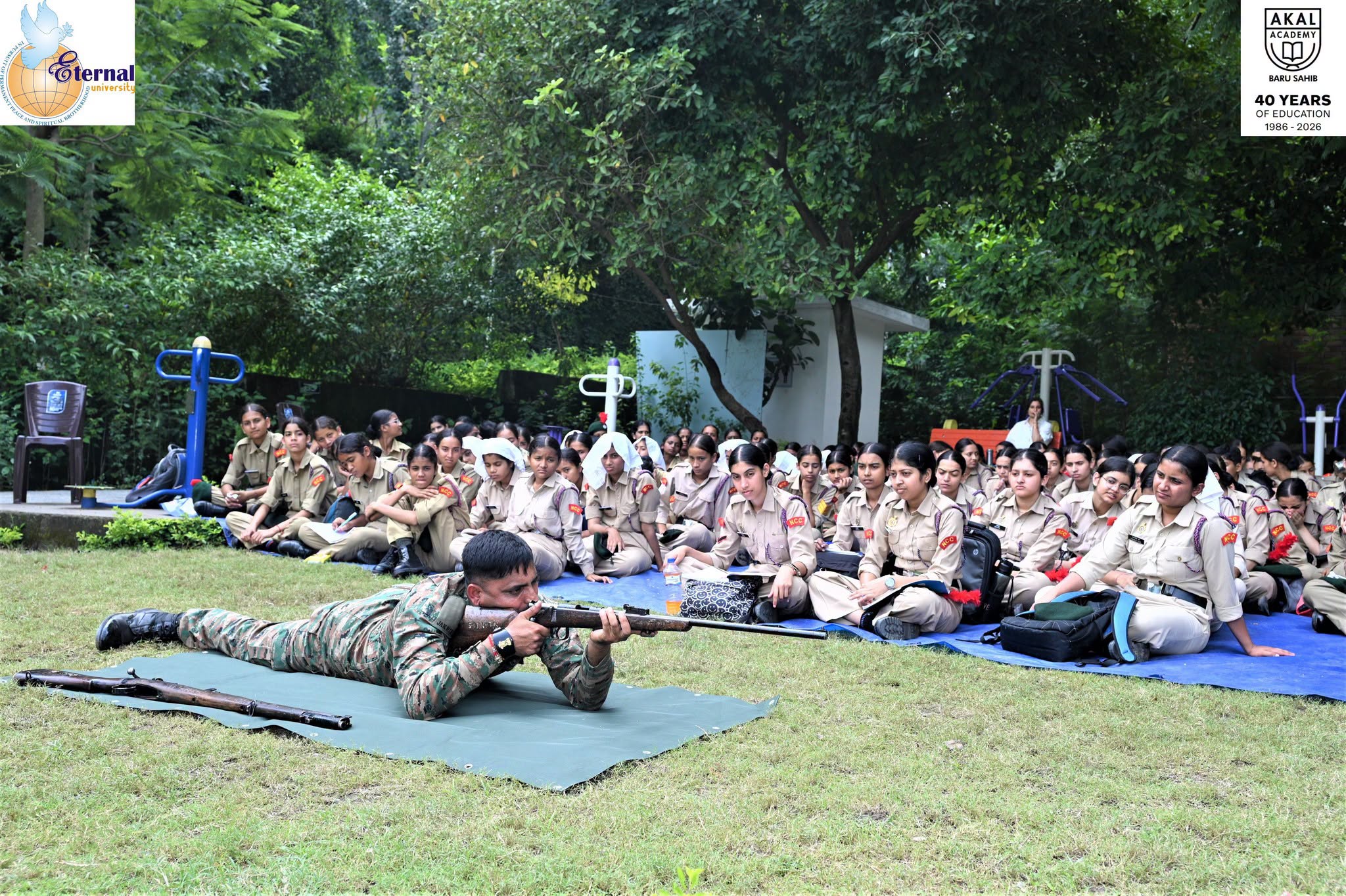
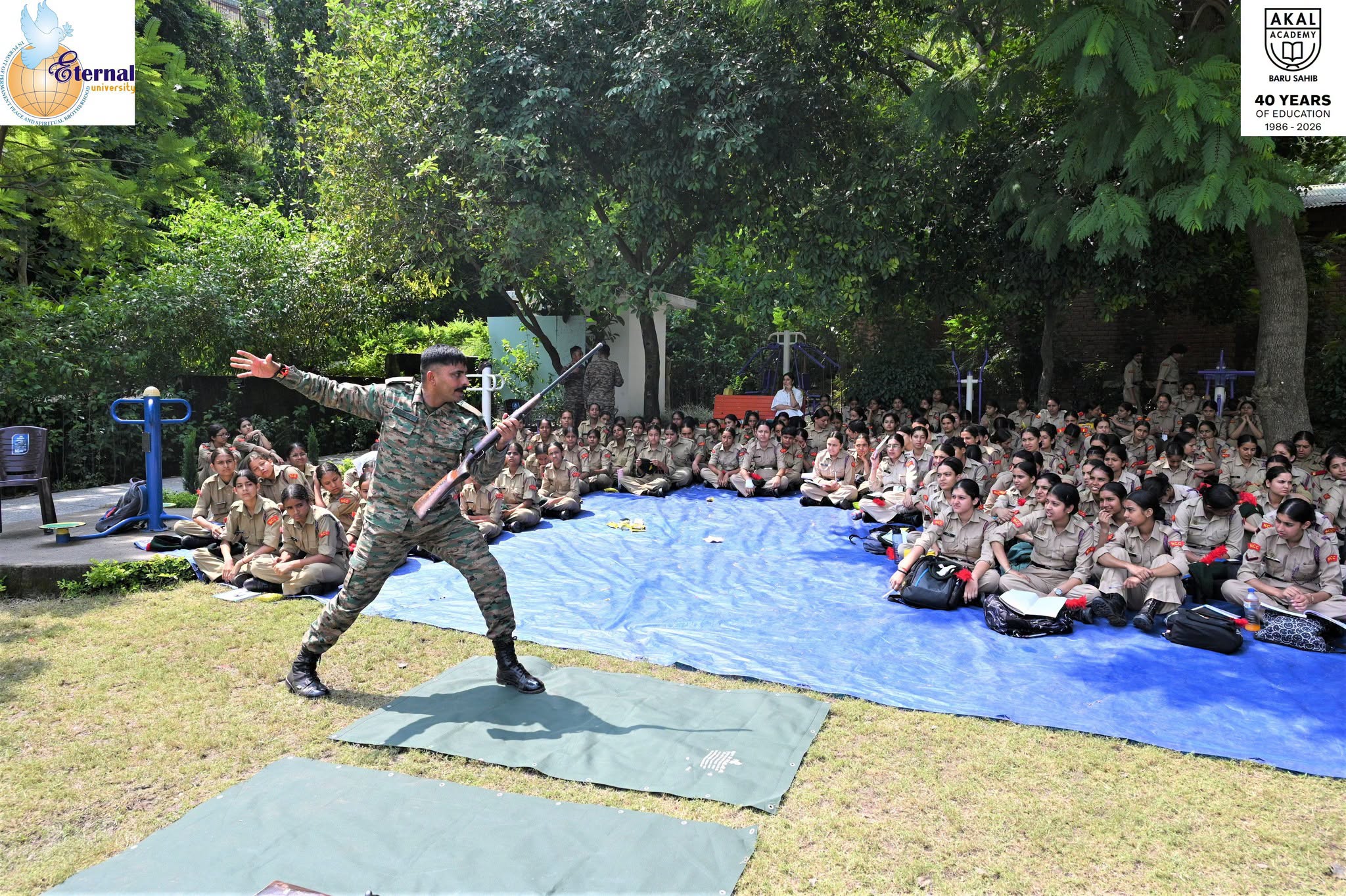
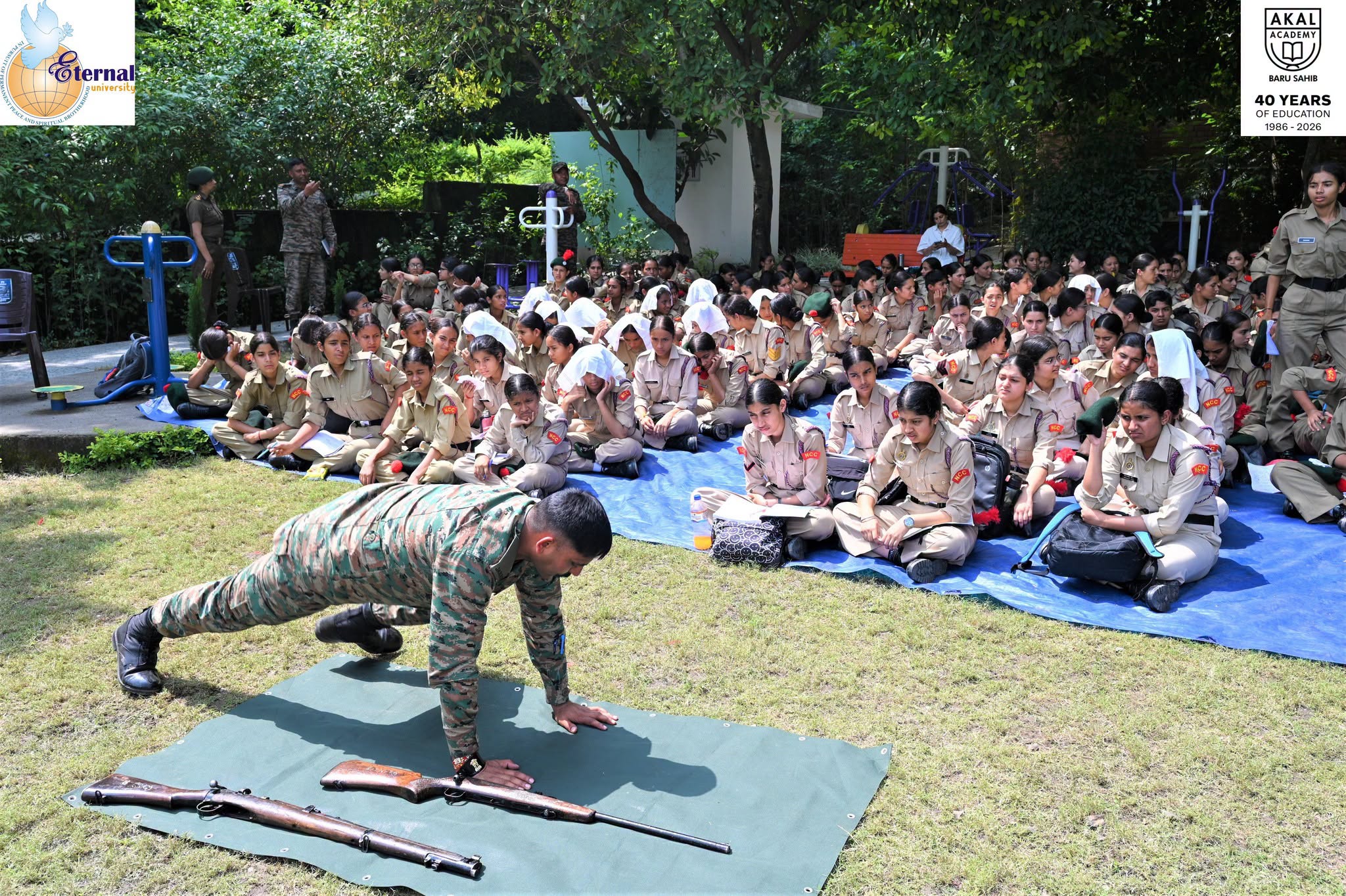
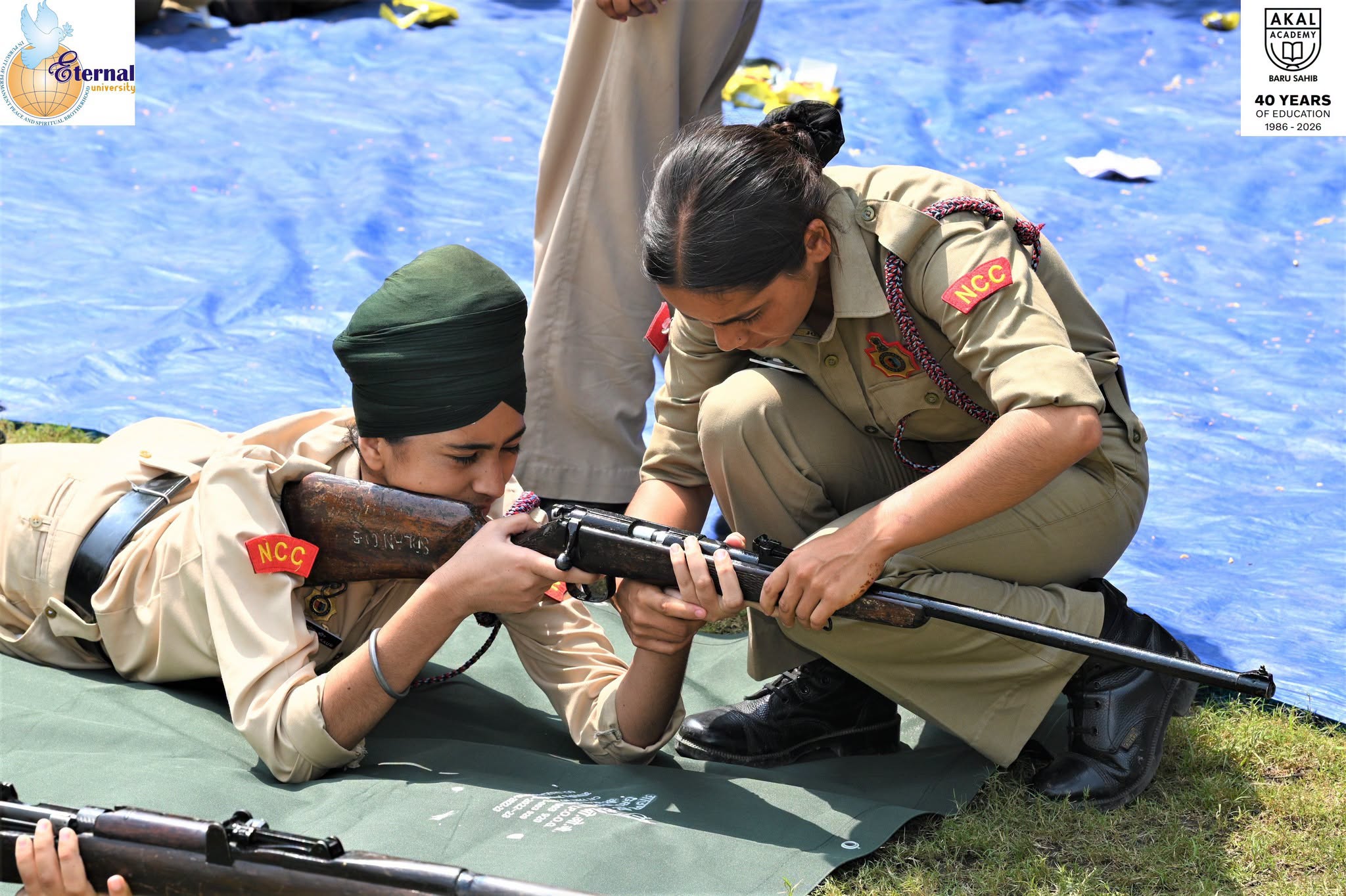
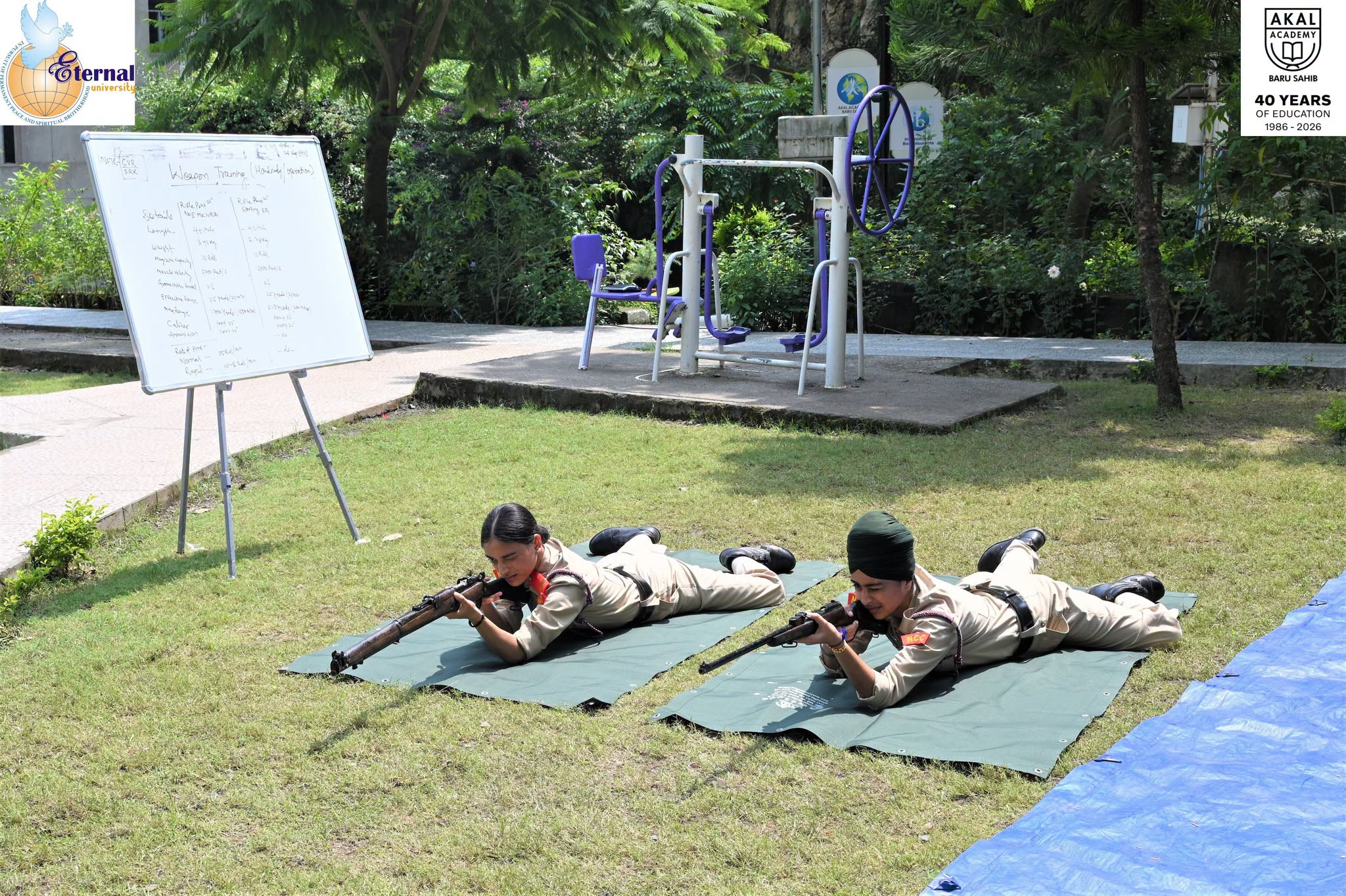
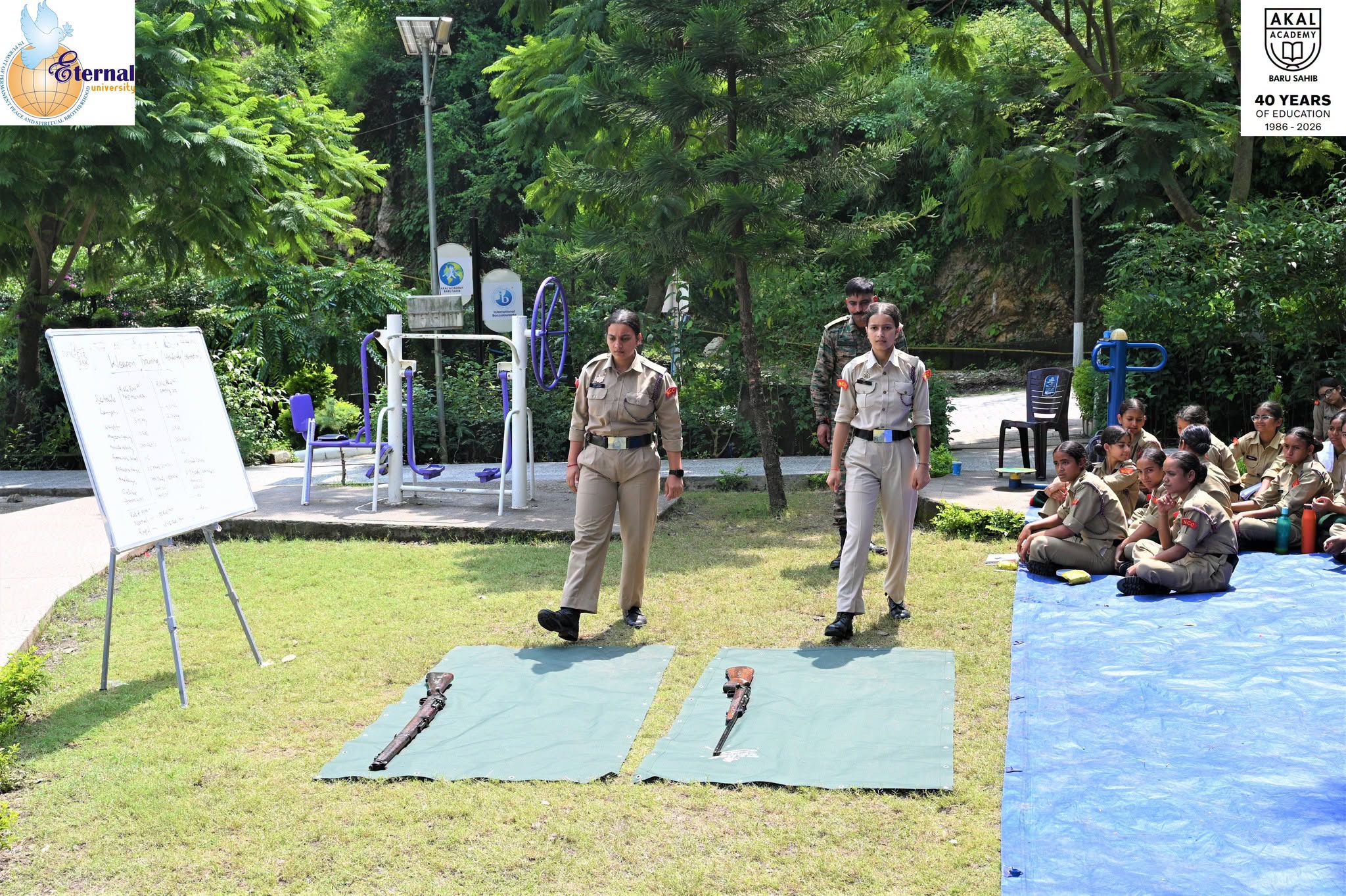
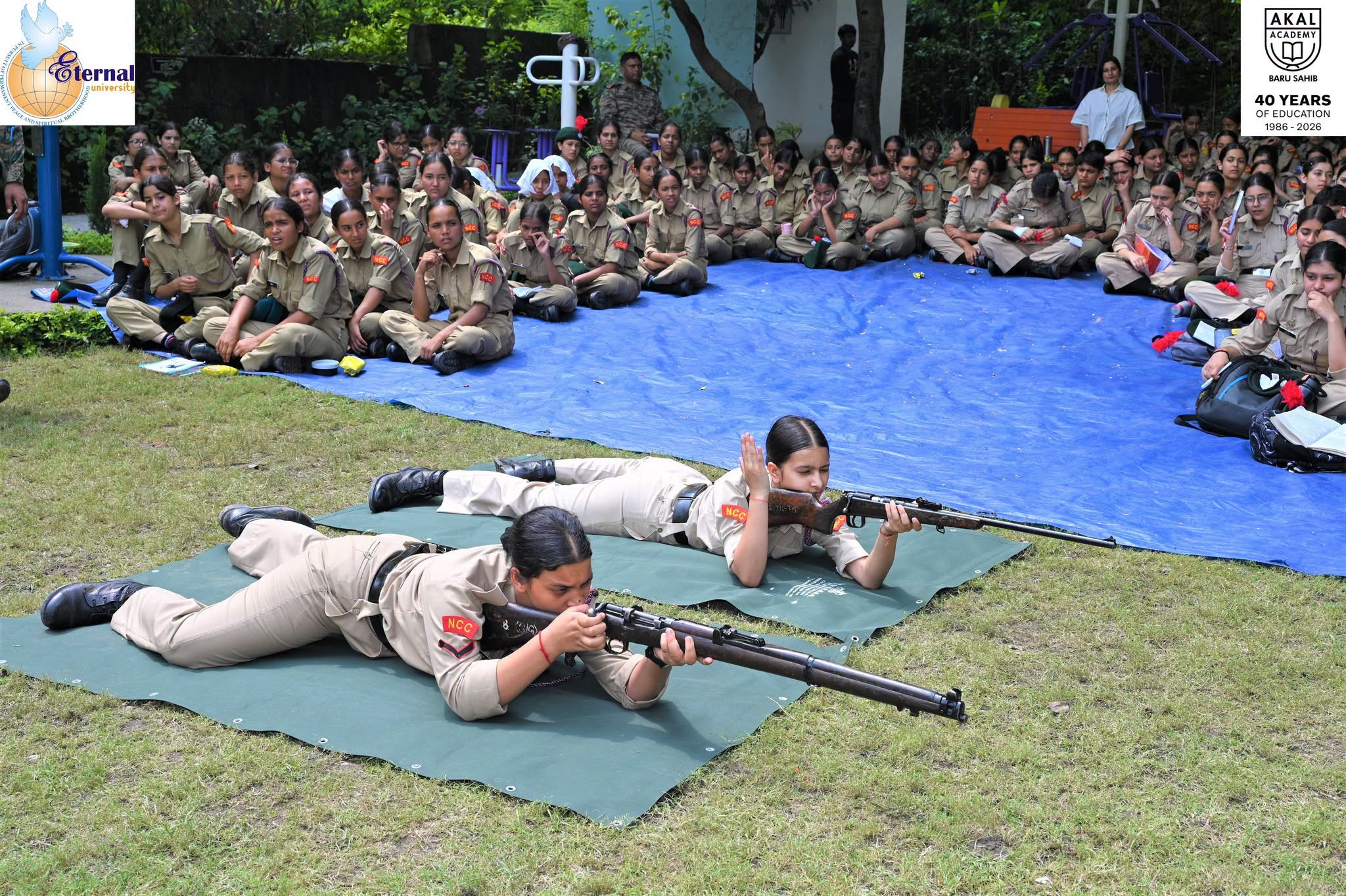
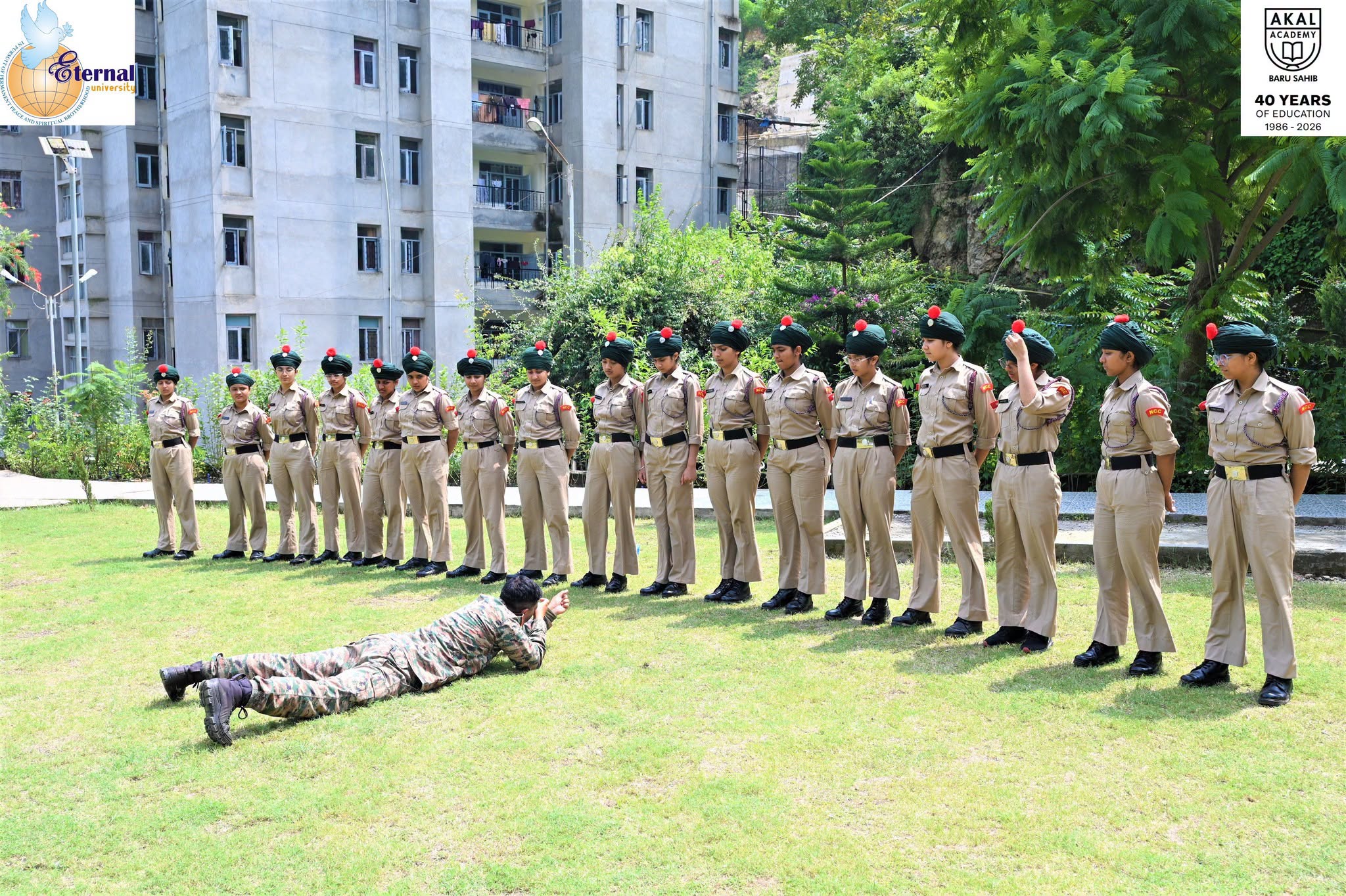
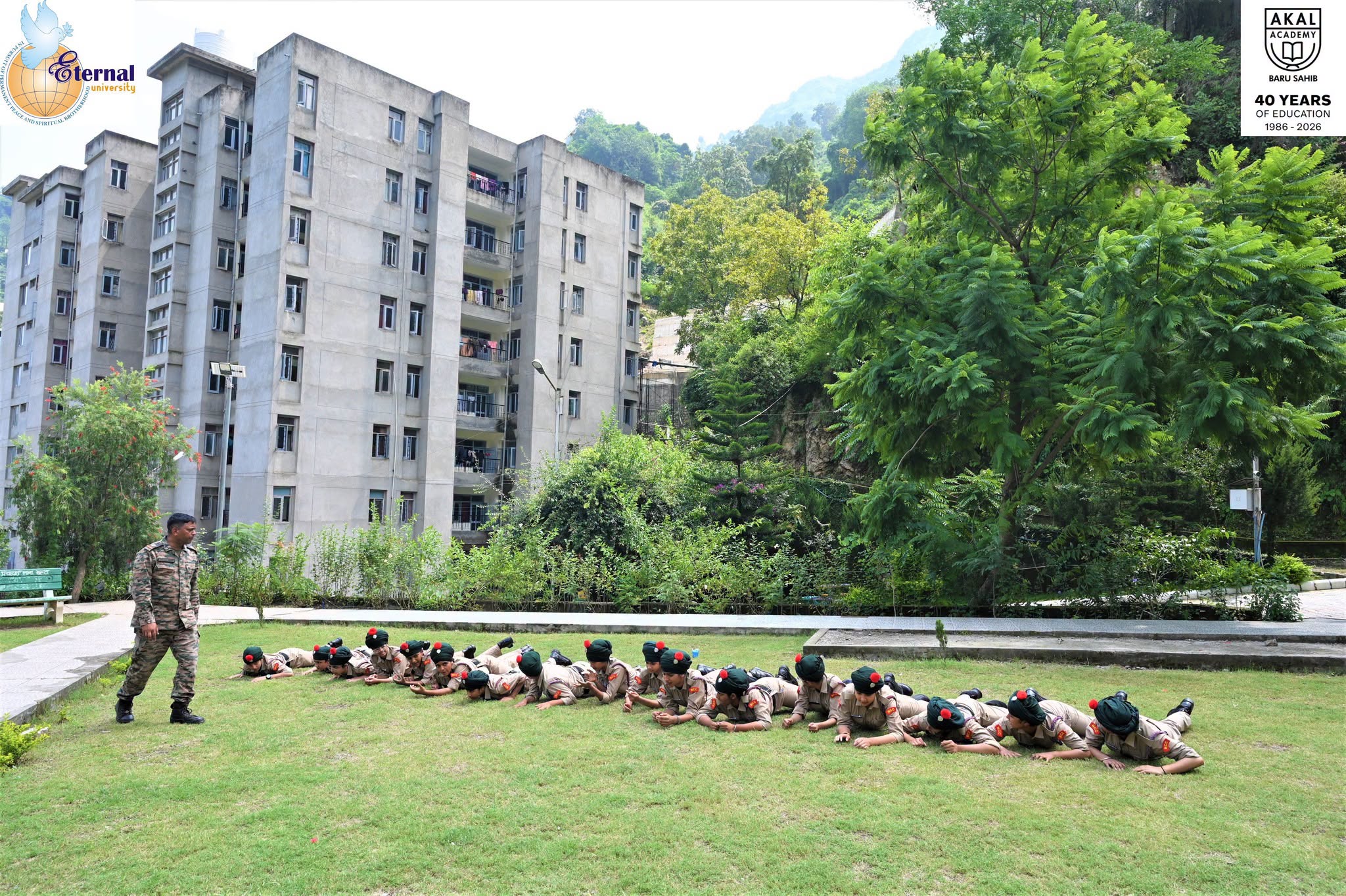
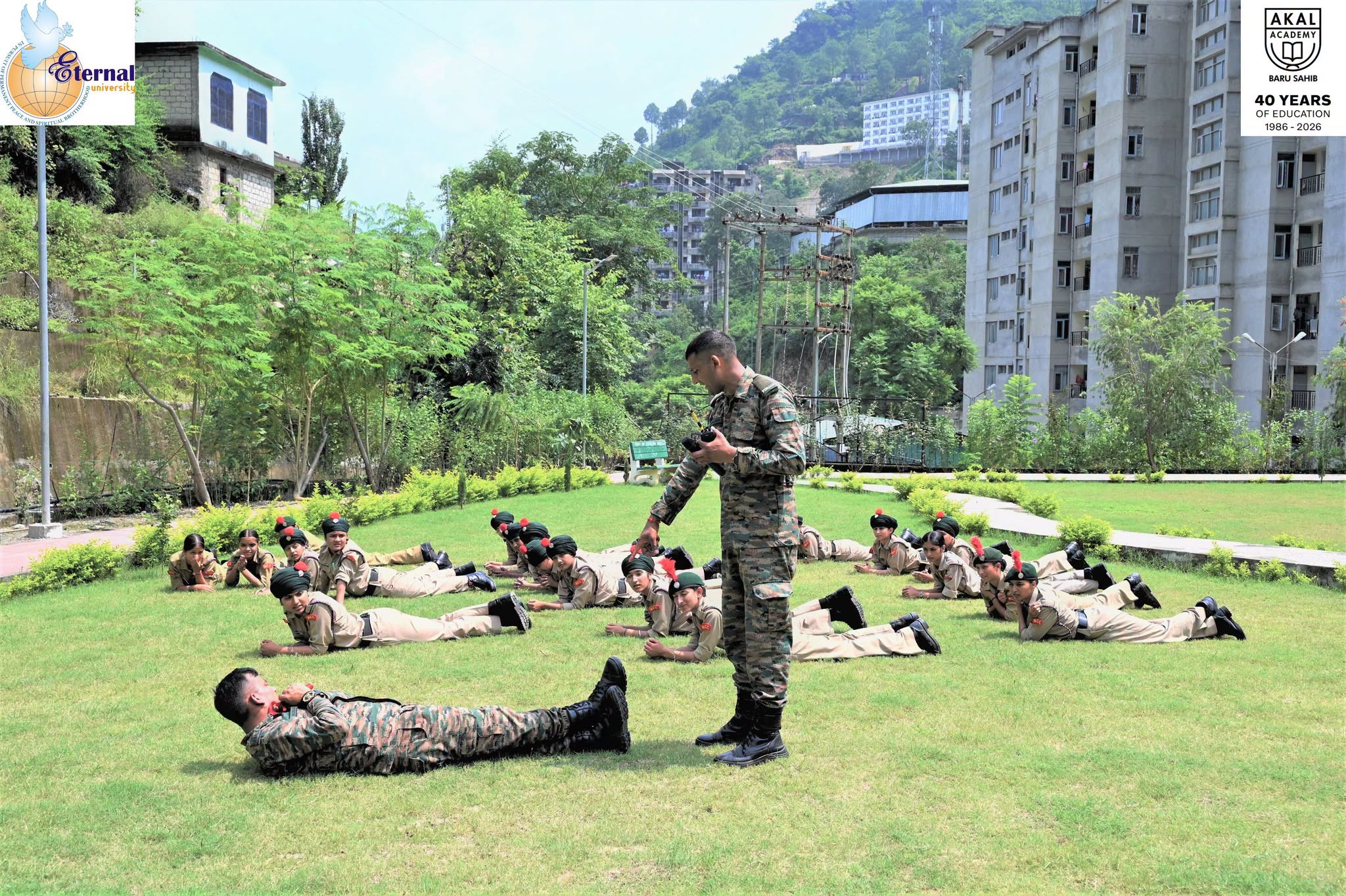
This episode takes us through Weapon Training (WT), introducing cadets to the characteristics of their training weapons, the fundamentals of weapon handling & different firing positions.
All 600 cadets from Eternal University, Akal Academy Baru Sahib & other participating institutions undergo detailed and structured weapon training.
1. Part 1 |Know Your Weapon: Cadets begin by getting familiar with their primary training weapons:
• .22 Deluxe Rifle: A Yugoslavian-made precision training rifle.
• .22 Rifle (Indigenous): An Indian-made standard training rifle.
Understanding the weapon begins with knowing its key characteristics, including -
Weight, Length, Effective range & Rapid-firing capacity.
Cadets are also introduced to disassembling and assembling the rifle, learning to dismantle its main parts for cleaning and reassemble them correctly within a prescribed time.
2. Part 2 | Weapon Handling
Effective weapon handling begins with three fundamentals —
H.A.T.
• H — Good Holding
• A — Good Aiming
• T — Right Trigger Operation
3. Part 3 | Firing Positions | Adapting to the Situation
Cadets are introduced to different firing positions depending on the situation and the available cover:
• Lying Position: Used when there is no obstacle available for cover, providing a low profile and greater stability.
• Kneeling Position: Used when taking cover behind a low obstacle of approximately 2–2.5 feet. The cadet sits back on one heel while taking the firing position.
• Sitting Position: The ultimate tactical stance when firing from an upward position to downward in mountain warfare or hilly terrain.
• Standing Position: Used when taking cover behind a higher obstacle of approximately 4–4.5 feet.
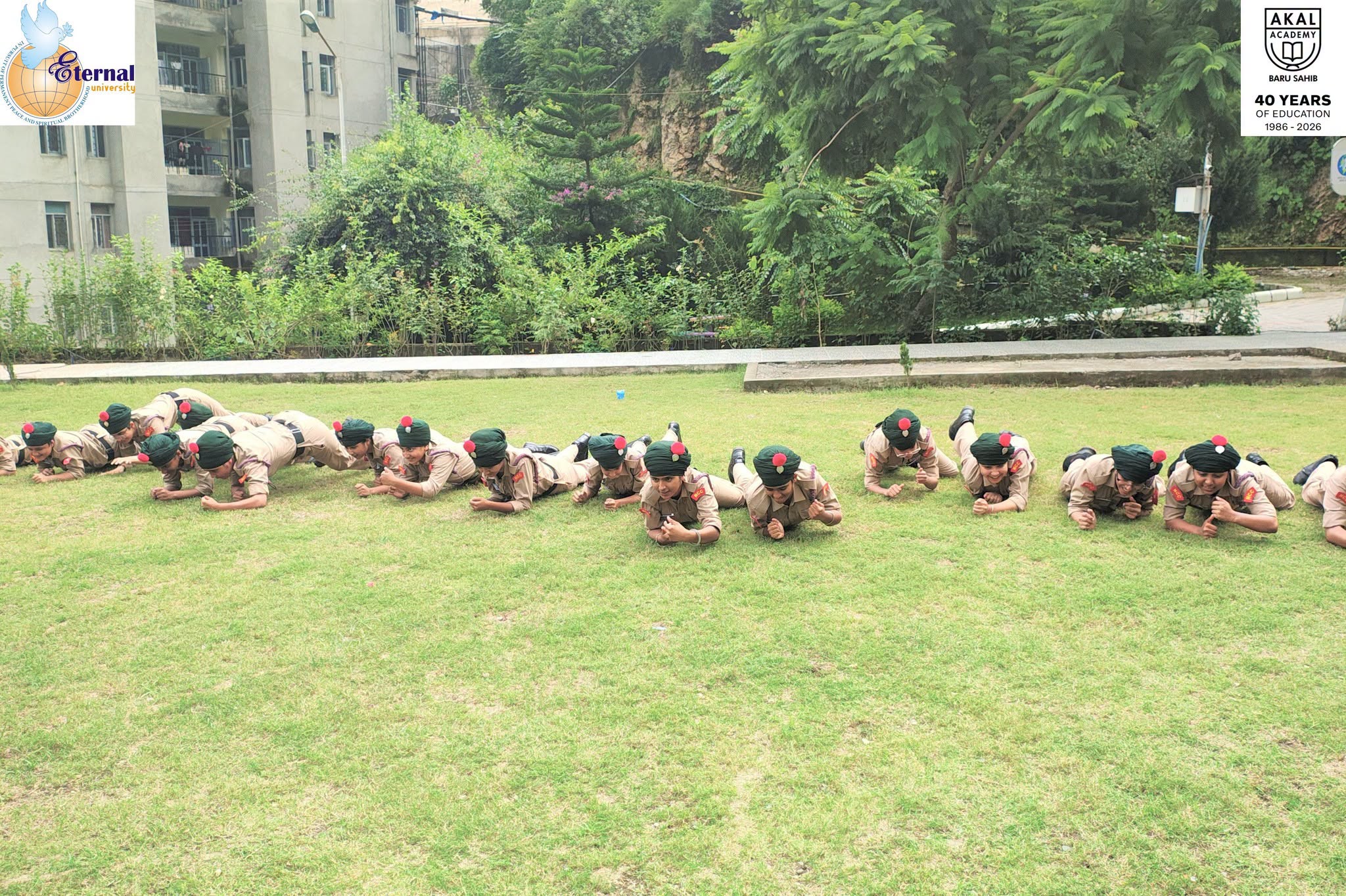
4. Part 4 | Tactical Movement
A section advances safely through hostile terrain using stealth and camouflage.
• Crawling: Moving forward while keeping body incredibly low to the ground to move beneath enemy sightlines.
• Rolling: A quick, defensive tactical movement used by a cadet to change their firing position instantly under enemy fire.
• Leopard Crawl: Done on elbows and knees, keeping your stomach slightly off the ground but your hips low, allowing for a quicker pace
• Hide & Seek (Take Cover): Mastering the art of using natural surroundings to remain invisible to the enemy
Each stage introduces cadets to a new aspect of military training. In the upcoming episodes, cadets will delve deeper into various aspects of military training.
Stay Tuned...
Akal Academy Baru Sahib, celebrating 40 Years of Education (1986- 2026).
Call us – 18001807755 | WhatsApp us: 9816400510
Website - www.akalacademybarusahib.com
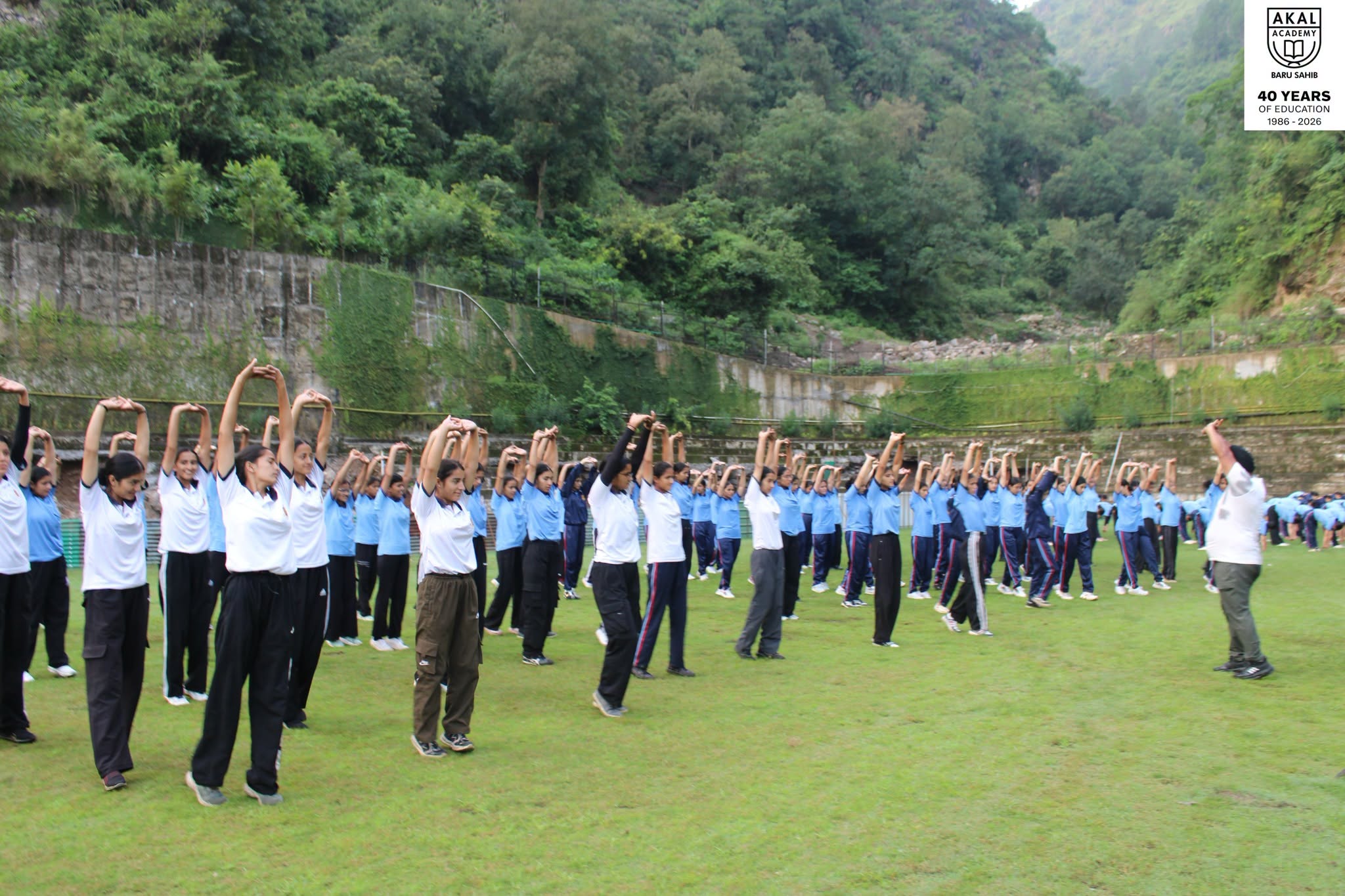
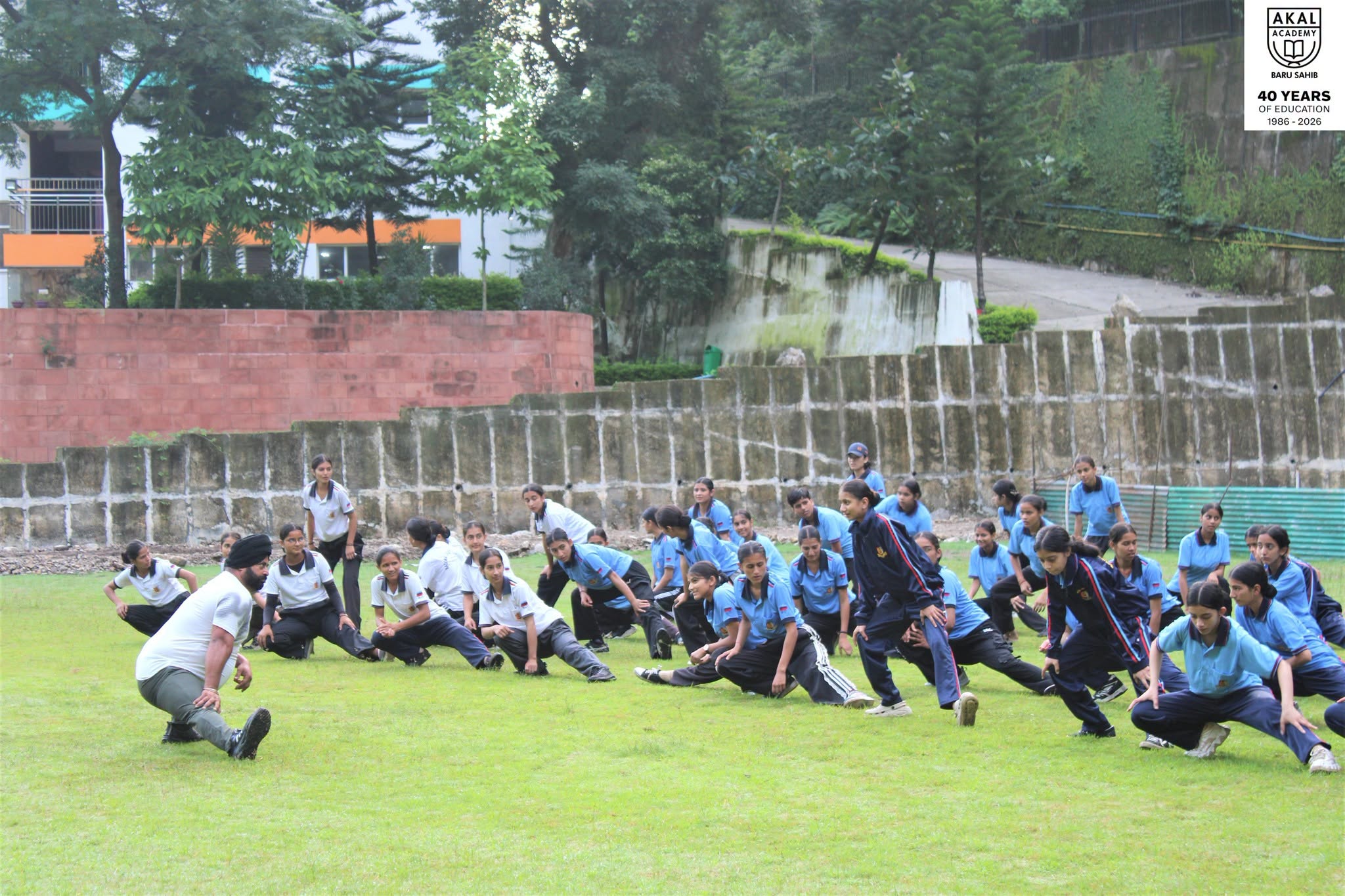
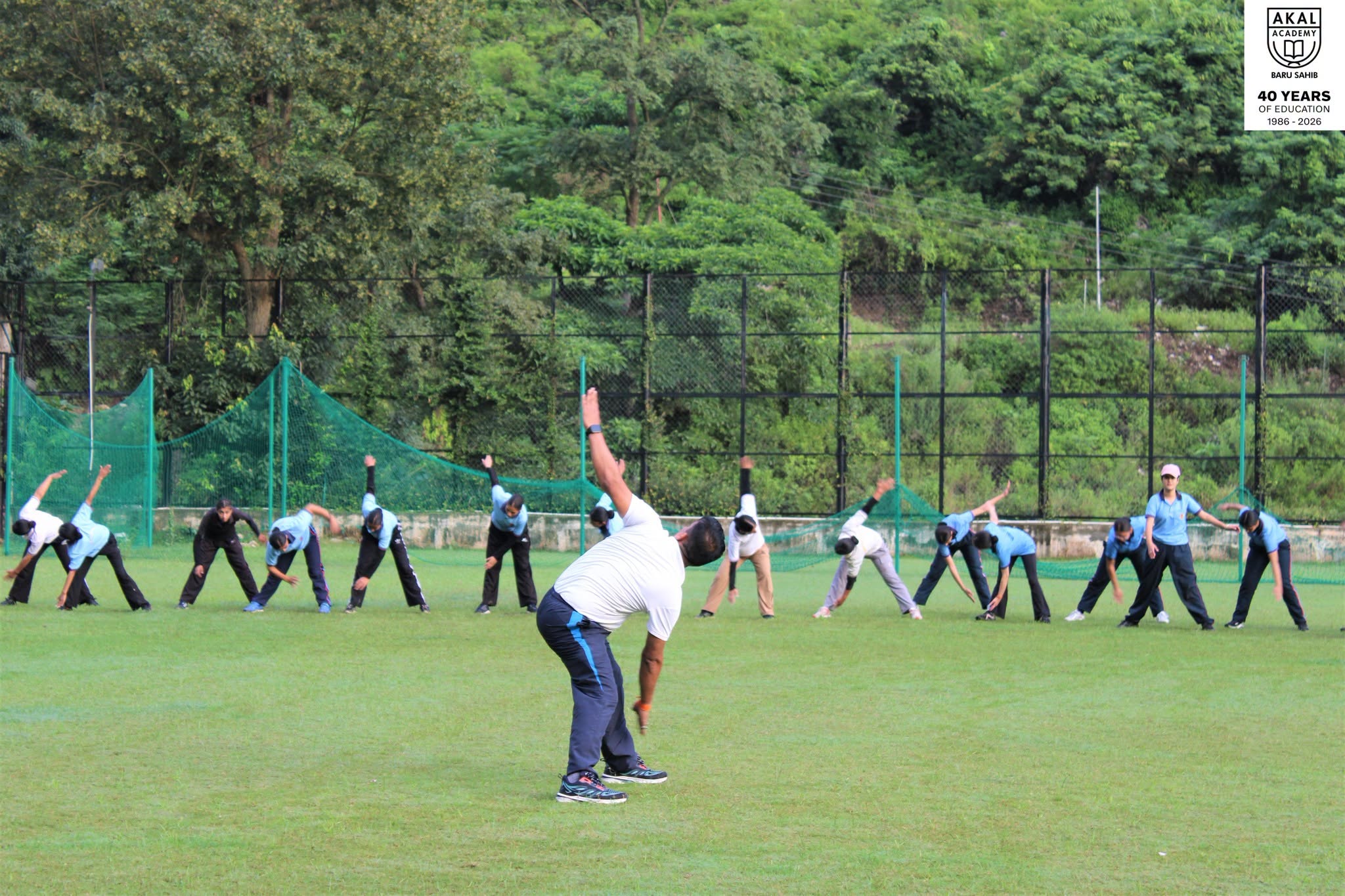
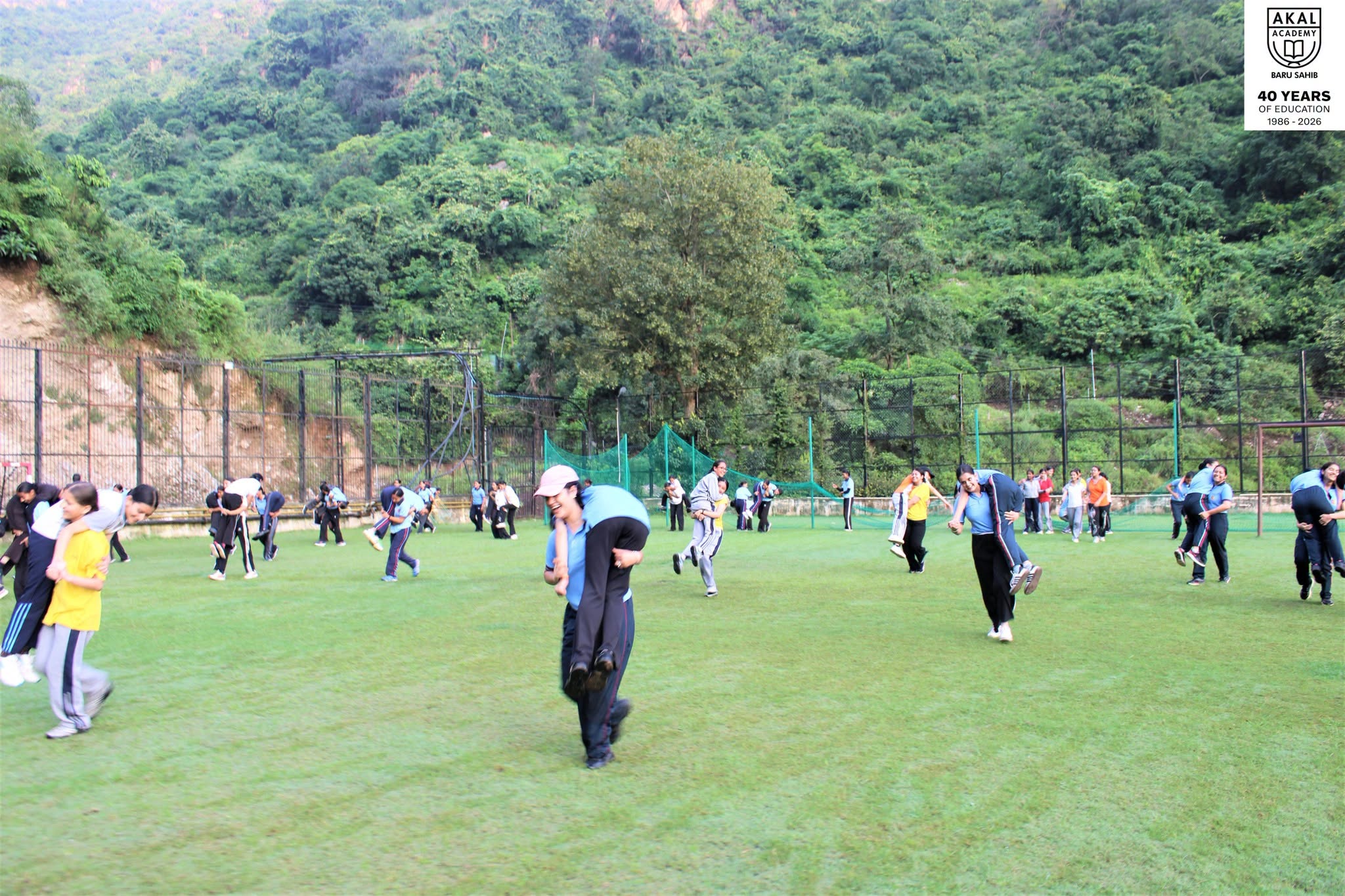
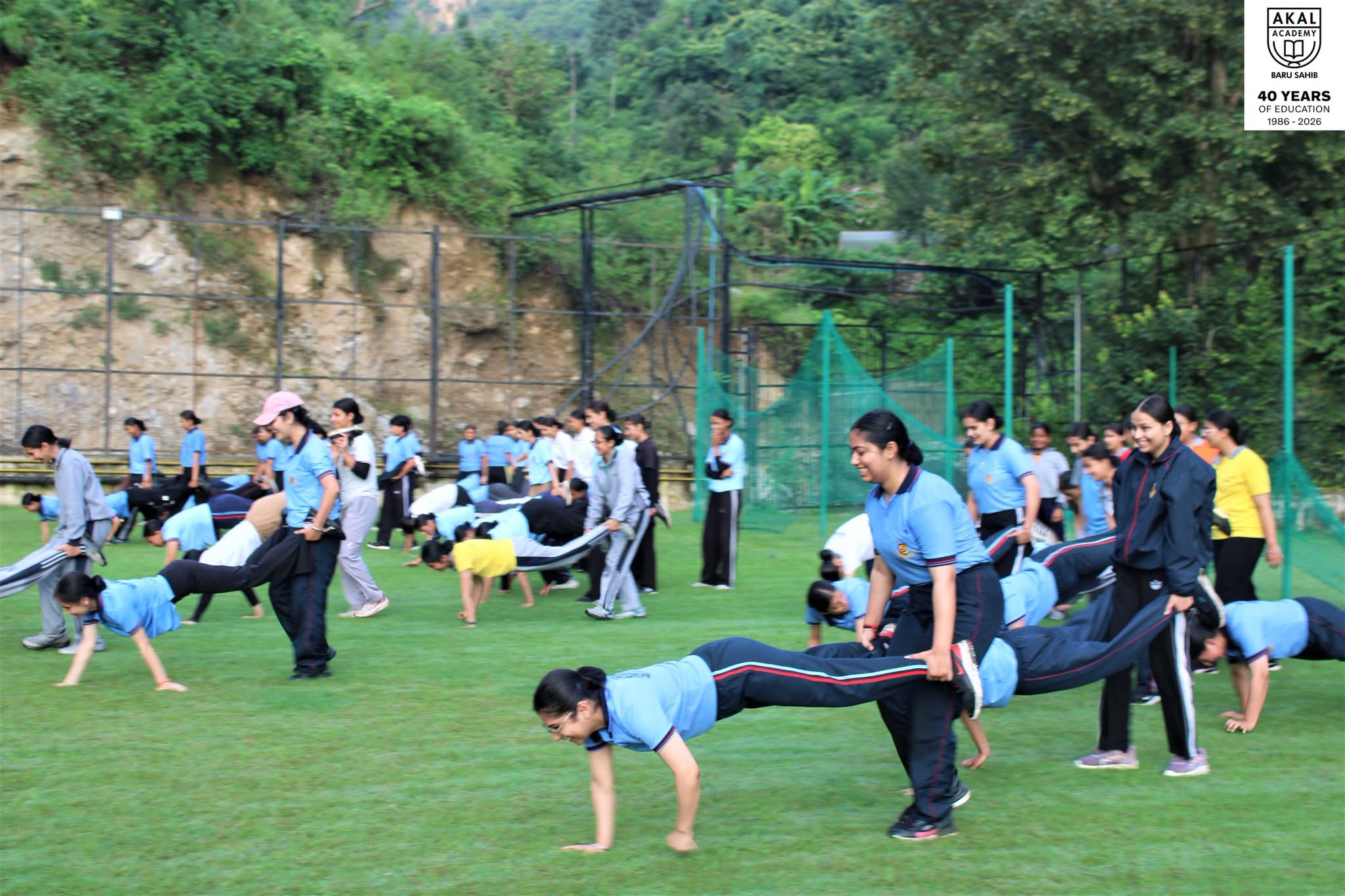
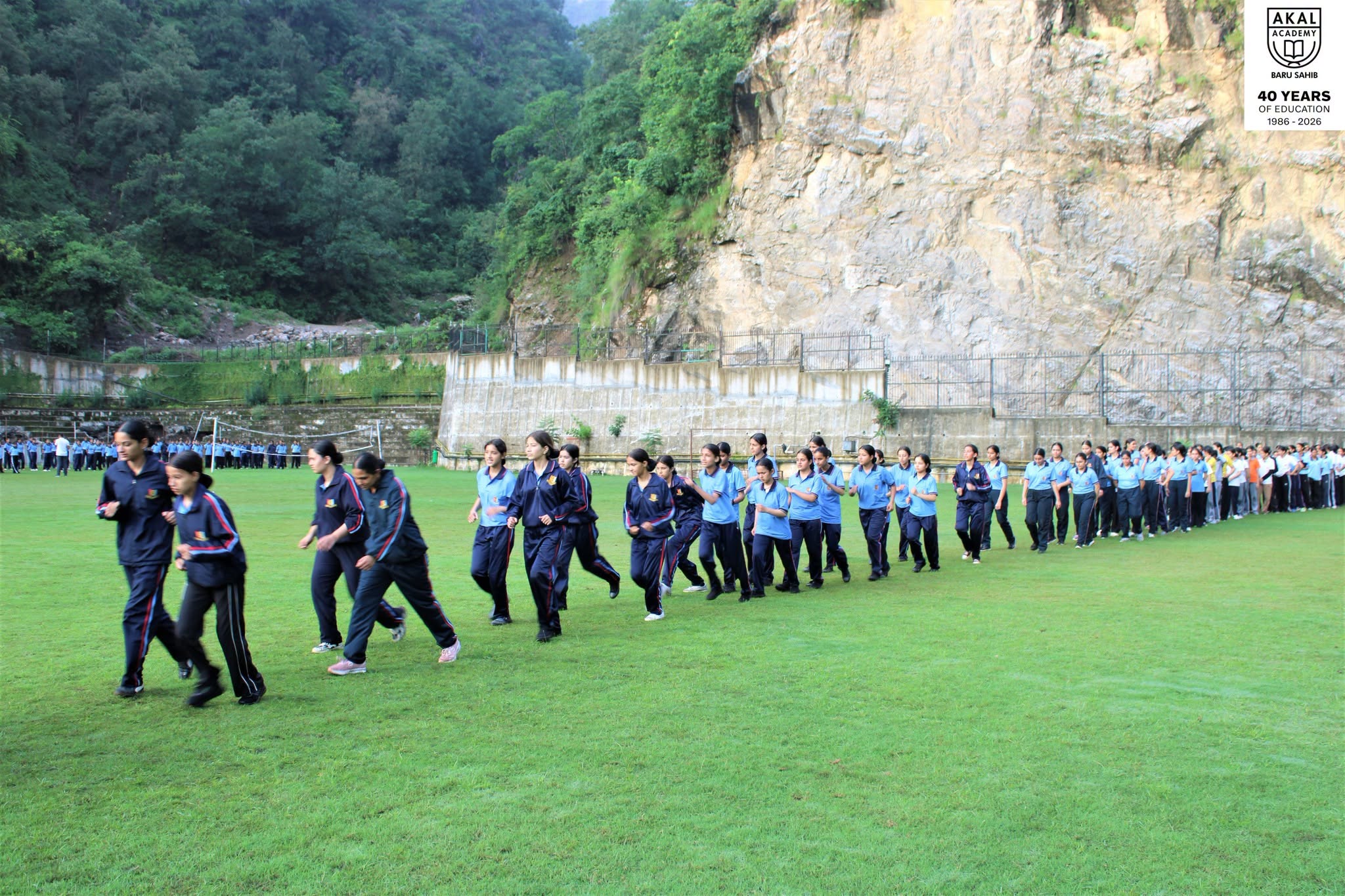
The day at the NCC Annual Training Camp begins at 6:00 hrs with Physical Training. Around 600 cadets assemble at designated base areas across the Baru Sahib Campus in their respective companies (Alpha, Bravo, Charlie and Delta), each comprising 150 cadets.
Led by the Chief Physical Training Instructor, along with the Permanent Instructors, the session begins with roll calls, followed by jogging to the Physical Training Grounds. The cadets then move through warm-up exercises and cardio activities, followed by a series of exercises covering different muscle groups from head to toe.
The training also includes group activities that emphasise strength, coordination and teamwork. In one activity, cadets work in pairs, with one cadet walking on their hands while their buddy supports and holds their legs.
The final activity focuses on learning how to carry an injured buddy over the shoulder, introducing cadets to a practical technique for assisting a wounded soldier on the battlefield.
From early-morning physical training to activities that build coordination and teamwork, the session combines physical fitness with practical learning.
Stay tuned for the 3rd episode, featuring Cadet Drills & Squad Formation.
Akal Academy Baru Sahib, celebrating 40 Years of Education (1986- 2026)
Fully Residential School | Coeducational | International Educational Boards
IB (Nursery–V) | Cambridge (VI–XII) | CBSE (Nursery–XII)
Call us – 18001807755 | WhatsApp us: 9816400510